
Inside EU Health: Tobacco games Commission consultation; pharma push back on PABS; Danes pilot real-world data to assess cancer drugs
Dutch investigation finds that Philip Morris is gaming tobacco consultation; Pharmaceutical companies caution against tougher obligations in PABS talks; Denmark turns to real-world data to assess cancer drugs
Dutch investigation finds that Philip Morris is gaming tobacco consultation
An investigation by Dutch journalists has raised fresh questions about tobacco industry lobbying during the European Commission’s consultation on revisions to the Tobacco Products Directive and the Tobacco Advertising Directive. Research by Pointer, the investigative platform of KRO-NCRV, together with NOS, found that Philip Morris International (PMI) appeared to dominate Dutch-language submissions through an AI-assisted campaign.
The Smoke Free Partnership raised questions in early June, saying that the consultation had already received more than 39,000 responses and over 1,300 questionnaire responses, alleging that “a significant share” appeared to have been driven by industry-linked campaigns.
 Catherine Feore
The Commission’s consultation has now attracted more than 80,000 responses, the journalists highlight that 97% of comparable Commission consultations receive fewer than 1,000 submissions.
Pointer analyzed more than 65,000 responses from 15 EU countries and concluded that 71 percent of Dutch submissions were almost certainly entirely AI-generated. Yellow posters at tobacco specialty stores and via a website were redirected via a QR code to a tool that wrote a response based on answers to leading questions that led to “concerns” over stricter regulations.
“We presented over 65,000 responses from fifteen EU countries to the AI detector Pangram. After Portugal, and just above France, the largest share of AI responses comes from [the Netherlands]. Of the 786 Dutch responses, 71 percent were almost certainly written entirely by AI.”
Director of the Smoke Free Partnership, Erin Roman, said: “The European Commission’s consultations are designed to gather meaningful feedback and support evidence-based policymaking. Coordinated industry campaigns that conveniently amplify particular viewpoints threaten the integrity of this process.”
Pharmaceutical companies caution against tougher obligations in PABS talks
The International Federation of Pharmaceutical Manufacturers and Associations (IFPMA), which represents many of the world's largest pharmaceutical companies, is warning negotiators against adopting a Pathogen Access and Benefit Sharing (PABS) system that could undermine innovation and slow outbreak response.
Ahead of the seventh meeting of the Intergovernmental Working Group on the WHO Pandemic Agreement, the industry group argued that the agreement's success will depend on whether the PABS annex is designed to "enable science," "expand equitable access," and provide "legal certainty." The annex is critical to the full adoption of the WHO Pandemic Agreement.
 Catherine Feore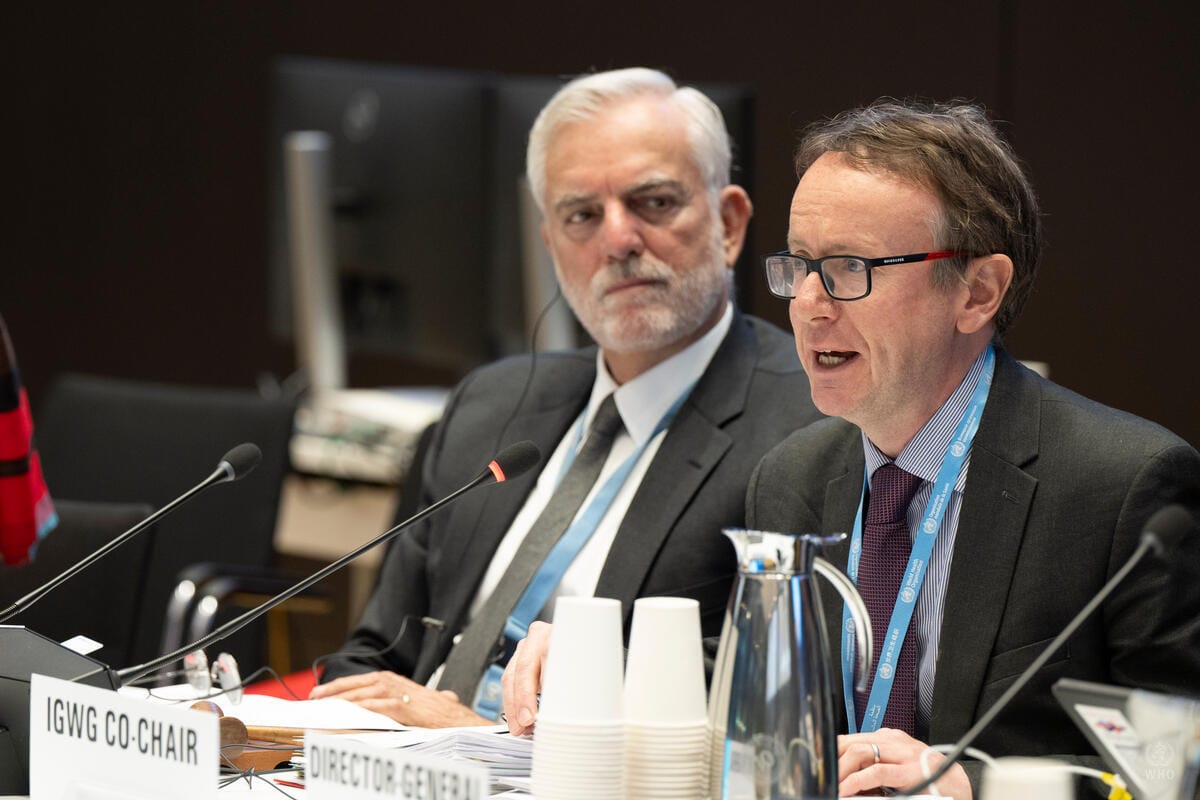
The statement reflects industry's growing concern over proposals that would require companies accessing pathogens and genetic sequence data to take on additional obligations. IFPMA argued that mandatory financial contributions and other requirements would discourage investments and delay scientific collaboration: “Introducing a cumbersome PABS system will not improve preparedness or access outcomes.”
IFPMA says they back the goal of equitable access to medical countermeasures, but say that in practice: “the main bottlenecks have consistently been related to financing, regulation and delivery – not supply.”
Denmark turns to real-world data to assess cancer drugs
As European governments seek better ways to assess the value of increasingly expensive medicines, Denmark is launching two pilot projects to evaluate how cancer drugs perform in routine clinical practice.
The Danish Medicines Council has partnered with the Danish Alliance for Real-World Evidence (DARE) to analyse data from patients receiving treatments for lung and breast cancer.
"Real-world data should give us knowledge about how the medicines work in Danish patients," said Jannick Brennum, deputy chair of the Danish Medicines Council. He said the evidence available at the time of approval often does not reflect Danish clinical practice: “The treatment that is already used in Denmark is typically better than the one compared in the studies and the patient group in the studies is not representative of the Danish patient group” making post-market data "crucial" for assessing whether a medicine's benefits justify its cost.
The pilots reflect a broader trend across Europe, where health systems are looking beyond clinical trial data to inform reimbursement decisions and support faster access to innovative therapies while managing healthcare spending.
DARE said the projects could help establish a new standard for evaluating medicines after launch. "The goal is to develop a model that can be reused across new treatments, so that systematic follow-up on new medicines becomes the rule rather than the exception," said Espen Jimenez Solem of DARE.
If successful, the initiative could provide a blueprint for other European countries looking to integrate real-world evidence into health technology assessment.