
‘Last piece of the puzzle’ in the WHO pandemic agreement delayed to 2027
WHO member states agree to further negotiations to reach an agreement on key Pathogen Access and Benefit Shifting (PABS) annex
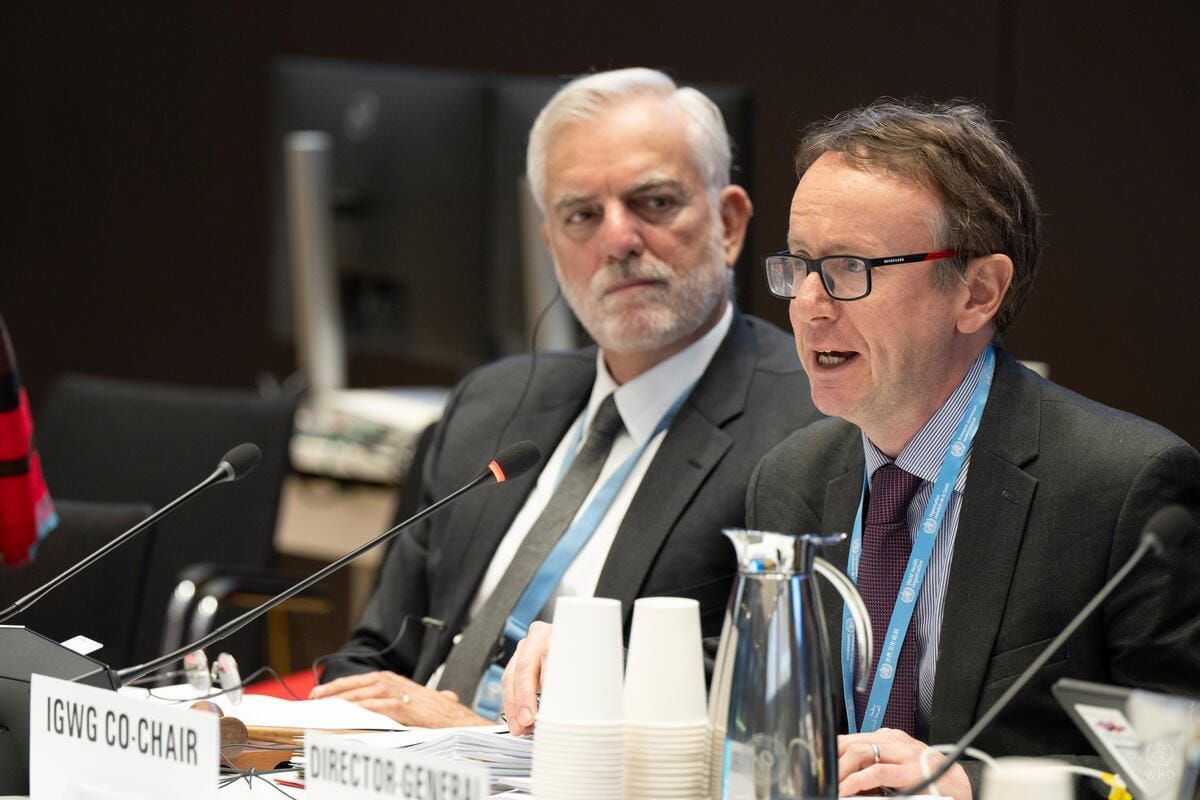
The WHO Pandemic Agreement adopted in May 2025, contained one crucial proviso: it couldn’t be ratified until one of its most contested elements, the Pathogen Access and Benefit Shifting (PABS) was agreed. Despite an additional year of negotiations, diplomats have failed to bridge diverging views.
“Real progress was made on the PABS annex and I am confident that through continued negotiations differences will be overcome,” said WHO Director-General, Dr Tedros Adhanom Ghebreyesus. “Member states should continue approaching the outstanding issues with a sense of urgency because the next pandemic is a matter of when, not if. The PABS annex is the last piece of the puzzle.”
Intergovernmental Working Group (IGWG) Co-Chair Ambassador Tovar da Silva Nunes of Brazil said that finalizing a document of such technical and legal complexity requires “precision and dedication”, which he said negotiating parties had shown: “We are not there yet, but with an extension of our negotiations, we will get there.” British Co-Chair, Matthew Harpur said states had demonstrated “strong and continuing commitment”.
Negotiators have been at loggerheads with sharp divisions between low- and middle-income countries (LMICs) and wealthier nations. The process was extended for a further week in March in the hopes of reaching an agreement ahead of the World Health Assembly, which starts on 18 May. Instead, delegates will receive an update.
The Third World Network (TWN) places the blame principally at the door of the European Union: “The sixth meeting of the Intergovernmental Working Group (IGWG6) was suspended due to the refusal of the European Union and other developed countries to accept proposals for a fair and equitable Pathogen Access and Benefit Sharing (PABS) system.”
Delegates from lower-income countries have been clear that the technical discussions - and difficulties - should not overshadow the fundamental issue: In a future health crisis will there be legal certainty and equitable access to vaccines, therapies and diagnostics (VTDs).
Speaking at a media briefing KM Gopakumar said that though the EU had proposed a “hybrid” approach, it had not as yet put forward a formal text. AIDS Healthcare Foundation (AHF) were sceptical: “A dual-track system might sound flexible, but it creates dangerous loopholes. Separating access to pathogen data from benefit-sharing obligations weakens the entire system”. AHF calls on members to reject an approach, which they argue would allow actors to bypass responsibility.
One element that has been pushed for by the AHF among others is the need to create a mandatory user registration and traceability database, the EU currently supports anonymous access, which AHF argues compromises system integrity and creates real biosecurity risks.
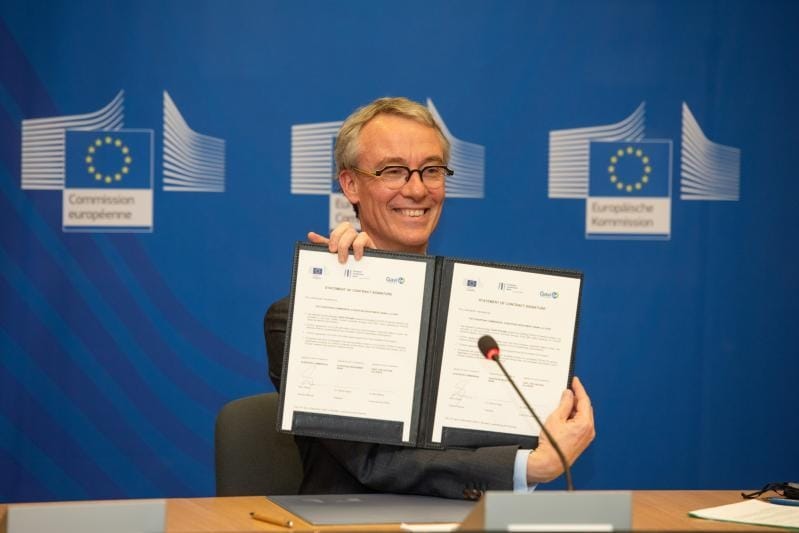
Apart from more equitable access to VTDs, several countries are also calling for non-exclusive licenses and relevant technology transfer for manufacturers in developing countries under major health emergencies, as well as annual contributions.
Text that has been marked as having “initial agreement” is limited, but there are some important elements. For example, there is a commitment that a minimum threshold of 10% of real-time production should be made available to WHO as a donation, with a further percentage, as yet unquantified, to be provided by participating manufacturers to WHO at affordable prices.
The pharmaceutical companies are not at the table in these negotiations, but their presence is felt as the EU, a major producer of pharmaceuticals, will be mindful of their concerns. However, this isn’t just a cynical act of self-interest; it is also a question of the practicalities of any agreement reached.
A different approach
Can the deadlock be unlocked? Colombia’s Ambassador Germán Velásquez said there is no sense in extending the negotiating period without changing the negotiating method. He argues for a system of “progressive consensus” where, once a majority is reached on specific points, a vote should be held and then negotiations continue. It would be surprising if the EU players would agree to this approach given their well-known “nothing is agreed until everything is agreed” mantra.
The seventh round of negotiations by the IGWG will resume from 6 to 17 July 2026. In the meantime, there will be hybrid discussions on contracts for benefit-sharing agreements and core terms of reference for the WHO Co-ordinated Laboratory Network and consideration of a WHO PABS-recognised sequence database.
In theory, agreement could be reached before next year's World Health Assembly, by calling for a special session, should agreement be reached in 2026. Given the division and the extensive work to do, this seems unlikely.
Resilience Action Network International (Rani), a global advocacy group, says that a “meaningful” system is needed, calling on member states to “come together behind a meaningful PABS system that delivers real change, not one that just tinkers at the margins”.