
Inside EU Health: Tobacco control; EU/US trade deal; clinical trials; CEPI; scaleup fund
Europe is backslking on tobacco control; EU-US ‘Turnberry’ trade deal back on track; EU first report charting progress on its clinical trials ambitions; EU commits €73.7 million CEPI 100-day mission; EQT selected to manage EU Scaleup Europe Fund
Europe is backsliding on tobacco control
Europe’s tobacco control efforts are slipping backwards for the first time in two decades, according to the newly released Tobacco Control Scale (TCS) 2025 by the Smoke Free Partnership. The report warns that weak taxation policies and failure to regulate newer nicotine products are undermining progress.
“Too many governments are falling behind on tobacco control while simultaneously arguing in Council working groups for weaker tobacco taxes, longer transition periods, and delayed indexation,” said Director of the Smoke Free Partnership, Erin Roman. “With more than 700,000 people dying every year in the EU from tobacco-related diseases, Europe cannot afford to let the least ambitious countries define the ceiling of public health ambition.”
The TCS, which evaluates tobacco control policies across 37 European countries, found that 23 countries scored lower than in 2021. Romania, Italy and Greece recorded the sharpest declines, largely due to inadequate regulation of heated tobacco products (HTPs) and tobacco taxes failing to keep pace with inflation.
Ireland topped the rankings, while the UK, the Netherlands, France, Norway, Finland, Belgium, Hungary and Slovenia also scored strongly. However, 19 countries failed to reach the benchmark of 50 points considered necessary for adequate tobacco control. Bosnia & Herzegovina and Switzerland remained at the bottom of the ranking.
EU-US ‘Turnberry’ trade deal back on track
The EU-US ‘Turnberry’ trade deal moved a step closer to implementation on Wednesday morning after the European Parliament and Council reached a provisional agreement after an intense five hours of negotiations.
Chair of Parliament’s International Trade Committee MEP Bernd Lange (S&D, Germany) and standing rapporteur for the United States, welcomed the breakthrough, describing the process as “a rocky journey” but ultimately worthwhile.
“By setting the commitments under the joint statement into law, this regulation becomes part of the EU’s toolkit to improve EU-US relations but also responds to pressure,” Lange said.
He stressed that Parliament had strengthened the Commission’s original proposal with stronger review and safeguard provisions, as well as clearer and more regular democratic oversight.
Lange underlined the broader political importance of the deal, arguing that “a stable transatlantic partnership can only succeed if both sides remain committed to reliability, restraint and mutual trust.”
The provisional agreement now moves to the next stages of formal approval before the legislation can enter into force.
 Catherine Feore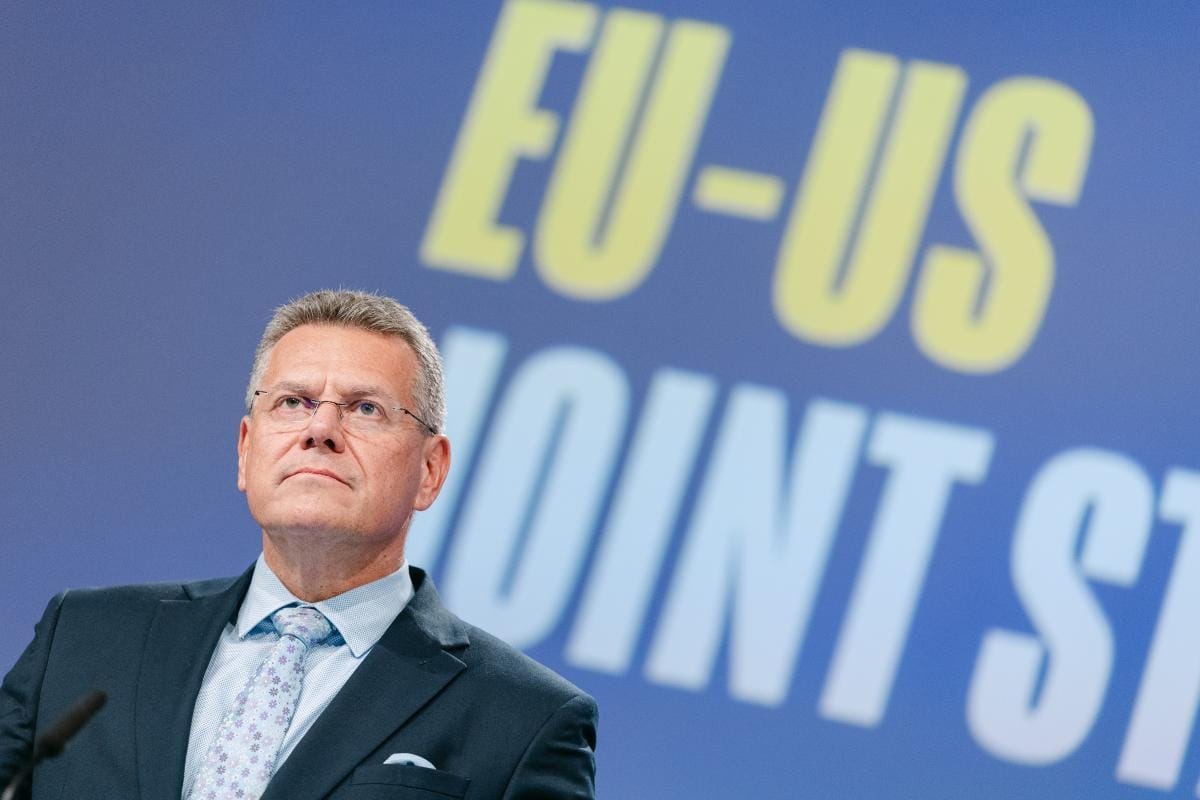
EU first report charting progress on its clinical trials ambitions
The European Commission, the Heads of Medicines Agencies (HMA) and the European Medicines Agency (EMA) have published their first quarterly report tracking progress toward their 2030 targets introduced in 2025 under the Accelerating Clinical Trials in the EU (ACT EU) initiative.
Between January and March 2026, 19 additional multinational clinical trials were authorised above the historical average; the EU’s target is 500 extra multinational trials by 2030. The report also shows improvements in recruitment timelines, with 40.5% of clinical trials now enrolling participants within 200 days of application submission. The long-term goal is to raise this figure to 66% by the end of the decade.
The targets align with those in the EU Biotech Act, which aims to streamline and accelerate clinical trial authorisation procedures across member states. Supporting initiatives such as FAST-EU, a pilot aimed at testing faster evaluation processes for multinational studies.
Marking Clinical Trials Day, European Commissioner for Health and Animal Welfare Olivér Várhelyi stressed the importance of maintaining Europe’s competitiveness. “Europe has the science, Europe has the talent, Europe has high standards,” he said, calling for continued investment in research, innovation and patient-centred clinical development across the EU.
EU commits €73.7 million CEPI 100-day mission
At the World Health Assembly, the EU reaffirmed its commitment to preparedness with a €73.7 million investment in the Coalition for Epidemic Preparedness Innovations (CEPI), supporting vaccine development and pandemic preparedness through to 2027. The '100-day mission' sets the goal of being able to develop a safe and effective vaccine within 100 days of a pandemic declaration. The funding comes from the EU’s Horizon Europe programme.
CEPI says the funding will help accelerate the development of vaccines against priority pathogens and strengthen the world’s capacity to respond rapidly to future pandemics. The investment comes amid renewed concern over infectious disease outbreaks, including the emergence of Ebola caused by the Bundibugyo virus.
Dr Florika Fink-Hooijer, Director General of DG HERA, said: “Ensuring access to medical countermeasures for the most vulnerable is a key EU priority for health emergency preparedness and response.”
Marc Lemaître, Director General of DG Research and Innovation, said the EU was “investing in the full innovation pathway for new vaccines, from research and clinical studies to real-world deployment”.
EQT selected to manage EU Scaleup Europe Fund
The European Innovation Council (EIC) Fund Board has chosen EQT as the preferred fund manager for the €5 billion Scaleup Europe Fund. The Commission describes EQT as a “leading global investment organisation with deep European roots”.
The fund will focus on large late-stage growth financing for strategic sectors, including health biotech and medtech, where companies often require substantial investment to move to the next level. With a planned structure combining up to €1 billion in public funding and wider private investment, including Novo Holdings, the investment company linked to the Novo Nordisk Foundation.
The Scaleup Europe Fund is set to make its first investments in autumn 2026.