Inside EU Health: Parliament supports wastewater revision; eHealth
Commission defends Urban Wastewater Directive against EPP-ECR challenge; EU narrows gap to 2030 health data target by 4% points
Commission defends Urban Wastewater Directive against EPP-ECR challenge
The European Parliament has adopted an EPP-led resolution calling for a delay in implementation and a reassessment of the impact of the Urban Wastewater Treatment Directive (UWWTD).
The resolution focuses on the directive's extended producer responsibility scheme, which requires pharmaceutical and cosmetics companies to cover at least 80% of the costs of removing micropollutants from urban wastewater. EPP lawmakers argue the measure could raise costs for medicine manufacturers, particularly producers of low-margin generic drugs, potentially affecting supply and affordability.
Opening the debate, German EPP MEP Oliver Schenk said: ""Europe needs clean water. But Europe also needs a safe and affordable supply of medicines. These two things must not be played off against each other, they must go hand in hand."
Environment Commissioner Jessica Roswall rejected calls to delay implementation, citing Commission analysis showing the cost of micropollutant removal would be between €2.70 and €3.20 per citizen annually by 2045.
The debate exposed growing divisions between the centre-right and the left and liberal groups. Green MEP Tilly Metz described the EPP's position as "deeply shameful", while S&D's Tiemo Wölken accused conservatives of siding with "powerful lobbying interests".
Medicines for Europe Director General Adrian van den Hoven welcomed the vote, saying access to essential medicines should not be put "at risk" because of a "flawed methodology".
In her closing comments, Roswall reminded MEPs: "Only by 2045 will it be fully in place. So, ladies and gentlemen, that is 20 years from now."
 Catherine Feore
EU narrows gap to 2030 health data target by 4% points
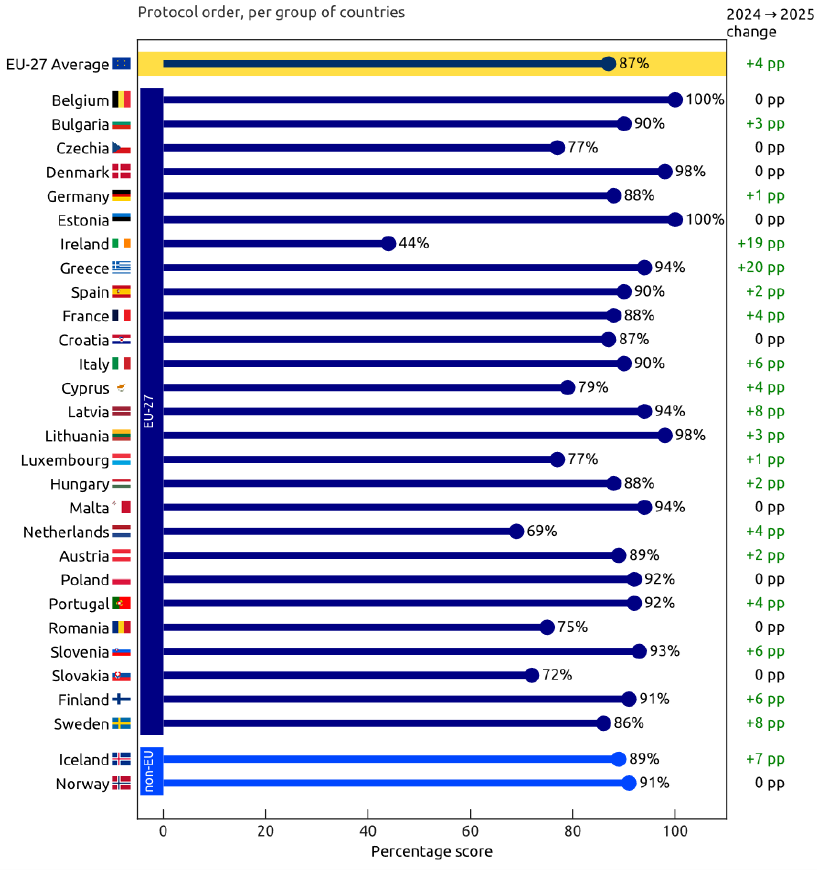
The European Union has made significant progress towards its goal of ensuring all citizens have access to electronic health records (EHRs) by 2030, according to the latest eHealth Indicator Study prepared by Capgemini Invent for the European Commission.
The report shows that the EU-27 achieved an average eHealth maturity score of 87% in 2025, up four percentage points from 83% in 2024. Eighteen member states improved their scores, while Belgium and Estonia maintained a perfect 100% rating.
“All participating countries report having some form of online access service for electronic health records,” the study notes, highlighting the widespread adoption of digital health services across Europe.
Despite the progress, challenges remain. The least developed areas concern access to data on “medical devices/implants and medical images”, often due to technical limitations and fragmented healthcare systems. The report also found that geriatric nursing homes, rehabilitation centres and mental health facilities remain less connected than other healthcare providers.
The study says the forthcoming European Health Data Space (EHDS) Regulation will provide “strong additional momentum” by establishing legal rights and technical standards for access to health records across the EU. With implementation beginning in March 2027, the regulation is expected to accelerate progress towards the Digital Decade's 2030 eHealth target.
The Digital Decade programme will undergo areview in 2026 to evaluate if the 2030 digital targets remain aligned with the latest developments. The study suggests this could be revised given the EHDS and the new evolving policy priorities, notably the EU’s Apply AI Strategy.