
Inside EU Health: Biotech Act; Critical Medicines Act; preparedness
MEPs supportive of draft Biotech report, but divisions over incentives remain; Critical Medicines Act text finalised; preparedness should include all viral families, say international organisations
MEPs supportive of draft Biotech report, but divisions over incentives remain
The European Parliament's first debate on the joint (ITRE/SANT) report by co-rapporteurs Wouter Beke (EPP, Belgium) and Vytenis Andriukaitis (S&D, Lithuania) showed broad support for the EU's need to regain ground lost to the US and China. Beke warned biotechnology had become "deeply geopolitical".
MEPs strongly backed plans to streamline clinical trials, with Peter Liese (EPP, Germany) calling for Europe to be "more harmonised", while Renew's Stine Bosse said the EU should evolve from "a group of trial nations to a trial union".
The most divisive issue was the Commission's proposal to grant a conditional 12-month extension to supplementary protection certificates (SPCs). Beke described the measure as "an important piece of the puzzle" for keeping biotech investment in Europe.
The Commission's Thomas van Cangh insisted the extension was "not a gift", stressing companies would qualify only if they carried out research and manufacturing in Europe.
MEP Tiemo Wölken (Germany) exposed rifts in the S&D's position, warning that longer exclusivity could delay biosimilar competition and increase healthcare costs. Closing the debate, Andriukaitis urged colleagues to keep discussions "calm" and "evidence-based", saying SPCs should be considered alongside broader measures to boost research, manufacturing, investment and patient access.
 Catherine Feore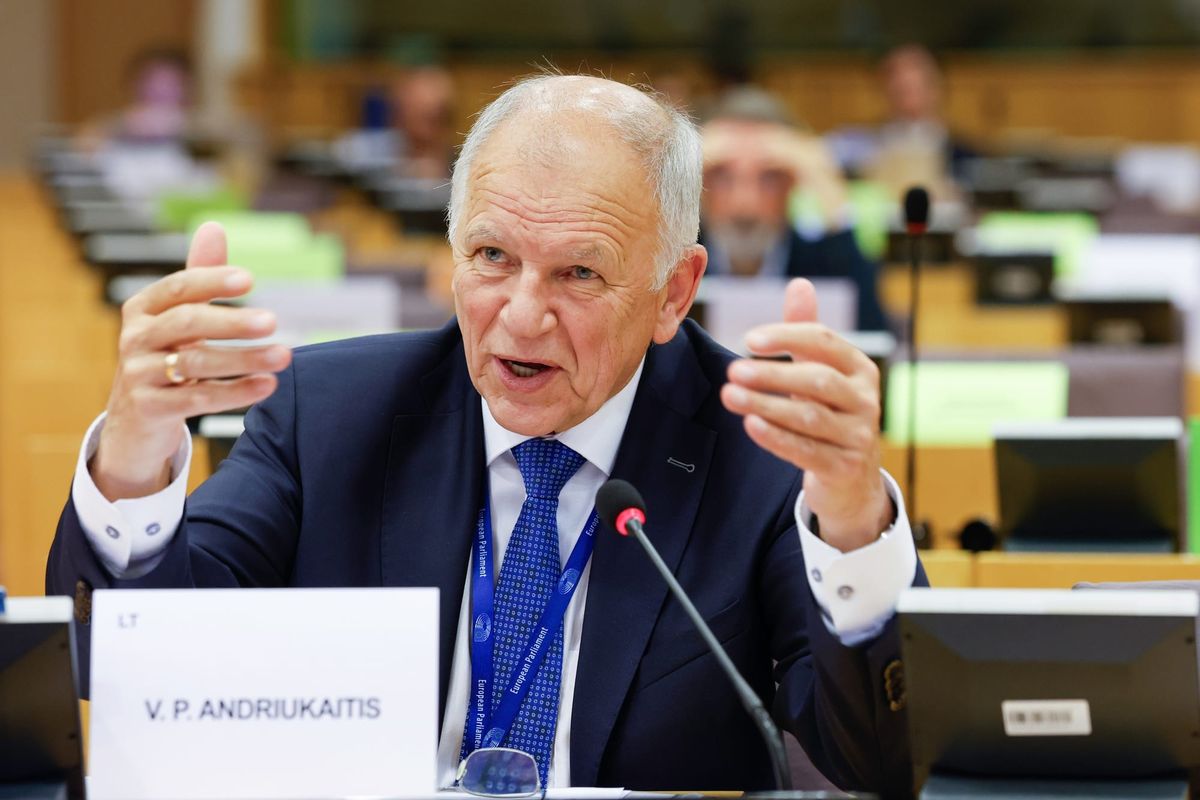
Critical Medicines Act text finalised
This afternoon, EU ambassadors agreed on the final text of the Critical Medicines Act. EU lawmakers reached a provisional agreement on the Critical Medicines Act aimed at boosting Europe’s pharmaceutical resilience in the early hours of 12 May after more than 12 hours of negotiations.
The final text is presented to ambassadors after technical work and “legal scrubbing” is completed. In one of the final acts of the Cypriot Presidency of the EU, Georgios Ioannides sent the agreed compromise text to the Chair of the Parliament’s Public Health Committee, MEP Adam Jarubas (EPP, Poland) with the hope that it would “enable us to reach an agreement at first reading”.
 Catherine Feore
Preparedness should include all viral families, say international organisations
Several international organisations, including the Coalition for Epidemic Preparedness Innovations (CEPI), have called on governments to accelerate action on pandemic preparedness after the ongoing Bundibugyo ebolavirus outbreak exposed persistent gaps in the world's ability to respond to emerging infectious diseases.
In a joint statement published on 30 June, the partners said the outbreak demonstrates that future pandemic threats cannot be fully predicted and that preparedness must extend across viral families, including rare and neglected pathogens. They warned that shortages of ready-to-deploy vaccines, therapeutics and diagnostics, together with limited research and manufacturing surge capacity, continue to slow outbreak response.
The organisations urged states to use the UN High-Level Meeting (HLM) on Pandemic Prevention, Preparedness and Response (PPPR) in September to strengthen political and financial commitments for research and development, equitable access to medical countermeasures and sustainable preparedness financing.
The European External Action Service (EEAS) set out its three main priorities for the HLM on 9 June. The EEAS called for more coordinated global health architecture, with the WHO at its centre (while respecting national sovereignty), progress on the Pandemic Agreement's pathogen access and benefit-sharing (PABS) annex and improved tracking of pandemic preparedness financing and regular progress reviews.
The statement was signed by the International Pandemic Preparedness Secretariat (IPPS), CEPI, the Foundation for Innovative New Diagnostics (FIND), the Drugs for Neglected Diseases initiative (DNDi) and Unitaid.