
EU Kids Act targets social media’s impact on children’s mental health
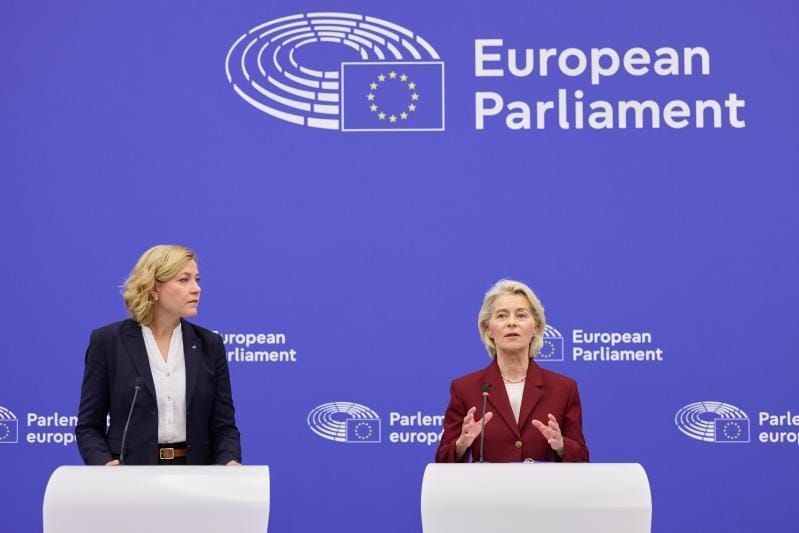
The European Commission unveiled its EU Kids Act on Thursday (17 September), proposing sweeping restrictions on children’s access to social media and new obligations on technology companies to address growing concerns over young people’s mental health and online safety.
The proposal would prevent children under 13 from accessing social media, while 13- and 14-year-olds could use restricted “mini accounts” under parental supervision. From the age of 15, teenagers would be able to open their own social media accounts. The legislation also requires platforms to prove their services are safe for minors, reversing the burden of proof from regulators to technology companies.
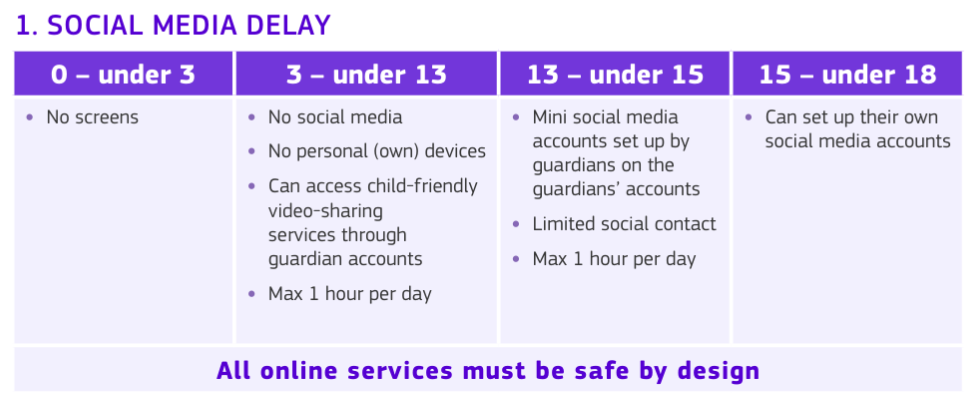
But the legislation goes beyond age limits. Platforms offering social media, video-sharing services, online games and AI services to minors would have to be “safe by design”. Addictive features, including infinite scrolling, reward mechanisms, profiling-based recommendation feeds, and push notifications during sleeping hours, would be restricted, while minors’ accounts would be private by default.
“Today, our children are engaging with the most sophisticated technologies ever created. Technology that was never created with their wellbeing in mind,” Commission President Ursula von der Leyen said. “Our Kids Act is reversing the burden of proof; it is for platforms to show they are safe by design.”
During the press conference, von der Leyen said France’s Constitutional Court ruling on social media restrictions for minors had shaped the proposal in part. She said the Commission had drawn two key lessons from the judgment: making “safety by design” an explicit legal obligation for platforms and avoiding a “cliff edge” where children would go from no access to unrestricted access overnight.
Instead, the Commission opted for a gradual transition through supervised “mini accounts” before full autonomy at age 15. “We have found a very good solution now with a lot of parental supervision, the mini account, and then [access] with maturity, but ‘safety by design’ as a backup, protecting children,” von der Leyen said.
 Catherine Feore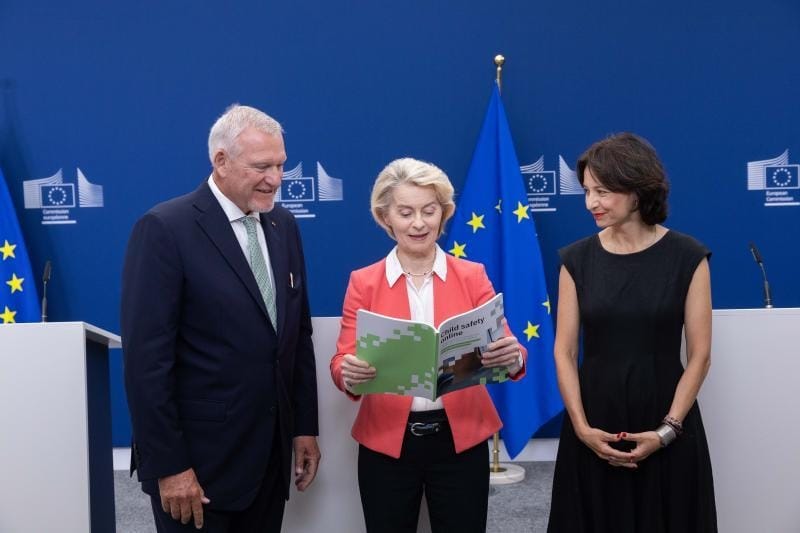
Executive Vice-President Henna Virkkunen said the legislation would allow children to “learn, stay connected and explore” online while pressuring platforms to prove their services do not cause harm.
The potential mental health impact, however, is difficult to predict. Research accompanying the proposal acknowledges that social media can contribute to cyberbullying, exposure to harmful content, self-harm material and other mental health risks, while also helping young people build social connections, reduce isolation and access peer support networks.
Australia’s experience suggests age restrictions may be easily circumvented. A study published in The BMJ (British Medical Journal) found little evidence that Australia’s world-first Social Media Minimum Age Act had produced immediate reductions in social media use among under-16s during its first three months. More than 85% of under-16 participants still reported using restricted platforms.
The Socialists and Democrats welcomed the proposal as “a good first step”, arguing that responsibility should not fall on parents alone.
“The digital world offers incredible opportunities, but it also creates new risks - especially for children,” S&D president Iratxe García Pérez said. “Technology must serve people - not the other way around.” The group also called for a broader Digital Fairness Act to tackle harmful business models affecting minors and adults.
The Greens/EFA Group also backed the legislation while urging the Commission to go further by addressing addictive platform design for all users. “Social media must become safe by default for young people - because their mental health is at stake,” said MEP Alexandra Geese, praising the proposal’s crackdown on infinite scroll and attention-based recommendation systems.
Fellow Green MEP Kim van Sparrentak argued that parents had been left “powerless against tech companies” and warned that simply banning children without reforming platforms’ business models would leave wider problems unresolved.
The European Parliament and EU member states will now negotiate the proposal before it can become law.