EU health ministers may demand further review of Urban Wastewater rules
Tomorrow, health ministers will discuss an agreed position on the European Biotech Act I directive, but the real discussions may lie elsewhere
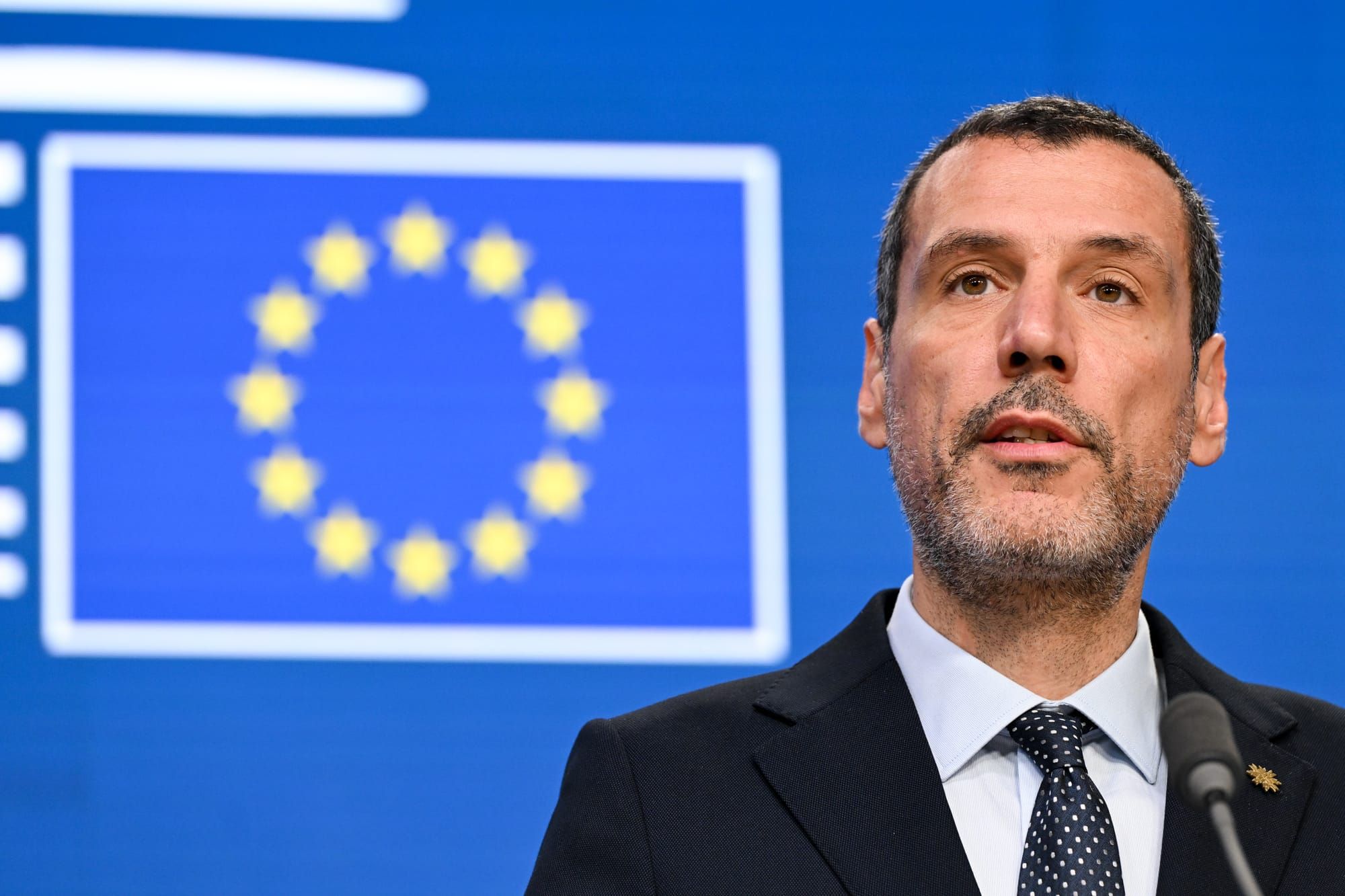
Tomorrow (16 June) the Employment, Social Policy, Health and Consumer Affairs Council (Health) will meet in Luxembourg. Discussions around the Biotech Act and Medical Devices are on the table, but a paper tabled by Germany may prove a turning point for discussion on the Urban Wastewater Treatment Directive.
Germany's paper, which has wide support, is highly critical of the Commission’s study updating the potential impact of extended producer responsibility on medicinal products, particularly generics. While it thanks the Commission for its work, it says that health ministers had expected that the review would entail “an in-depth examination of the financial impact on the national health systems and on the availability of medicinal products” and that it did not meet “these expectations”.
The paper calls for a mechanism to ensure that cost burdens can be controlled financially and for a standardised approach, “insofar as possible... with as little bureaucracy as possible" should be adopted across the EU. The paper also calls on upcoming evaluations to consider whether products other than cosmetics and medicinal products should be included.
Implementation, it states, should not jeopardise the supply of critical medicines, and the affordability of certain products should be “taken into consideration”.
 Catherine Feore
Over lunch, ministers will take part in an informal discussion on the topic of ‘Strengthening Europe’s pharmaceutical resilience and strategic autonomy’. Trump’s “Most-Favored Nation” pricing is already having an impact and some ministers say this requires a “fundamental review” in the EU’s approach. The Beneluxa Initiative calling for “deeper cooperation to further strengthen and support the way in which pricing and reimbursement (P&R) is carried out in Europe”. While “respecting national competencies” they propose quicker uptake of EU Health Technology Assessment outcomes and streamlining of P&R procedures on a mutually agreed collaborative basis.
 Catherine Feore
Biotech Act I - Directive
Ministers are expected to agree on a general approach to the Biotech directive, which is an important but smaller part of the wider provisions of the multifaceted Biotech Act I regulation.
The directive covers expediting procedures for the use of certain genetically modified micro-organisms (GMMs) and for the processing of organs, including parts of organs, in line with the latest clinical developments.
The Council wants risk assessments of GMMs to focus on the characteristics and genetic changes of the final product rather than the technique used to create it. It aims to streamline authorisation procedures, reduce assessment and monitoring requirements for certain low-risk GMMs. The Council proposes addressing practical enforcement challenges, such as determining which GMMs are eligible for expedited approval under delegated and implementing acts.
For organs, the aim is to ensure that high standards of quality and safety are upheld while facilitating innovative biotechnological techniques that can improve organ preservation, processing, and potentially transplantation outcomes. Member states have agreed to communicate with each other and with the Commission on their organ processing via a joint platform.
Biotech Act I - Regulation
The Cypriot Presidency will hand over negotiations on the regulation to the Irish, who have declared it their top priority. The regulation is more substantive, containing proposals on everything from clinical trials to strategic projects. The ministers will have their first political debate on the proposal and “provide strategic guidance for the next stages of the discussion”, said a senior diplomat.
In the meantime, the European Parliament’s co-rapporteurs, MEP Wouter Beke (EPP, Belgium) on the industry (ITRE) committee and MEP Vytenis Andriukaitis (S&D, Lithuania) of the SANT committee, are front-running the Council, having already submitted their draft report, which will be discussed in their respective committees in the near future.
 Catherine Feore
Medical and in vitro devices progress report
The Cyprus presidency will present its progress report on the proposed regulation simplifying the rules on medical and in vitro diagnostic devices. The report outlines the many areas where opinions diverge. It’s clear the Irish have much to resolve before there is an agreed ‘general approach’.
EU member states broadly support the European Commission’s proposed overhaul of the Medical Devices Regulation (MDR) and In Vitro Diagnostic Medical Devices Regulation (IVDR), but discussions among national delegations have exposed divisions on several key issues.
While delegations welcome the European Medicines Agency’s (EMA) new role in providing scientific, technical and administrative support, several member states are seeking a clearer division of responsibilities between EMA and the Medical Device Coordination Group (MDCG).
Artificial intelligence is another point of discussion. Many countries support the Commission’s aim of avoiding regulatory overlap by making the medical devices framework the primary regime for AI-enabled devices. Others favour additional sector-specific AI requirements and further clarification of how cybersecurity rules should apply under existing proposals.
Delegations are also divided over proposed fee reductions for micro and small manufacturers. While supporting efforts to ease the burden on SMEs, several countries warn that lower conformity assessment fees could threaten the financial sustainability of notified bodies. Some have questioned the Commission’s role in setting fee structures.
The proposed category of “well-established technology” devices has received broad support, but member states say the criteria require further refinement and clarification before the concept can be applied consistently.
Other issues under discussion include streamlining classification procedures, clarifying the role of expert panels, the costs and governance of Joint Assessment Teams (JATs), the extensive delegated powers proposed for the Commission, international cooperation and ensuring simplification measures do not weaken patient safety oversight.
The Parliament’s report will be led by MEP Oliver Schenk (EPP, Germany) and is unlikely to be adopted by the Parliament before 2027.
 Catherine Feore