Generic makers appeal to fix tax on treatment
Medicines for Europe to appeal the decision on its challenge to Urban Wastewater Treatment Directive
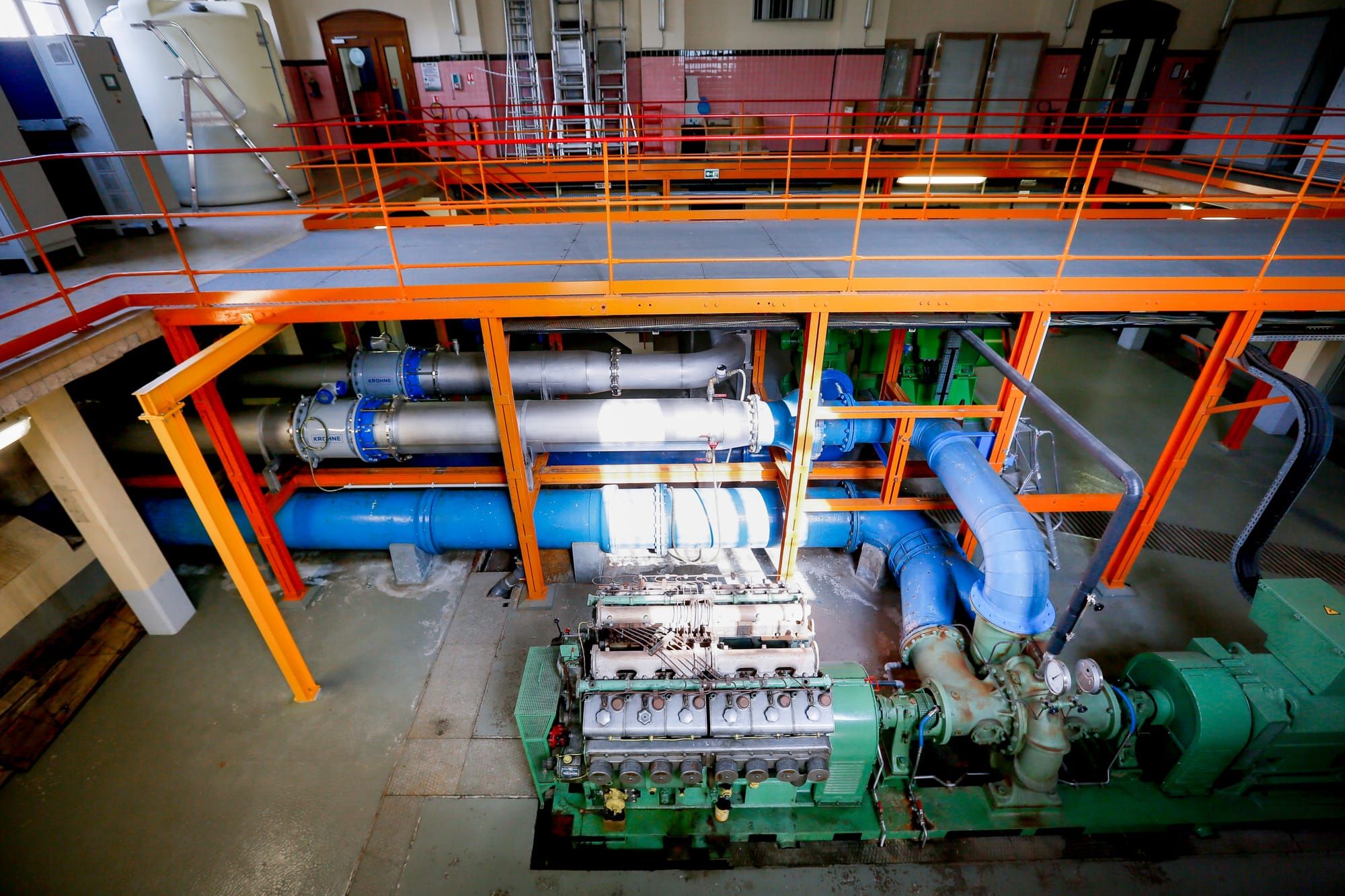
Medicines for Europe, which represents the generic and biosimilar industry, is fighting tooth and nail to address what it considers disproportionate costs that will be imposed on the pharma sector by the current extended producer responsibility (EPR) scheme embedded in the Urban Wastewater Treatment Directive (UWWTD).
Yesterday, Medicines for Europe announced its decision to challenge the Court of First Instance's decision that it lacked legal standing to challenge the UWWTD. The technical decision meant that the Court did not address the substance of their arguments.
The Directive, which was adopted with little fanfare in 2024, has attracted growing controversy. Pharmaceuticals are one of the sectors - along with cosmetics - which have been identified in the legislation for an extended producer responsibility levy. ‘Extended producer responsibility’ will apply by the end of 2028 and cover 80% of the costs of introducing and operating the necessary quaternary treatment to remove micropollutants.
 Catherine Feore
In September: Franco-German “programme d’action” called for a “targeted revision” of the UWWTD legislation
Medicines for Europe’s Director General, Adrian van den Hoven, warns of the crushing effect this could have on the generics sector which, while accounting for 70% of dispensed medicines and 90% of critical medicines used in the EU, only accounts for 19% of overall market value. For EU producers of generics, even relatively minor price changes can prove existential, given low profit margins and price-cap policies. Add to this mix a geopolitical energy crisis and supply disruption, and you have a perfect storm.
At the same time, the EU is negotiating the Critical Medicines Act (CMA) to address medicine shortages. Over 90% of the medicines on the EU’s critical medicines list are generics. The CMA seeks to reduce dependence on third-country suppliers and is considering supporting strategic projects and updating procurement rules to promote EU production. The UWWTD exacerbates an already precarious situation.
Catherine Feore
There has been concern that since shortages are proving more manageable, the impetus behind the act will be lost, but the potential for the disruption of supply chains due to the conflict in the Middle East is likely to sharpen minds and revive concerns about Europe’s dependency on non-EU manufacturing
While acknowledging that micropollutants are a real problem and that quaternary treatment is needed, Medicines for Europe questions the Joint Research Centre (JRC) analysis underlying its assessment on several levels. Firstly, they believe that it overlooks other industries that contribute to micropollution, such as, cleaning products and pesticides, among others. Secondly, it calls into question the JRC’s reliance on computer modelling rather than laboratory tests. Beyond the accuracy of the source and the scale of the problem, it calls into question the assessment of treatment costs.
There appears to be wide agreement that the Commission has seriously underestimated the costs of treatment. EurEau, which represents the European Federation of National Associations of Water Services and has opposed proposals for a so-called ‘stop-the- clock’ initiative proposed by some MEPs to delay implementation, has estimated that the Commission’s figure of €1.2 billion/year is three to ten times lower than their estimate of €3.6 to €11.2 billion/year. National authorities, including the Dutch, German, and Spanish, have estimated their national costs to be 6 times, 4.3 times and 3.2 times more than the Commission estimate, respectively.
Catherine Feore
EU Health Commissioner Várhelyi says he will do “everything in his power” to carry out a rebalancing, of obligations under Urban Wastewater Treatment Directive
Which polluter?
Like all European industries, the pharmaceutical industry must adhere to environmental standards in its production. What the UWWTD focuses its attention on is the actual end products, which presents two major problems when it comes to pharmaceuticals. Normally, a polluter pays provision should shift consumer demand or incentivise the production of greener products.
Medicines for Europe represents prescription medicines, so medicines that doctors prescribe for their patients. van den Hoven says that the EPR is basically a levy on the human consumption of medicines, “not everything you swallow or inject will be consumed or metabolised in your body, so part of it is excreted by the patient, and this is what this EPR fee is about. So the patient takes Metformin, Ciprofloxacin, or Leviracetam, and part of it is excreted into the wastewater. Of course, it is a chemical residue originating from a medicine that goes into the wastewater”. He says it cannot be considered pollution, as it is a byproduct of a necessary medication. That is not to say that it can't be both, which is where at least one of the problems lies.
Secondly, the steering effect to greener products presents particular problems in the pharmaceutical sector. The modification of an active ingredient in a medicine would have to be approved by the European Medicines Agency to ensure it remains effective; in effect, it would no longer be a generic but a new medicine that would require expensive research, clinical trials, and formal approval. Putting costs aside, this would probably take years to achieve.
There are no easy choices, van den Hoven says he understands that it may be a struggle for municipalities or public utilities to cover the cost, but adds: “that is not a justification for placing all of this cost on generic medicines - because inevitably, the cost will land then on health insurance. In Europe, I'd say about 95% of health insurance is public. In the end, you're just transferring from one public cost to another public cost.”
He points to the figures in the JRC study that estimate the cost as €3/person/year in Europe, adding that “this is what they claim”. If this is the cost he asks, “Is this really impossible?”
The European Parliament is considering a motion for resolution on the Directive, originally tabled for this weeks’ plenary it has been delayed. So far, the Commission has resisted growing pressure to delay or revise the proposal, but it is facing strong headwinds.
Catherine Feore