
ECDC highlights HPV vaccination for European Immunisation Week
European Centre for Disease Prevention and Control (ECDC) is marking European Immunisation Week 2026, by shining a spotlight on HPV vaccination
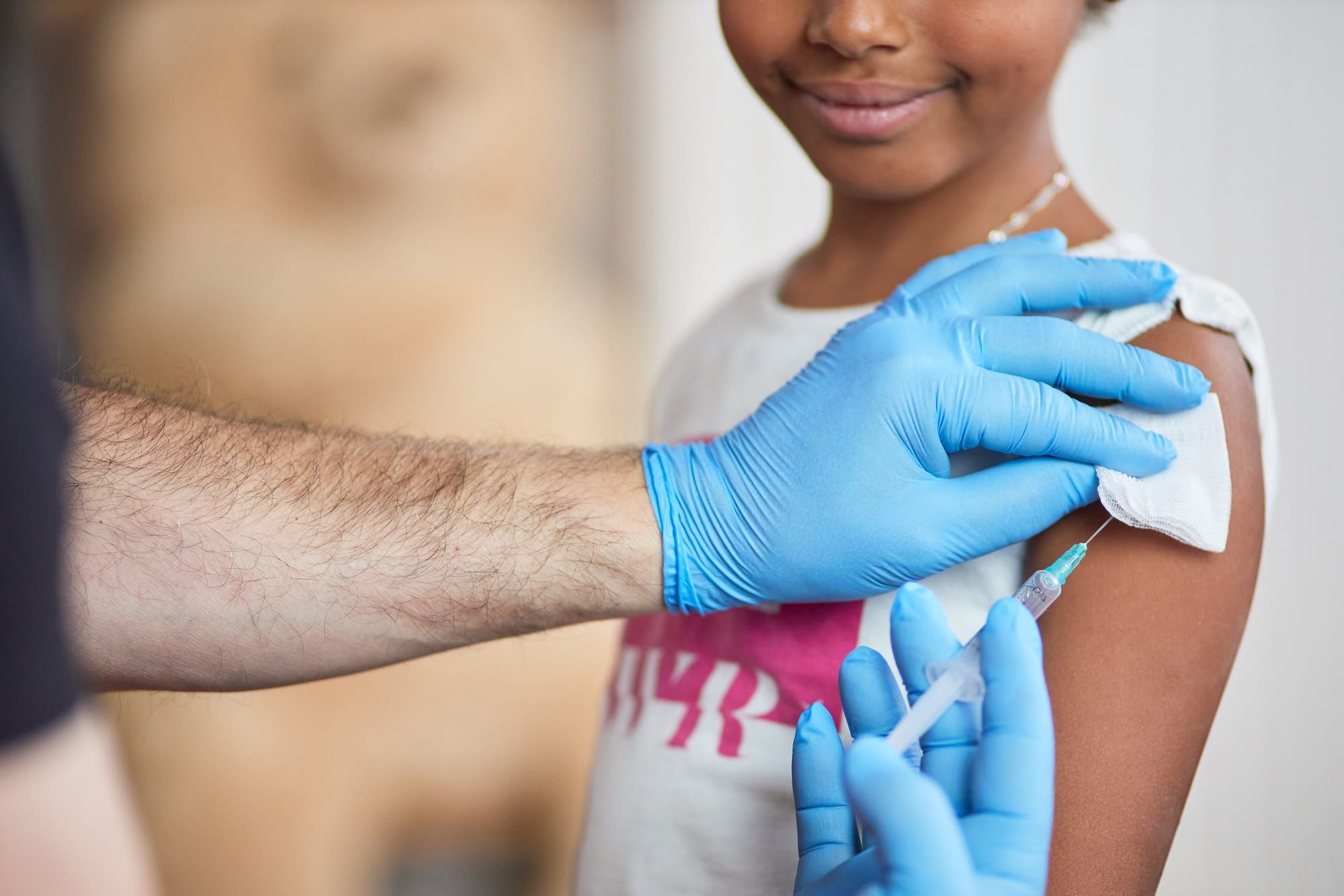
All countries in the EU and the European Economic Area now recommend HPV vaccination for both adolescent girls and boys. A Council recommendation on vaccine-preventable cancers in 2024 has set a target of 90% HPV vaccination coverage among girls by age 15 by 2030. According to the latest report from the European Centre for Disease Prevention and Control, Iceland, Portugal and Norway have already achieved this goal.
“The elimination of cervical cancer in the EU/EEA is becoming an achievable goal, thanks to the HPV vaccination programmes. The progress we are seeing across Europe demonstrates what can be accomplished when countries invest consistently in effective immunisation strategies,” said ECDC Head of Unit, Directly Transmitted Diseases and Vaccine Preventable Diseases, Bruno Ciancio.
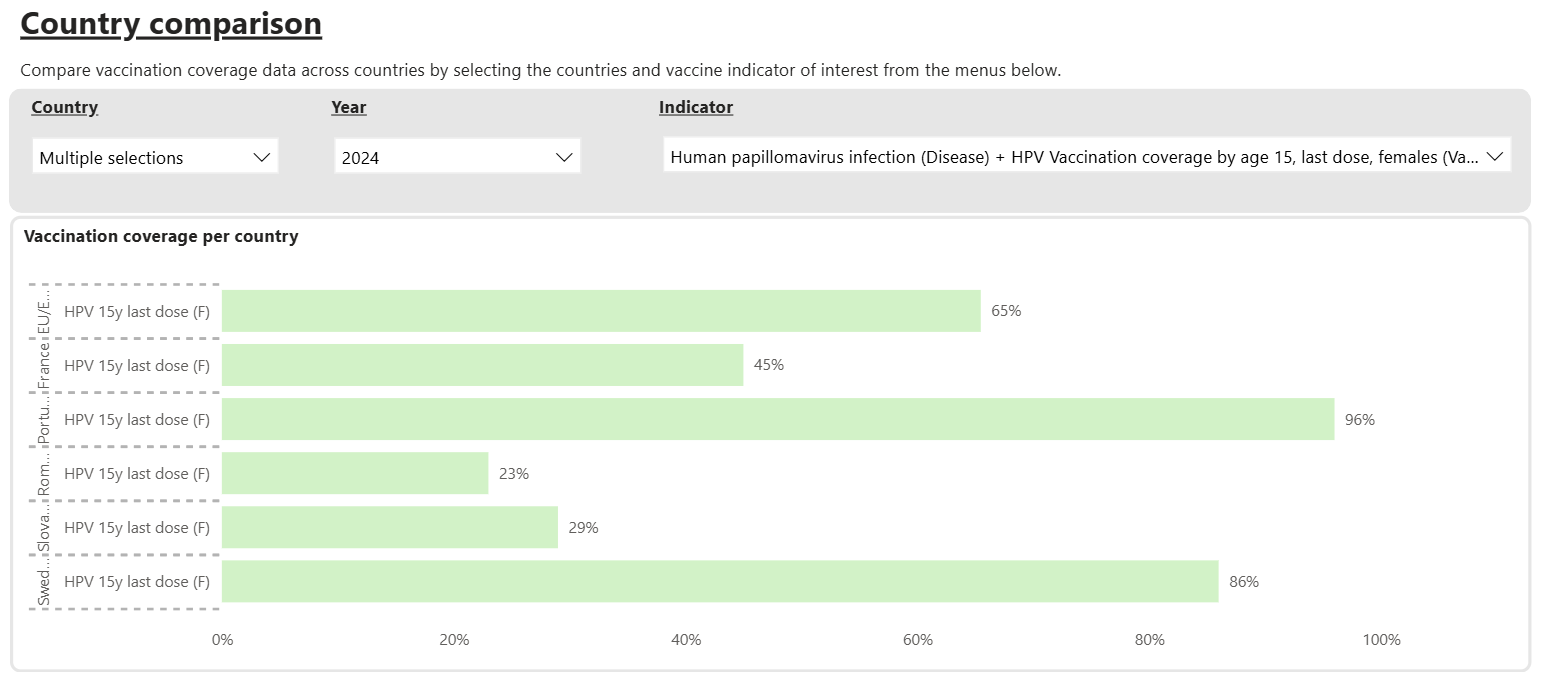
The European Centre for Disease Prevention and Control is also launching a new vaccination dashboard. A comparison of selected countries - France, Portugal, Romania, Slovakia and Sweden - against the EU/EEA average shows that progress remains uneven, with significantly lower vaccination levels in countries such as Romania and Slovakia. The dashboard also includes data on measles, rubella and hepatitis B vaccination.
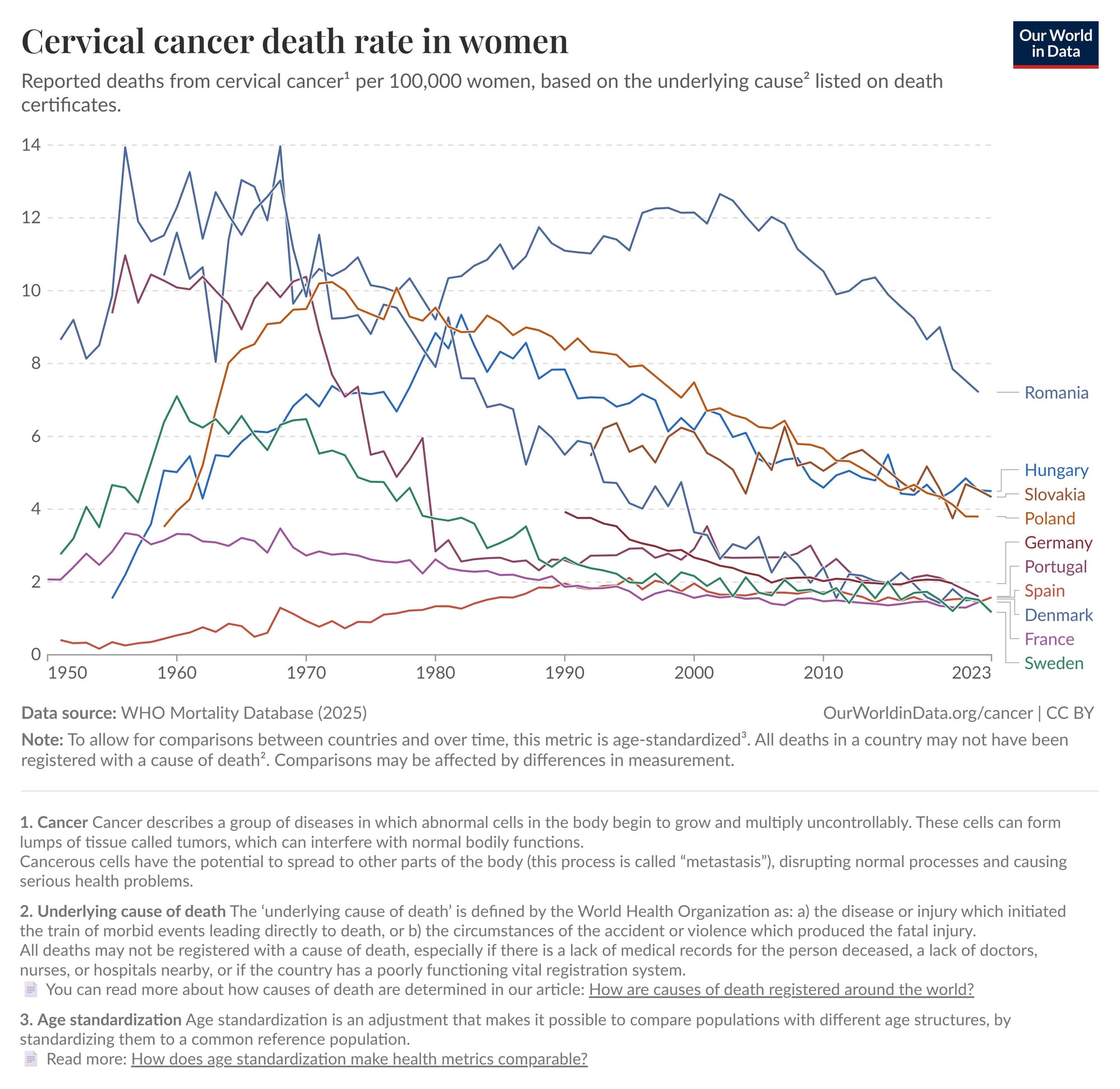
Evidence from Sweden, Denmark and the United Kingdom shows that the vaccine is highly effective in reducing precancerous lesions and cervical cancer rates among vaccinated populations. The data so far also shows that protection doesn’t appear to wane.
Early vaccination is especially important. A major Swedish study found that girls vaccinated before age 17 saw an 88% reduction in cervical cancer risk. School-based campaigns were found to achieve higher coverage among both girls and boys compared to other delivery methods.
The Council recommendation on vaccine-preventable cancers adopted in June 2024 highlighted that in the EU and the European Economic Area (EEA), there are around 28,600 cases of cervical cancer and 13,700 deaths from cervical cancer every year. Infection with HPV can also lead to other cancers in both women and men (vulvar, vaginal, penile and anal cancers) as well as head-and-neck cancers.
“We are closely monitoring this progress and actively supporting countries to accelerate uptake and move faster towards cervical cancer elimination,” said Ciancio.
The report concludes that sustained political commitment and funding to strengthen delivery, monitor performance, and target under-immunised populations remains the single most important determinant of reaching and maintaining the high coverage needed for cervical cancer elimination.