
EU offers COVID-style app for age verification
The EU is introducing a privacy-focused age verification app, but faces challenges aligning member states
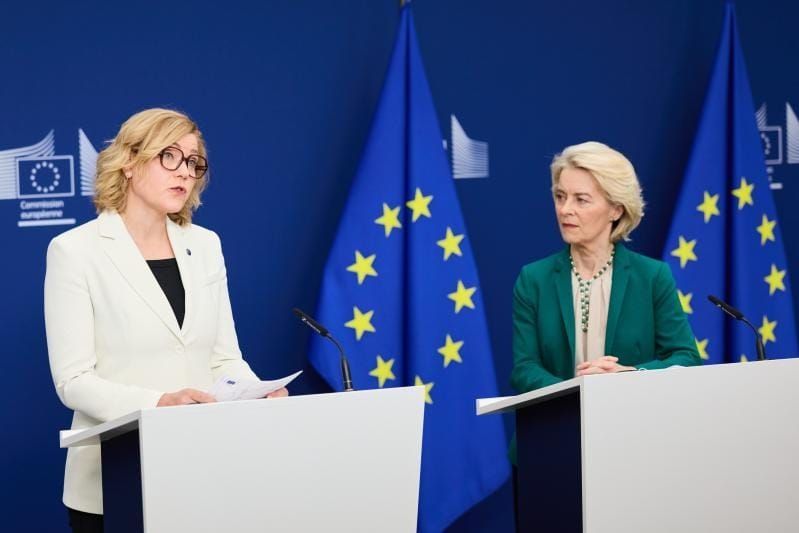
The European Commission has presented an age verification app aimed at protecting minors online. Announced by the Commission President, Ursula von der Leyen, the app allows users to anonymously verify their age when accessing online services, with the goal of blocking harmful content without compromising privacy.
The initiative follows a political commitment first made in von der Leyen’s State of the Union speech in September, where she elevated child safety online as a key EU priority. “When it comes to the safety of children online, the situation is extremely worrying. One child in six is bullied online,” she said. She also pointed to addictive platform design and growing screen time, warning that such an environment “does not benefit young developing minds”.
“Our technical solution is ready,” von der Leyen said, describing a system that builds directly on the EU’s COVID certification app, repurposing a model that enabled secure, cross-border verification during the pandemic. Like its predecessor, the new tool is designed to be user-friendly, interoperable, and widely adoptable.
Mixed picture
Several Member States, including France, Spain, and Greece, are already considering national legislation to impose age limits on social media. France has already notified the European Commission of its proposal. Other countries remain hesitant, wary of overregulation and potential impacts on digital rights.
This divergence underscores the difficulty of achieving a “harmonised European approach” which risks a more fragmented digital market. Von der Leyen is set to participate in an online conference today at 17:00 on online safety, organised by President Emmanuel Macron.
To navigate these tensions, the Commission has convened an expert group on children’s online safety, which is expected to report in the coming months. Its findings - and pressure from member states - will determine whether the EU moves forward together or whether a patchwork of rules emerges.
Meanwhile, enforcement under the Digital Services Act is ramping up. Commission Vice President Henna Virkkunen, pointed to steps against major platforms, highlighting action against TikTok over “addictive design” elements such as infinite scroll and autoplay, and similar scrutiny of Facebook, Instagram, Snapchat, and Shein. It has also moved against several pornographic platforms for lack of proper age verification.
Still, critics argue that enforcement actions, while high-profile, have yet to fundamentally change platform design or business models.
The age verification app signals that the EU may have a viable mechanism, but the ongoing challenge will be balancing child protection, privacy, and a unified approach.