
Parliament budget committee backs €10bn EU4Health fund
The European Parliament’s powerful Budget Committee endorsed their negotiating position on the 2028–2034 EU budget
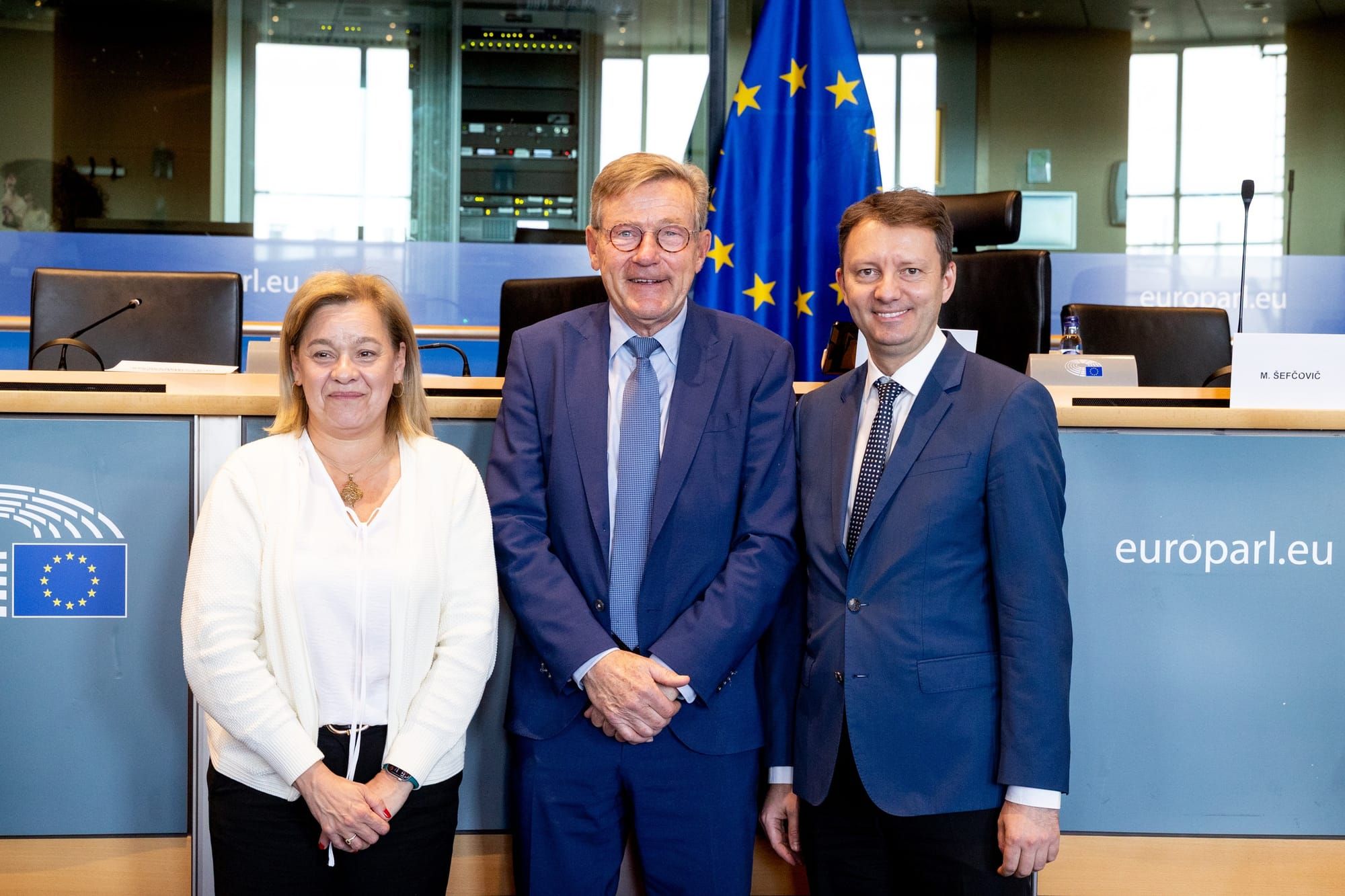
On Wednesday (15 April), MEPs on the European Parliament’s powerful Budget Committee endorsed their negotiating position on the 2028–2034 EU budget - known as the MFF – Multiannual Financial Framework - including a breakdown of the amounts they want to allocate to each EU funding programme.
10% increase in overall budget
The Parliament wants the budget set at 1.27% of EU GNI, with debt servicing for the NextGenerationEU recovery fund (0.11% of GNI) kept outside the budget ceilings. This represents a 10% increase compared to the Commission’s proposal.
“We propose a European budget that is both sufficient and predictable for beneficiaries, addressing the shortcomings of the Commission’s initial proposal. Through a moderate 10% increase, we ensure adequate resources for new priorities,” said MEP Siegfried Mureșan (EPP, Romania), one of Parliament's co-rapporteurs.
Ringfenced €10 billion EU4Health
Mureșan said that many parliamentary committees had demanded increases in areas where support is very broad among MEPs. This will be funded by raising the Competitiveness Fund from €207 billion to €234 billion.
The first area he highlighted was the EU4Health programme, where Parliament wants a ring-fenced €8.9 billion fund* (Parliament is calling for €10,05 billion in current prices, which is equivalent to EUR 8,90 billion in 2025 constant prices). The Horizon research fund will also be increased to €177 billion (+€25 billion compared to the Commission proposal). Horizon currently funds health research in many fields from digital innovation in health to cancer research.
The European Social Fund and Structural Funds also have the potential to finance health-related measures, which were defended by Parliament in both their amounts and their mechanisms.
“Common agricultural policy, cohesion funds, the European Social Fund – these are not relics of the past. They are the backbone of European solidarity. New challenges cannot erase responsibilities. We want a budget that works for regions, beneficiaries and for people. Horizon Europe, Erasmus+, civil protection – these programmes do not merely serve today's needs; they shape Europe's future. But ambition without resources is empty,” said co-rapporteur MEP Carla Tavares (S&D, Portugal).
Mureșan added that vulnerable groups should continue to be supported by the European Union.
Proposed increases to the EU Civil Protection Mechanism and health preparedness (UCPM+) +1.74bn programme and the Global Europe programme +24.06bn are other areas where health interests have been defended by Parliament.
Own resources
MEPs support creating new 'own resources' to repay NextGenerationEU debt and finance the EU budget. The current budget is largely dependent on national contributions and, to a lesser extent, a portion of VAT income.
MEPs back the Commission’s 'basket approach' for new revenue sources that are considered - by the Commission, if not member states - as being independent of national budgetary decisions. The co-rapporteurs stress that these must be adopted together with the next MFF and should aim to generate around €60 billion annually.
The debate on additional own resources is already encountering difficulties, with the revised Tobacco Taxation Directive facing strong opposition from some countries.
 Catherine Feore
MEPs say that member states need to reach an agreement on these new resources and propose alternatives if some are dropped from the list. Among the possible alternatives Parliament has suggested are a digital services levy, an online gambling levy, an extension of the Carbon Border Adjustment Mechanism (CBAM), or a levy on crypto-asset capital gains.
“We need new, genuine own resources to fund Europe's enhanced responsibilities,” said Carla Tavares (S&D, Portugal), co-rapporteur.
Next steps
Parliament will vote on the proposal in its next plenary session on 29 April. This will form the basis of negotiations with member states in the Council, which is deep in its deliberations and far from a common approach at this moment. Parliament ultimately holds a strong card, as it has the power to veto the entire budget.
*This article was updated at 10:45, 16 April, to reflect that the Parliament is calling for €10,05 billion increase in current prices, which is equivalent to € 8,90 billion in 2025 constant prices.