
Inside EU Health: Support for health NGOs; Europe’s East-West healthcare divide; Hungarian health minister
European Patients’ Forum welcomes MEP support to restore funding for health NGO’s; Europe’s East-West healthcare divide; From viral victory dance to cabinet role, Hegedűs named as new Hungarian health minister
European Patients’ Forum welcomes MEP support to restore funding for health NGO’s
The European Patients’ Forum (EPF) have welcomed a letter by MEPs calling for the European Commission to restore operating grants under the EU4Health Programme. The MEPs say that it has been a “particularly challenging year” for health NGOs, with “staff cuts,” “reduced activities,” and even “office closures”.
“The broad cross-party support reflects a clear recognition that patient organisations are a fundamental component of an inclusive and effective European health policy framework,” said EPF Executive Director, Valentina Strammiello.
EPF argue that the cuts come at a time when health organisations could be making a meaningful contribution to health files that are being negotiated and implemented. Strammiello says that the European Commission calls on the NGOs to inform policies and yet their contribution is “expected without the support needed to sustain it”.
MEPs stressed that grants (€9 million annually) represent only “around 1%” of the programme, making their removal a “political choice.” They argue project funding cannot replace structural support, as it is “narrow” and “time-bound.” Operating grants ապահով “time, continuity and organisational capacity” for NGOs to contribute expertise, represent patients, and support policymaking.
The letter let by Christophe Clergeau MEP (S&D Vice-President for the SANT Committee) urge reinstating funding in 2026 and improving transparency. Signatory Christophe Clergeau calls for swift action to “safeguard” civil society’s role.
Europe’s East-West healthcare divide
A study commissioned by an EFPIA (pharma industry) Central and Eastern European (CEE) task force explores the gaps East-West healthcare gap. The differences are particularly stark when a comparison is made between the EU’s big four ‘EU4’ countries - Germany, France, Italy, and Spain - and CEE countries.
Public healthcare spending in CEE remains significantly lower, averaging €1,618 per capita in 2023, compared with €3,221 in the EU4, roughly half. This gap is mirrored in health outcomes: life expectancy is five years shorter on average, while treatable mortality is approximately 137% higher.
One of the impacts is slower access to new drugs
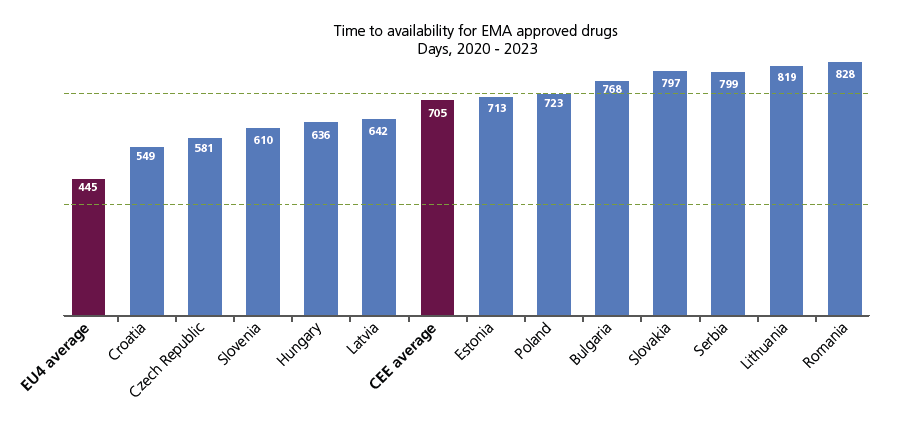
Recent years have seen health and pharmaceutical spending in CEE growing faster than in Western Europe, especially in Czechia and Slovenia, which approach the EU average in health investment.
Projections suggest that Slovenia, Poland, Croatia, and Bulgaria could reach EU4-level investment by 2040 if current trends continue. However, the study argues that targeted policy action will be essential, particularly in countries lagging behind.
The paper is also critical of “clawbacks” which most states use as a way to cap their spending on pharmaceuticals. This has been a regular refrain from the pharma industry.
The study argues that higher investment yields broader economic benefits, boosting labour participation, reducing the disease burden, and enhancing productivity.
 Catherine Feore
From viral victory dance to cabinet role, Hegedűs named as new Hungarian health minister
Hungary’s new prime minister Péter Magyar introduced the first seven ministers for his incoming government. Among them, Zsolt Hegedűs, as widely predicted to become Health minister.
I am pleased to introduce the first seven ministers of the TISZA government:
— Magyar Péter (Ne féljetek) (@magyarpeterMP) April 20, 2026
Szabolcs Bóna – Agriculture and Food
Zsolt Hegedűs – Health
András Kármán – Finance@_OrbanAnita – Foreign Affairs
László Gajdos – Living Environment
István Kapitány – Economy and Energy
Romulusz… pic.twitter.com/6wLE2DnQ4S
Hegedűs became an internet sensation when celebrating Tisza’s landslide win over Viktor Orbán’s Fidesz party. However, he is a distinguished orthopaedic surgeon, who also has a British connection, having worked in the UK’s National Health Service for ten years.
In 2016, he was one of the leaders of a letter calling for an end to informal cash payments in Hungarian healthcare and was brought on board as Tisza’s chief healthcare expert in July 2025. The party’s manifesto set out the ambition of increasing healthcare spending to 7% of GDP by 2030, which is currently around half the EU average.
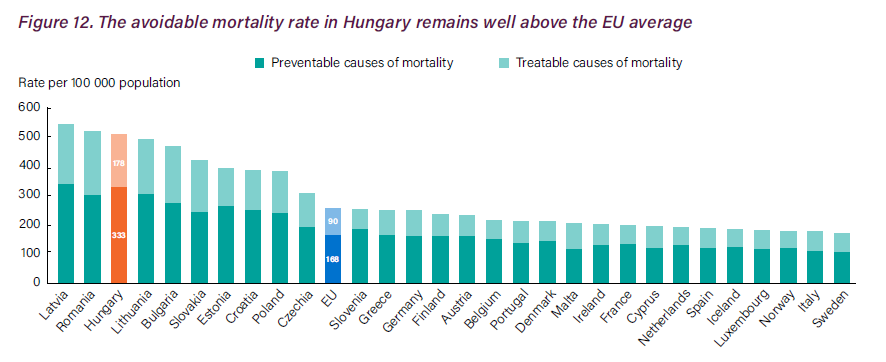
Life expectancy in Hungary is 77.6 years, one of the lowest in the EU, though ahead of Latvia, Romania and Bulgaria. The preventable mortality rate is one of the highest in the EU. Lung cancer (18 %), ischaemic heart disease (16 %) and alcohol-related diseases (12 %) were the three leading causes of preventable mortality in 2022.