
Inside EU Health: Online child safety; MEPS on US visit; hospital beds data; EU/UK cooperation on illegal drugs
EU weighs age-13 limit for 'social media plus'; US CDC officials 'ashamed' of US retreat from global health, MEP says; number of hospital beds per 100,000 people continues to decline; UK and EU drugs agency sign pact to cooperate on illicit drugs
EU weighs age-13 limit for 'social media plus'
The European Commission is considering restricting access to "social media plus" services for children under 13, with legislation expected this autumn following recommendations from an expert panel. The report says platforms should have to prove their services are safe before children can use them.
The panel goes beyond social media apps to include AI companions, video games that expose children to harmful commercial practices or dangerous contacts, and video-sharing platforms with age-inappropriate content.
Commission President Ursula von der Leyen said the Commission would "carefully read the report" before bringing forward proposals after the summer, adding that the panel's staged approach was "very convincing".
“Just as we do not give our children keys to the car before they have their licence or let them buy alcohol until they are legally allowed, we need to set the age at which they can legally access social media,” said von der Leyen.
 Catherine Feore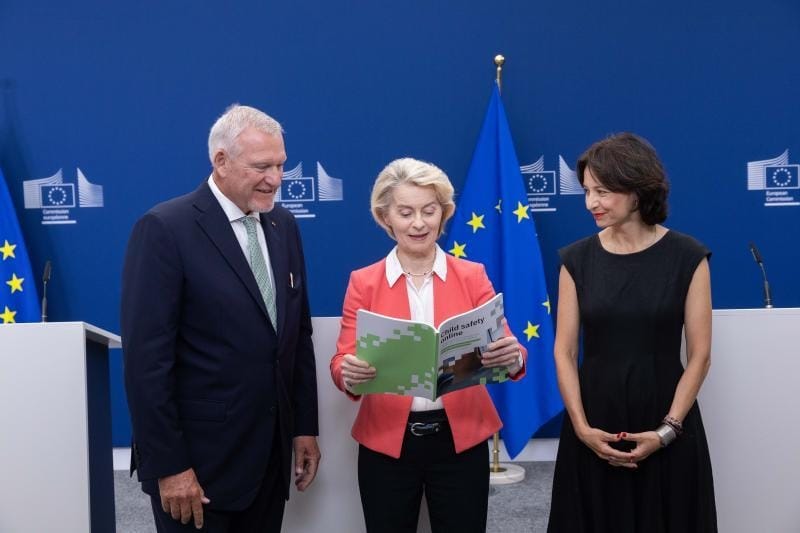
US CDC officials 'ashamed' of US retreat from global health, MEP says
Reporting back on a visit to Washington, MEPs said that US public health officials privately expressed unease over the Trump administration's withdrawal from global health leadership.
Reporting to Parliament's Public Health SANT Committee, delegation chair Ignazio Marino (Green, Italy) said CDC representatives appeared "ashamed" of the policy shift, revealing they were instructed to attend WHO Ebola meetings "to sit, but not to ask questions." Marino said officials "didn't feel very good about that," but "had to do what the administration told them."
Despite the administration's "America First" health strategy, the delegation said that they were also told that there was broad support of 80% among American citizens, both Republicans and Democrats, for providing medicine and medical supplies to developing countries.
Number of hospital beds per 100,000 people continues to decline
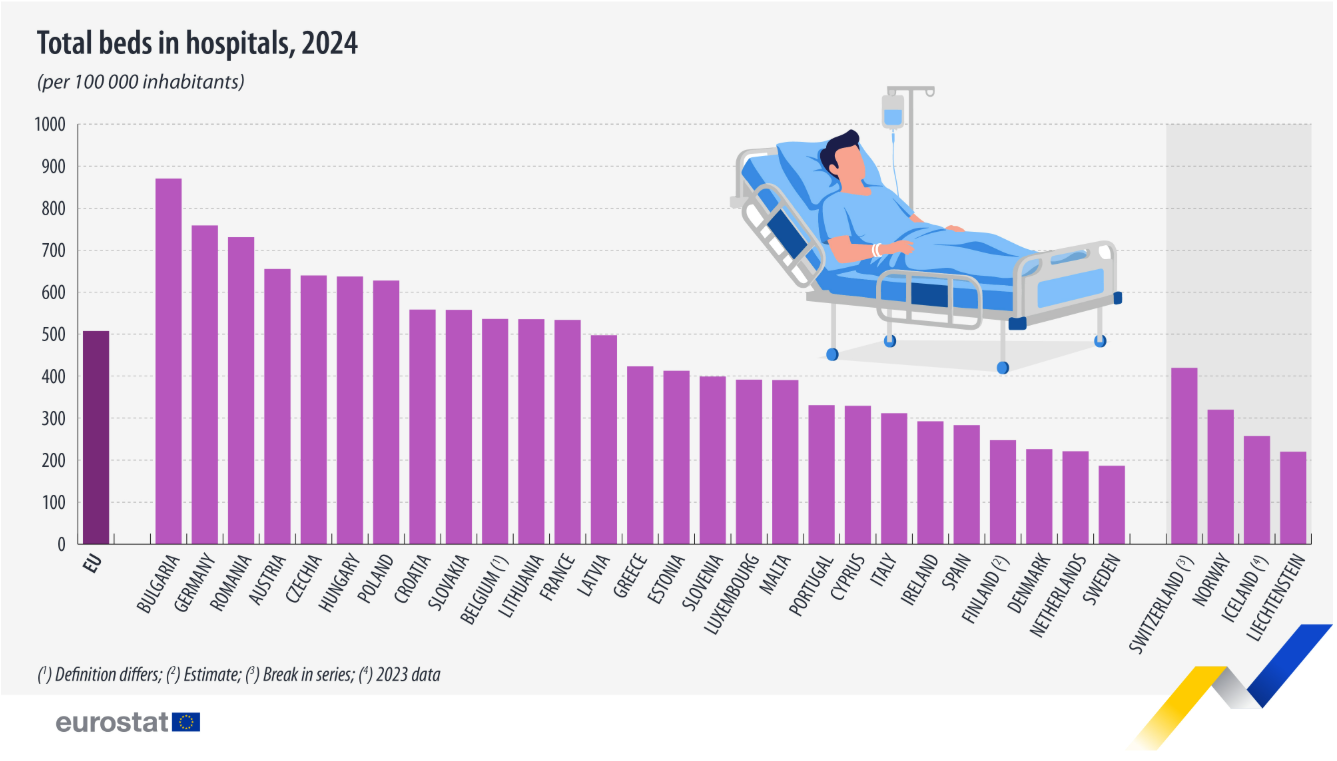
In 2024, the EU recorded 507 hospital beds per 100,000 people, down slightly from 511 in 2023 and continuing a long-term decline from 582 in 2009. Eurostat says this reflects advances in medical technology, shorter hospital stays and the growing use of outpatient and day-care treatment.
Hospital bed availability varies widely across Europe. Bulgaria had the highest rate, with 870 beds per 100,000 people, followed by Germany (759), Romania (731), Austria (655) and Czechia (639). At the other end of the scale, Sweden (187), the Netherlands (221), Denmark (226), Finland (248), Spain (283) and Ireland (293) had the lowest ratios.
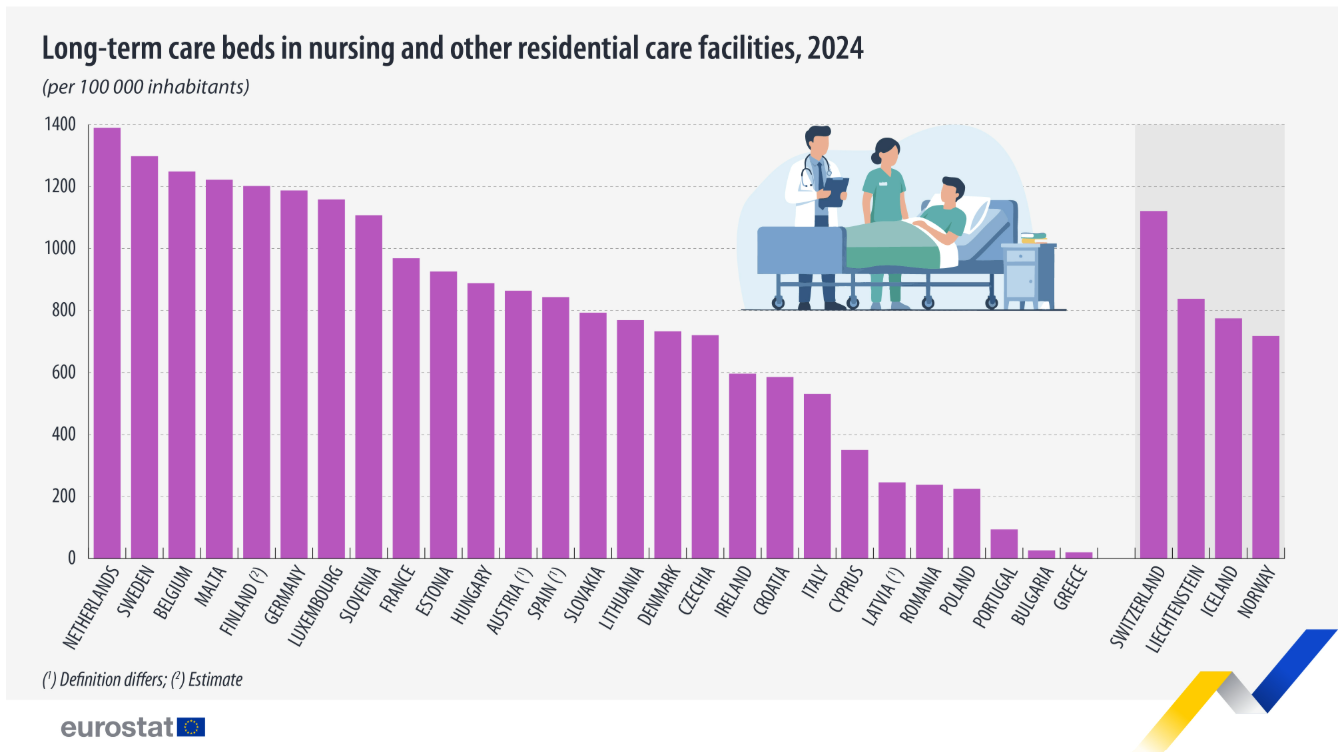
The Netherlands presents a striking contrast between hospital and long-term care capacity. Although it has one of the EU’s lowest hospital bed rates, it has by far the highest number of long-term care beds, with 1,390 per 100,000 people. This suggests a healthcare system that relies more heavily on residential long-term care than prolonged hospital stays.
UK and EU drugs agency sign pact to cooperate on illicit drugs
The UK government and the European Union Drugs Agency (EUDA) have signed a Working Arrangement to enhance cooperation against emerging drug threats and protect public health.
UK Home Secretary Shabana Mahmood said that restoring information-sharing with the EU partners would help "disrupt criminal networks" and make the UK safer.
Signed in London by UK Public Health Minister Sharon Hodgson and EUDA Executive Director Dr Lorraine Nolan, the agreement will improve the exchange of intelligence on dangerous substances, emerging trends and high-risk drugs.
The partnership follows a commitment made at the 2025 UK-EU Summit and supports collaboration on prevention, treatment, harm reduction and tackling organised crime.
Sharon Hodgson said the agreement would help authorities "spot dangerous substances before they cause harm" and better protect communities.