
'My Voice, My Choice': Commission opens ESF+ pathway for abortion access
The Commission says the European Social Fund can be used to support abortion access
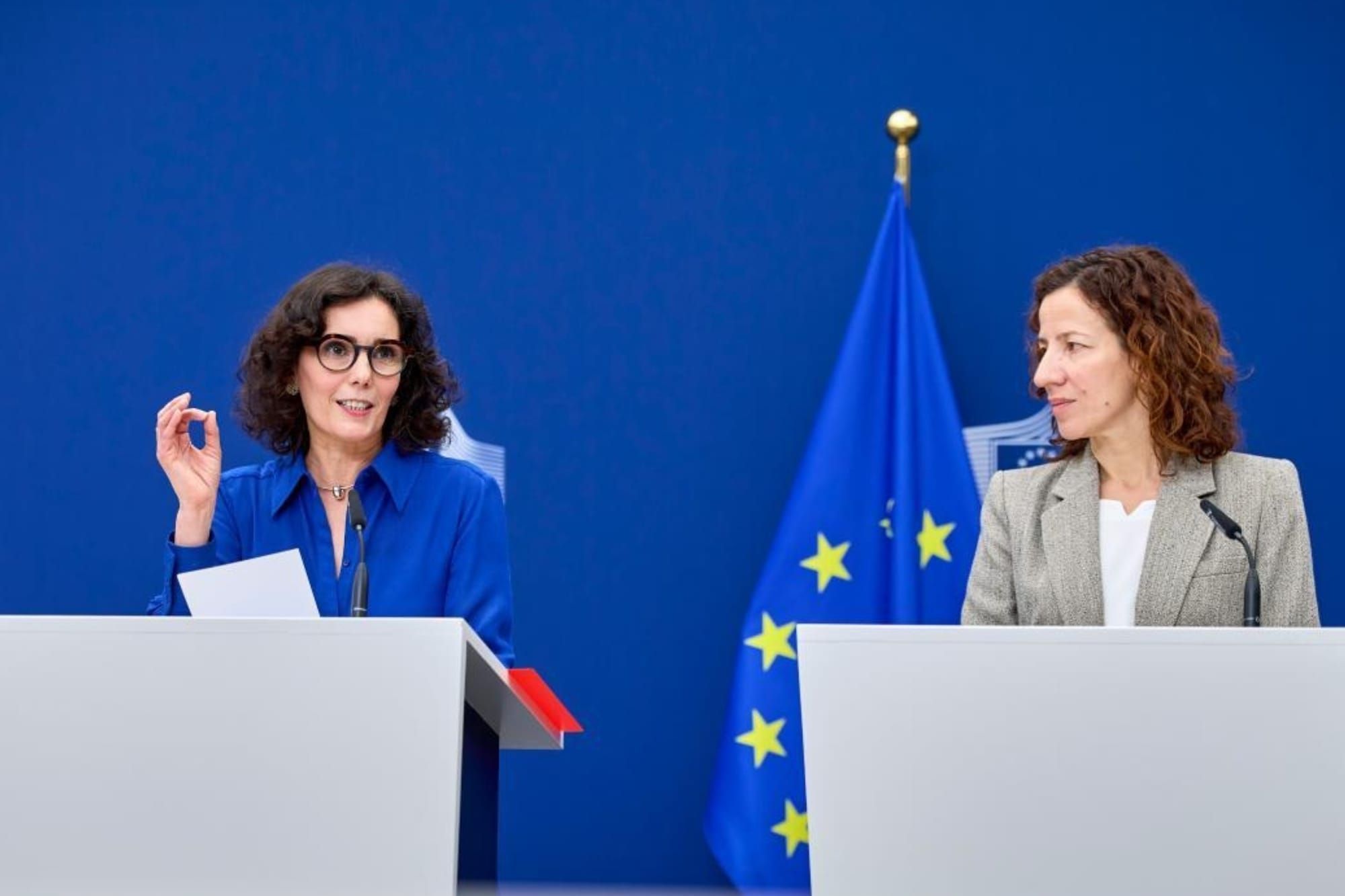
The European Commission’s response to the ‘My Voice, My Choice’ citizens’ initiative is already being described as a breakthrough moment, with broad agreement that an existing EU fund, the European Social Fund Plus (ESF+), can now be used to support access to safe abortion care across Europe.
Equality Commissioner Hadja Lahbib framed the decision as both democratic and practical, stressing that the outcome was driven directly by citizen mobilisation.
“Today, I’m proud - very proud - to stand before you for something truly important,” Lahbib said, calling the initiative “one of our key priorities on equality” that “will save lives.”
She credited organisers with demonstrating that “citizen participation works” and that “democracy can deliver,” after campaigners gathered more than one million signatures calling for safer abortion access across the EU.
According to Lahbib, the organisers’ proposal succeeded because it respected EU treaty limits while identifying a workable solution. Health policy remains a national competence, she noted, but the EU can still support member states willing to act.
“Their message was clear and smart,” she said. “A clear request: access to safe abortion for every woman in Europe. No matter where she lives. No matter how much money she has. And smart, because they respected the Treaties. They knew health policy is a national competence, and the Commission has limited room to act.”
The Commission’s response confirms that governments may voluntarily use ESF+ funding to improve access to abortion services - including support for travel, care in remote regions, and assistance for women without financial means.
“From now on, we are granting member states the possibility to use EU funding, the European Social Fund, to improve access to abortion,” Lahbib announced, calling the step “groundbreaking.” Lahbib said that ten states had already shown interest in participating.
Executive Vice-President Roxana Mînzatu, who has ESF+ as part of her portfolio, reinforced the legal and political consensus behind the decision, saying the Commission had carefully assessed the initiative before concluding that EU funding could indeed play a role.
“We concluded that, yes, it is possible to use EU funds to support member states’ efforts for better access to safe and legal abortion care,” she said, adding that ESF+ could help women in “vulnerable situations”.
A historic moment
In the European Parliament, lawmakers welcomed the clarification as historic. MEP Abir Al-Sahlani (Renew, Sweden), rapporteur for Parliament’s response to the initiative, described the decision as a turning point: “For the first time, the Commission formally confirms that EU funding can support abortion access. That is historic.”
However, she cautioned that implementation now depends on governments. “This opens a real pathway for Member States to act,” she said, stressing that funds must translate into “real access on the ground.”
It remains unclear how a woman would access a fund in another country, or which country she would be expected to approach. Participating countries would first need to opt into to using some of their ESF+ allocation for this purpose. A clear mechanism would then be required to guide women living in countries where abortion is prohibitively expensive, heavily restricted, or illegal, so they can access services in a participating state. The fund would be able to cover associated travel costs.
Activists behind ‘My Voice, My Choice’ declared the outcome a political victory while pushing for further steps. Coordinator Nika Kovač said the decision proved citizen action can force institutional change.
“Today is a victory for women in Europe. And today is a good day for European democracy,” she said.
Campaigners emphasised that the key achievement was the Commission’s explicit recognition that EU money can be used for abortion access.
“For the first time, the Commission confirms unequivocally that EU funds can be used to guarantee access to safe abortion care,” Kovač said, calling it “a political commitment to women’s rights.”
While no new funding instrument was created, activists said the decision “outlined a concrete pathway” for implementation, opening what they described as “a door” for member states to act using ESF+ resources.