‘Tariff chaos’ but pharmaceuticals may stay outside the fray
US tariff reset sparks trade uncertainty, following court ruling might spare pharmaceuticals - for the time being
The United States Supreme Court's decision to strike down President Trump’s tariffs imposed under the International Emergency Economic Powers Act (IEEPA) was greeted by many as a sign that constitutional checks and balances were still in working order.
However, anyone thinking that this might bring a turnaround in Trump’s thinking on tariffs were swiftly disabused of this notion by an announcement that he would impose a 10% tariff on all goods entering the US. By Saturday, Trump said this should be raised to 15%.
The new measures rely on Section 122 of the 1974 US Trade Act, which allows temporary tariffs to address serious balance-of-payments deficits, and can only be extended beyond 150 days with the approval of the US Congress.
If Congress has a Democratic majority after mid-term elections in the autumn, this might be overturned, something that trade ministers outside the US may be praying for.
In a proclamation, Trump said that exceptions were allowed under section 122 and that his advisors had “opined” that certain products should not be subject to the surcharge, including pharmaceuticals and pharmaceutical ingredients.
The European Commission issued a statement on Sunday saying that it “requires full clarity on the next steps the United States intends to take”. Chair of the European Parliament’s International Trade Committee, Bernd Lange (S&D, Germany) described the situation as “pure tariff chaos” and said that he will propose that the European Parliament put its approval work on the EU/US “Turnberry Agreement” on hold until there is “a proper legal assessment and clear commitments from the US side”.
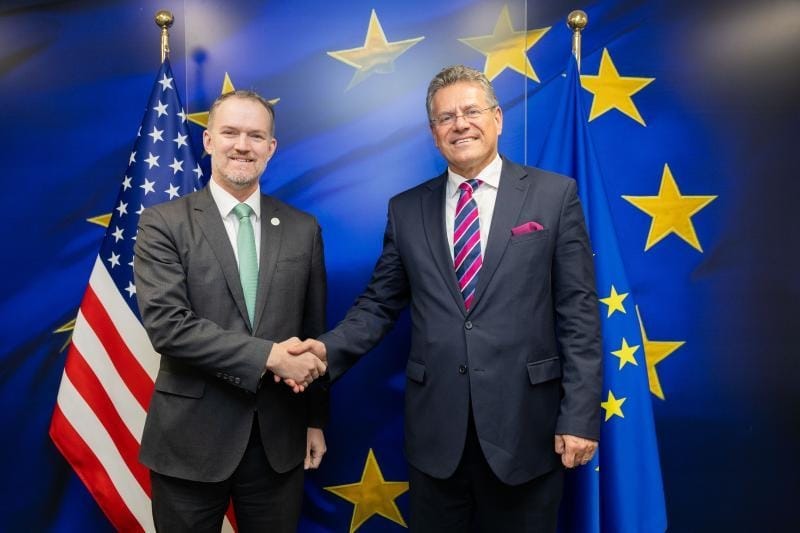
The Commission reports that it is in “close and continuous contact” with the US Administration. On Saturday, 21 February, EU Trade Commissioner Maroš Šefčovič spoke with US Trade Representative Jamieson Greer and Commerce Secretary Howard Lutnick.
For now, pharmaceuticals may sit outside the tariff crossfire, but the volatility of US trade policy means that pharma companies are unlikely to think themselves out of the danger zone.
 Catherine Feore