
Right to be forgotten: Commission offers guidance, not guarantees, to cancer survivors
On World Cancer Day, the European Commission reaffirmed support for the right to be forgotten for cancer survivors, but stopped short of binding action
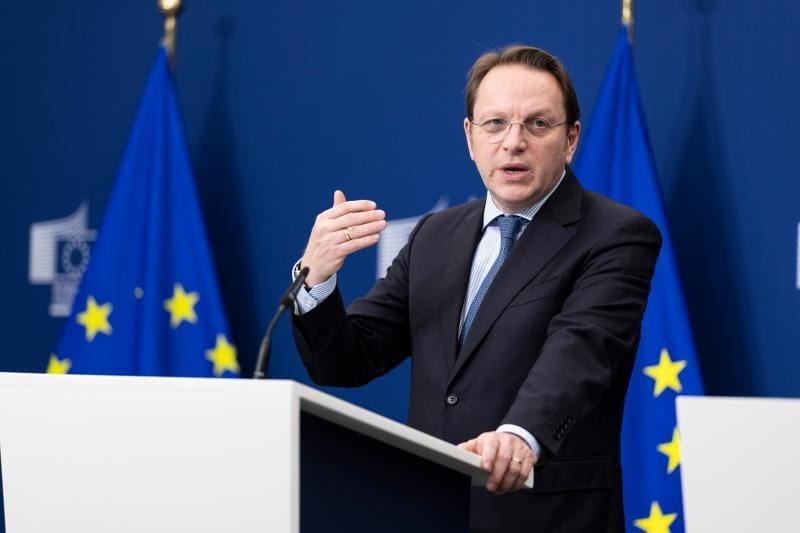
To mark World Cancer Day, the European Commission published a joint statement by Health Commissioner Várhelyi and Financial Services Commissioner Albuquerque on the ‘right to be forgotten’ (RTBF).
The RTBF aims to end the discrimination cancer survivors face when accessing financial services. Survivors are often charged prohibitively high premiums or denied financial products such as loans or mortgages because of their medical history.
As the statement notes, Europe’s Beating Cancer Plan placed the RTBF high on the agenda and set the objective of agreeing a code of conduct on fair access for cancer survivors, alongside a longer-term solution, by 2023. This did not materialise. While meetings were held and the Commission funded a study on access to financial products, deep divisions between cancer organisations and the medical community on one side, and insurers and reinsurers on the other, proved impossible to bridge.
In their statement, the Commissioners adopt a notably hands-off approach. They welcome continued engagement and promise to “carefully consider the complexity of the issue and the legitimate concerns of both cancer patients and the insurance community”. Their stated intention is to advance the rights of survivors - referred to throughout as “cancer patients” - by presenting guidance to financial undertakings on offering fair access to financial services later this year (2026).
While this may nudge the issue in the right direction, it is unlikely to satisfy campaigners calling for binding protections and equal treatment.
Françoise Meunier, founder of the European Initiative on Ending Discrimination Against Cancer Survivors, says support for the RTBF is steadily gaining ground.
“More countries have introduced binding protections, others are progressing toward legislation, and alternative frameworks are evolving where laws are not yet in place. Around 60% of the EU population is already covered by some form of binding RTBF protection, with nine member states having a legal framework in place. Momentum is also growing in key countries such as Germany, Poland, Ireland and Malta.”
Her message is clear: “Cancer may be part of someone’s past. Discrimination should not be part of their future.”
The Commission points to the 2023 Consumer Credit Directive as the first time the RTBF was introduced into EU legislation. The directive prohibits the use of a person’s cancer history for insurance policies linked to consumer credit agreements after a “maximum period”.
However, the Commission is reluctant to specify this period. Under the directive, member states may set a suitable timeframe, provided it does not exceed 15 years. In practice, the Commission already appears behind the curve: France and Spain have both set the RTBF at five years.
Regarding the appropriate length of the period before RTBF, the European Society for Medical Oncology (ESMO) advises that cancer survivors should be treated in the same way as individuals of similar age and socio-demographic characteristics. It recommends a universal RTBF of five to seven years from the end of treatment, noting that this timeframe is widely used in oncology statistics as an imperfect surrogate for ‘cure’ across tumour types.
ESMO argues that for most cancers, the five-year mark is the point at which the risk of relapse becomes lower than the risk of developing a new cancer—a risk shared by the wider population. It adds that patients with metastatic cancer treated with immunotherapy who are in near-complete or complete remission two to three years after treatment are likely to remain cancer free.
Speaking earlier in the week, Tomislav Sokol MEP (EPP, Croatia) said that RTBF needs to be incorporated into other legislation, including legislation on insurance premiums and mortgage credit.
Cancer may be increasingly survivable, but until binding protections are universal, financial discrimination remains a reality for many Europeans.