
Parliament draws the battle lines on Europe’s Critical Medicines Act
The European Parliament has overwhelmingly endorsed a more ambitious Critical Medicines Act
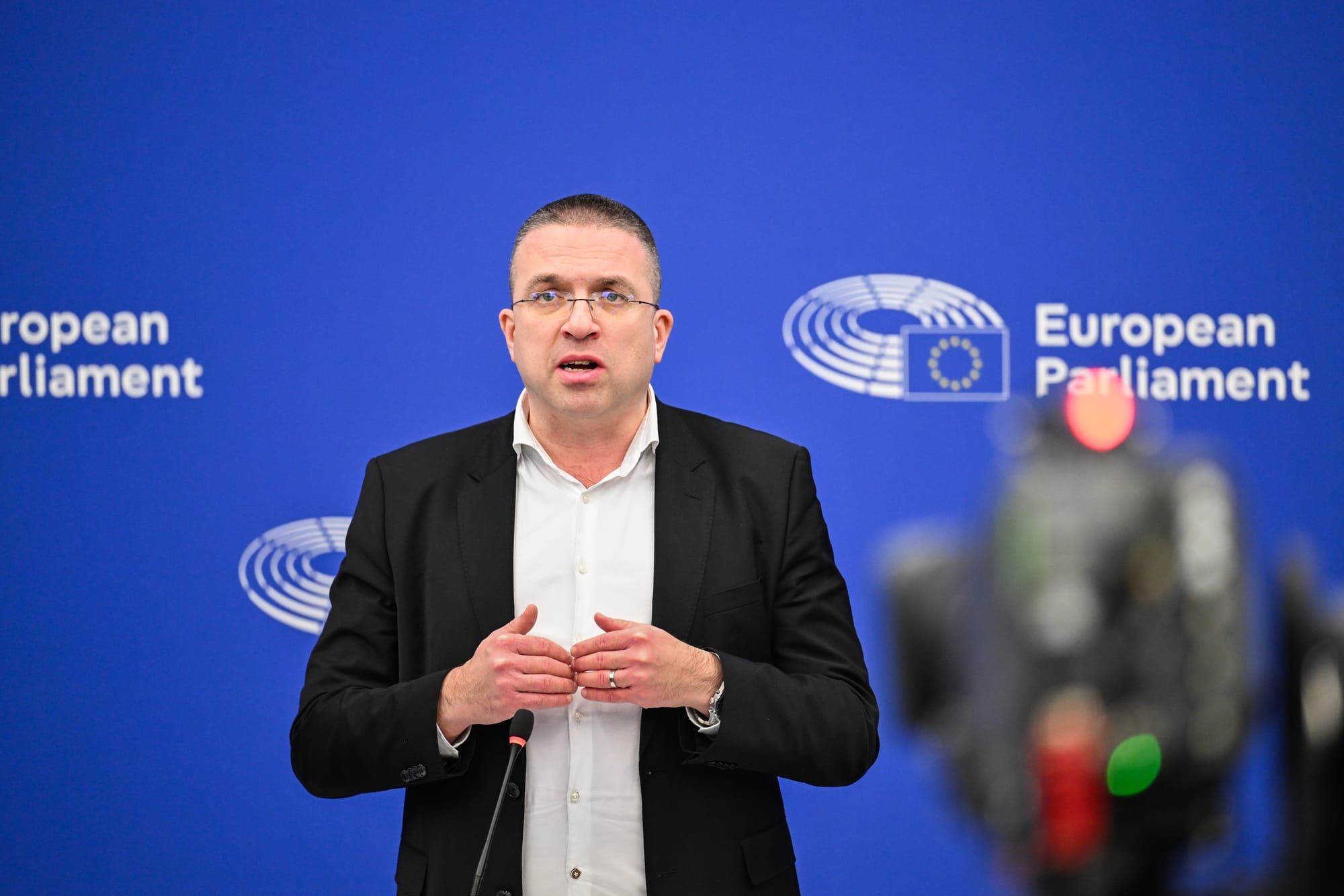
The European Parliament gave a resounding endorsement to Tomislav Sokol’s (EPP, Croatia) report on the Critical Medicines Act (CMA), setting out the Parliament’s battle lines for negotiations.
With 503 votes in favour, 57 against and 108 abstentions, the report sailed through Parliament, but is likely to face more choppy waters when it comes into contact with the Council’s position in trilogues.
Normally, criticism from Parliament’s EPP group would be directed at China’s anti-competitive practices. In 2026, however, it has been the United States that has drawn their ire. Aggressive US actions - accusing Europe of “free-loading” because of lower drug prices and threatening to repatriate pharmaceutical production - have instead helped rally MEPs. As Sokol noted, “(Trump) has put pressure on individual pharma companies to commit tens of billions of dollars in investments in the US.”
The Act, presented by the Commission in March of last year, aims “to improve the availability, supply and production of critical medicines within the EU". The CMA also aims to improve access to other "medicines of common interest", such as those for rare diseases, and to address the fact that some medicines are not available in certain markets.
It’s fair to say that the “general approach” on the Critical Medicines Act hammered out in the Council in early December was not fully endorsed by all EU health ministers, with some looking to the Parliament to push the envelope.
 Catherine Feore
Sokol says there are two main objectives for the parliament: incentivizing pharmaceutical production in Europe, reducing dependencies on India, China and now, the US; and ensuring equal access to medicines within the European Union, especially for smaller countries and those in Eastern Europe.
50% production in the EU
The Commission’s proposal was vague on the conditions for preferential treatment of European production, referring only to a “significant proportion of production.” Parliament has now specified what that means, demanding that contracting authorities be allowed to require at least 50% of active pharmaceutical ingredients (APIs) or final products to be manufactured in Europe. According to Sokol, this is one of the strongest tools available to “protect its own industry from what the US administration is doing.”
“Price can no longer be the sole criterion when awarding contracts for medicines. Security of supply, the resilience of production chains, and manufacturing capacity within the EU must be taken into account. This ‘Buy European’ approach ensures public procurement supports reliable suppliers, strengthens EU-based production of medicines, and contributes to long-term supply security.”
Having the ability to choose Europe doesn't mean that member states will; hard-pressed treasuries trying to reduce healthcare costs might be reluctant to choose anything other than the lowest price.
Medicines for Europe Director General Adrian van den Hoven, which represents the generic and biosimilar sector welcomed the vote: “We applaud the progressive position to advance Europe’s health security with this important vote. We are ready to work with the co-legislators to deliver a meaningful act that will enable the off-patent medicines sector to be competitive, especially in today’s unpredictable geopolitical landscape.”
Joint procurement
While the Commission’s original Pharma Package sought to address uneven access to medicines across Europe, negotiations on this point stalled. The Critical Medicines Act has appeared to offer a way forward, enabling the issue to be addressed more effectively.
 Catherine Feore
MEPs want to lower the number of countries needed to support a Commission-led joint procurement to at least five, compared to nine in the Commission’s initial proposal. The Council want to delete this possibility.
Renew MEP Vlad Voiculescu (Romania) said that the conditions and thresholds must be realistic, or joint procurement will remain a theoretical option rather than a practical tool that is actually used.
“Joint procurement is extremely important, especially for smaller, medium-sized, and less wealthy member states that lack bargaining power on their own. If designed well, it can improve access, reduce inequalities between countries, and provide predictable signals to industry.”
Many in industry are more sceptical. Alexander Natz of EUCOPE said that it must remain voluntary for both member states and market authorisation holders and include clear safeguards, such as minimum quantities.
“Crucially, these mechanisms do not address the root causes of access delays, which lie at the national level. Rather than creating new EU structures, existing tools should be leveraged to ensure timely and equitable patient access,” said Natz.
Tiemo Wölken (S&D, Germany) says that joint procurement would be a powerful tool to overcome market fragmentation and to ensure equal access.
Strategic projects
MEPs back the creation of EU-based industrial “strategic projects” to modernise and strengthen manufacturing capacity, funded through a dedicated Critical Medicines Security Fund under the EU’s next multiannual financial framework (MFF). Sokol noted that no funding has yet been ring-fenced in the current budget proposal, warning that a “big political fight” lies ahead to secure additional resources for health and strategic initiatives.
Wölken said: “As S&D, we secured the inclusion of a strategic foresight mechanism that will enable the EU to plan ahead, anticipate risks, and act in a long-term, forward-looking way.”
Mandatory sharing
Parliament supports a redistribution mechanism to address problems that can arise from stockpiling. While a voluntary solidarity mechanism exists, Sokol argues for a mandatory option that could be activated in emergency situations, when voluntary measures may prove insufficient.
“This essentially means that as a last resort, if there is a shortage in a country, let's say, Bulgaria or Slovakia or Lithuania, of a certain medicine, and this medicine is in a stockpile in France, Germany or Italy, that a decision at an EU level can be made to redistribute this medicine from the stockpile to the country which has the shortage.”
This is likely to be opposed, but Sokol says that the parliament will remain adamant.
Voiculescu echoes this view: “Relying solely on national stockpiles has led to fragmentation, inefficiencies and, in times of crisis, protectionist reflexes. A coordinated EU approach would improve preparedness, reduce waste and allow fair redistribution when shortages occur, which is where European solidarity must become concrete.”
Orphan Medicines
Some pharma bodies have questioned the parliament’s proposal to include orphan medicines for rare diseases as critical medicines, but Sokol - who is one of the co-chairs of the Parliament’s Intergroup on Cancer and Rare Diseases says it is something that he will insist on keeping in order to provide strong incentives for industry.
“When member states cannot solve problems by themselves, and especially for patients with rare diseases, then the EU should step up and provide incentives for these patients to actually get adequate treatment.”
The Cypriots, who hold the rotating presidency, are eager to make a deal in the next six months. A small country, Cyprus has already proposed more joint procurement at an EU-level. In the tough negotiations that lie ahead, they may be a useful ally and not just an honest broker.