
Macron and WHO chief back stronger safeguards for children online
French President Emmanuel Macron and WHO chief Dr Tedros have published a joint op-ed urging stronger global safeguards to protect children
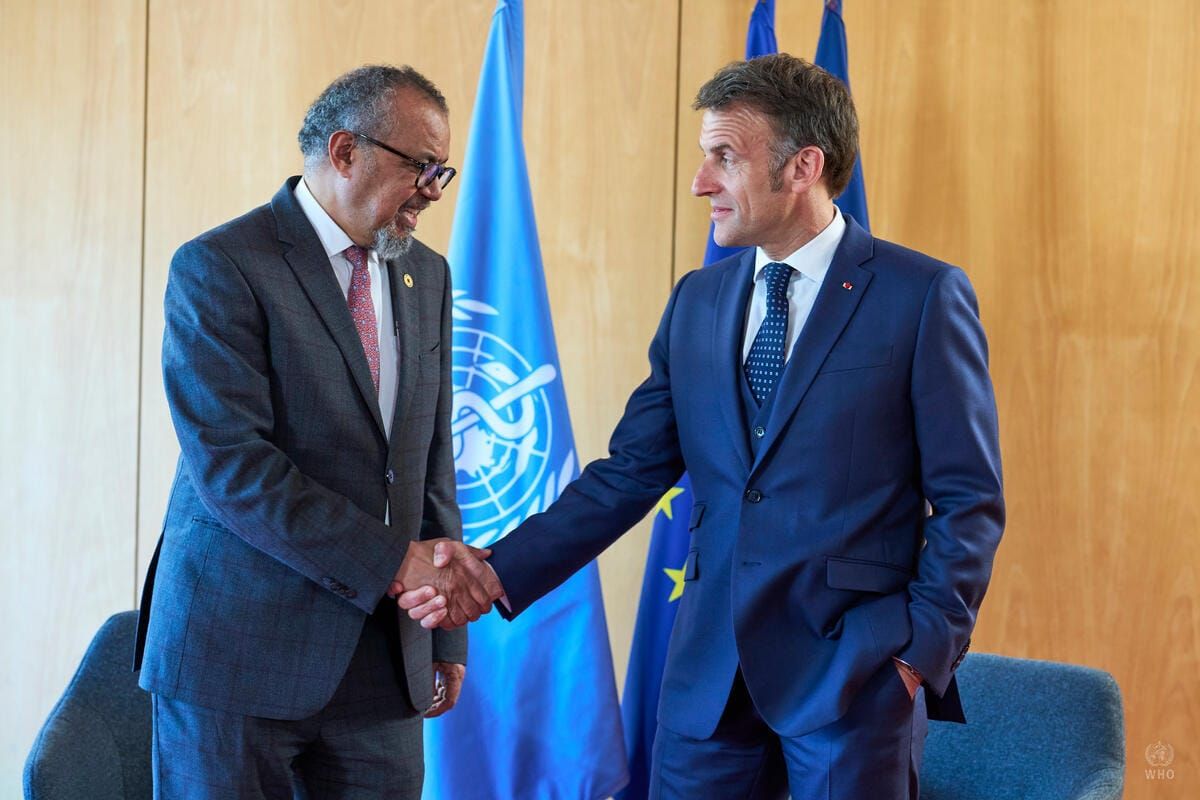
The World Health Organization's Director General, Dr Tedros Adhanom Ghebreyesus, has called for stronger governance of digital platforms to protect children's health, arguing that governments are increasingly recognising online safety as a public health priority.
Speaking after publishing a joint opinion piece with French President Emmanuel Macron, Tedros said there is now a growing international consensus that digital environments require "effective governance, accountability, age-appropriate design, and stronger safeguards" to protect young people.

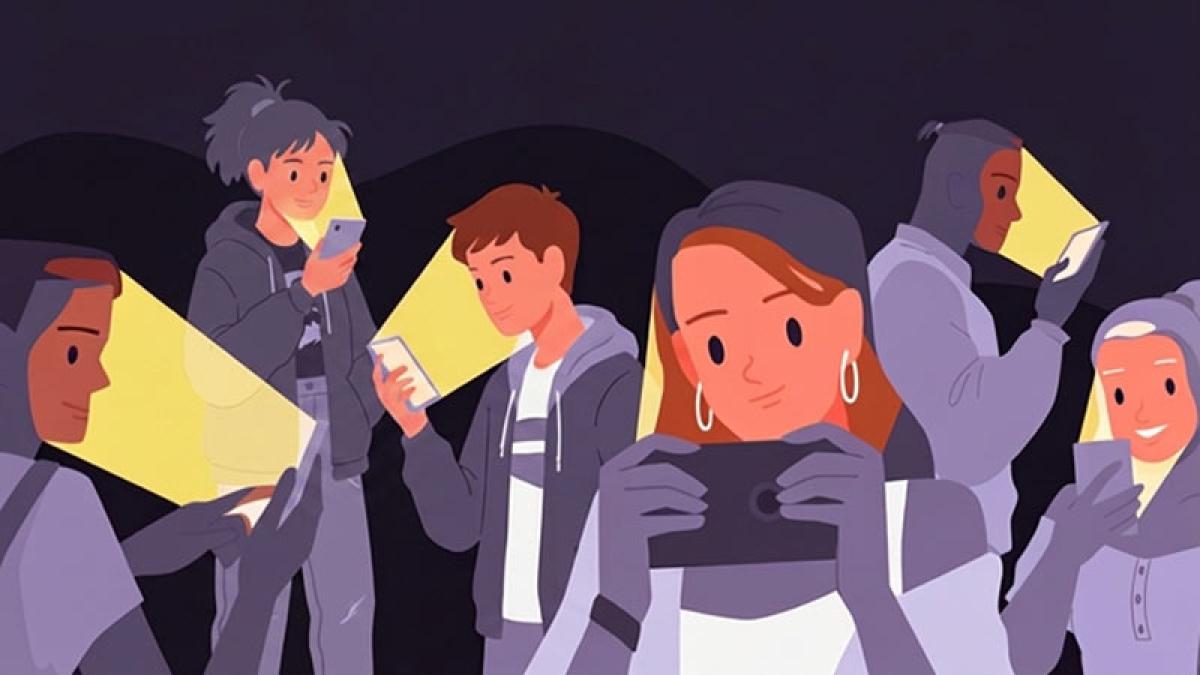
The intervention comes as a number of countries, including Australia, Canada, France, Indonesia, Ireland, Spain and the United Kingdom, have introduced or proposed new measures aimed at reducing children's exposure to harmful online content.
Australia has already put in place a ban on children under the age of 16 accessing ten social media platforms since December, but four out of five children have been reported to still be using the apps, prompting the government to propose doubling the fine and compelling the platforms to show what action they are taking.
"Digital environments are not neutral," Tedros said. "How they are designed, governed, and monetized shapes many aspects of our lives, including health."
He warned that repeated exposure to sexualised, violent, stereotypical or discriminatory content can shape how children see themselves and others, while algorithms increasingly prioritise engagement over accuracy, allowing misleading health information to spread.
The Macron-Tedros opinion piece argues that while digital technologies offer significant opportunities - including supporting education, communication, healthcare and social connection - they also present growing risks to children's mental health and development if left unchecked.
Evidence needed to ensure governments are not acting in a 'moral panic'
Director of Digital Health and Innovation at WHO, Dr Alain Labrique, said digital technologies continue to provide important opportunities for many young people, particularly those who might otherwise be excluded: “From the evidence perspective, the important message is to keep in mind that it's not moral panic that's driving these bans, but rather emerging evidence that needs to be strengthened, and there is an evidence gap.”
"Today's childhood is being reshaped by digital technology," Labrique said. "Social media, gaming and increasingly artificial intelligence bring real opportunities for learning and for inclusion of young people, especially those living on the margins of society or in remote and crisis settings."
"The question isn't whether technology is good or bad," he said. "It's how we make sure digital environments support healthy childhood development rather than undermine it."
"Our posture is precaution paired with active evidence generation, not necessarily a permanent restriction stance," he said.
The European Commission's Special Panel on Child Safety Online will present a report containing their recommendations to President Ursula von der Leyen on 13 July.