Inside EU Health: WHO to consider US payment arrears; IHI unveils first applicant-driven projects; improvement in unmet medical needs of children
WHO Executive Board will consider US payment arrears; IHI unveils first projects from its applicant-driven call; Eurostat data points to an improvement in the unmet medical needs of children
WHO Executive Board will consider US payment arrears
Tomorrow is the official withdrawal date of the US from the World Health Organization (WHO). President Trump issued an executive order on entering office stating that the US paid “unfairly onerous payments” compared to other states and that it would pause the transfer of any US government “funds, support, or resources” to the WHO.
Asked about the withdrawal last week, WHO Principal Legal Adviser Steven Solomon said there is no withdrawal clause in the WHO constitution, but that the US made an arrangement with the World Health Assembly in 1948, reserving the right to withdraw on two conditions: that it would provide one year’s notice and that it would meet its financial obligations.
Solomon explained that the US was in arrears on its payments for both 2024 and 2025, and that the organization's Executive Board would discuss the situation next month. The US accounted for around 22% of the WHO’s core budget ($135 million for 2025) and also made generous voluntary contributions to cover health emergencies and programmes, such as polio eradication.
WHO Director General Dr Tedros Adhanom Ghebreyesus described the US withdrawal as a loss for the US and for the rest of the world. He said he hoped the US would reconsider.
Here’s a fuller response from the WHO’s legal adviser. 👇
IHI unveils first projects from its applicant-driven call
The Innovative Health Initiative (IHI) has announced the first nine projects to emerge from its ‘applicant-driven’ call for projects.
Launched in January 2025, the call invited applicants to define their own opportunities within the IHI Strategic Research and Innovation Agenda, rather than responding to pre-set challenges.
The projects span the full innovation pathway, from early-stage drug discovery and antimicrobial development to clinical trial design and new models of care delivery. They also address major disease areas, including Alzheimer’s disease, cardiovascular conditions, cancer, antimicrobial resistance, and neurological disorders.
Artificial intelligence features prominently across several initiatives, exploring how machine learning, data science and generative AI can accelerate drug discovery, modernise clinical trials and help clinicians apply treatment guidelines more consistently in everyday care.
Others, including AF-B-STEP and ACCESS-AD, focus on improving diagnosis, monitoring and personalized treatment for people living with atrial fibrillation and Alzheimer’s disease.
Beyond digital innovation, the portfolio also includes ambitious efforts to rethink care delivery and surgical practice.
Eurostat figures on unmet medical needs among children improve
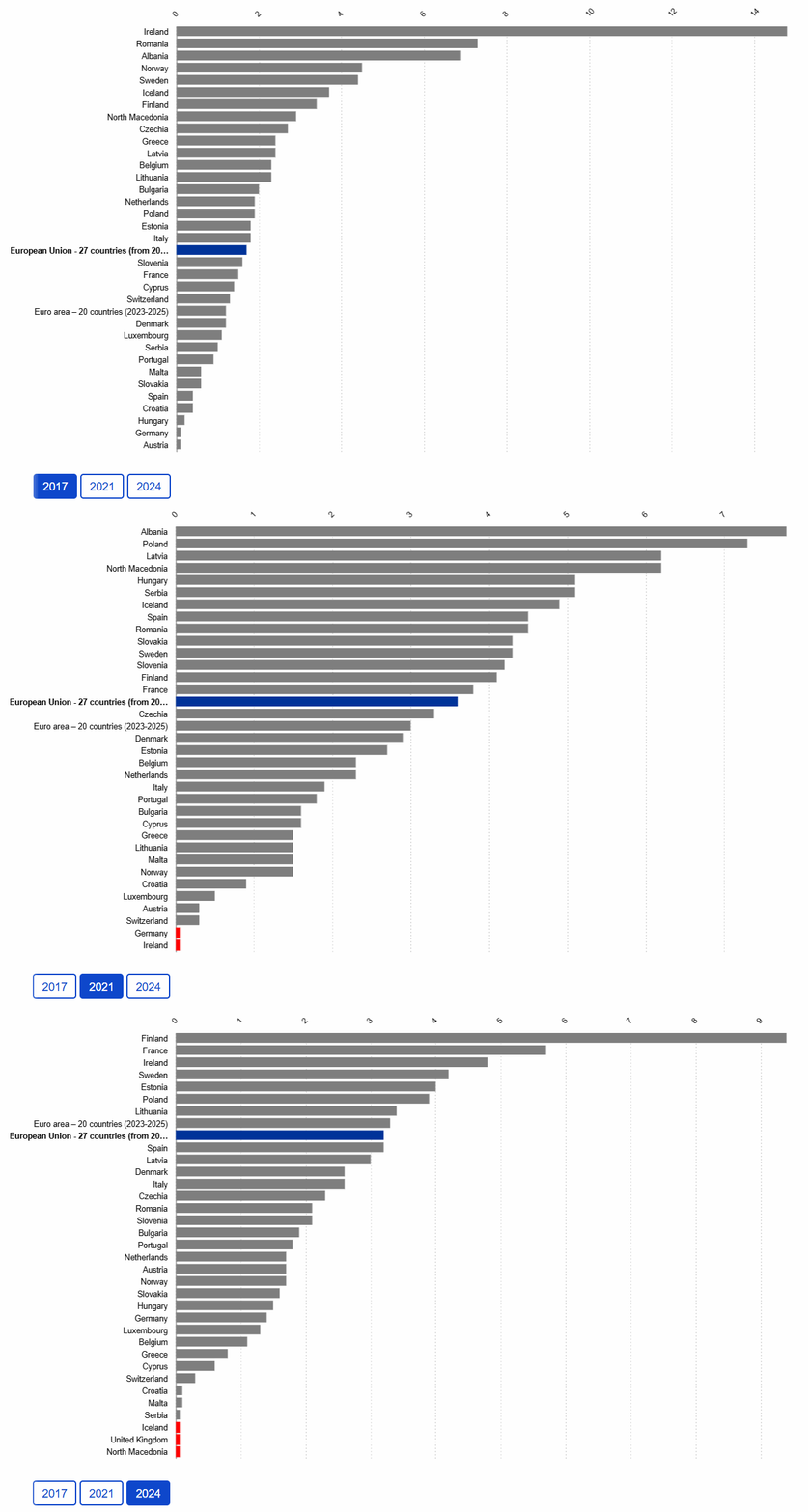
In 2024, 3.2% of children aged 16 or under in the EU were reported to have unmet needs for medical care, such as examinations or treatment. This is a slight improvement compared with 3.6% in 2021. Unmet needs for dental care were more common, affecting 4.0% of children in 2024, down from 4.4% three years earlier.
There are large differences between countries. The highest shares of unmet medical care needs were recorded in Finland (9.4%), followed by France (5.7%) and Ireland (5.0%). In contrast, Croatia and Malta reported the lowest levels (both 0.1%), with Cyprus at 0.6%.
For dental care, Spain had the highest share of unmet needs (7.5%), ahead of Finland (6.8%) and France (6.2%), while Croatia (0.2%), Malta (0.5%), and Luxembourg (1.0%) reported the lowest levels. Overall, the figures show gradual improvement, but also persistent inequalities in children’s access to healthcare across the EU.