
Inside EU Health: WHO/Europe proposal to help nursing crisis; antimicrobial resistance in the food chain; Apply AI invitation to join screening network and imaging pilot
WHO/Europe proposes eight steps to help fix Europe’s nursing crisis; persistent antimicrobial resistance in the food chain; Apply AI invitation to join screening network; EU launches €9 million call for AI-powered medical imaging pilots
WHO/Europe proposes eight steps to help fix Europe’s nursing crisis
With a projected shortfall of nearly one million health workers by 2030, WHO/Europe sets out eight priority actions to stabilize the workforce.
“Safe nurse staffing is not an administrative detail, it is a safety-critical investment for patients and health systems,” said WHO/Europe Director Dr Hans Kluge.
The European Specialist Nurses Organisation (ESNO) welcomed the brief, saying it “opens the door to broader policy reflection on nurse autonomy” and strengthening specialist and advanced practice nursing roles.
 Catherine Feore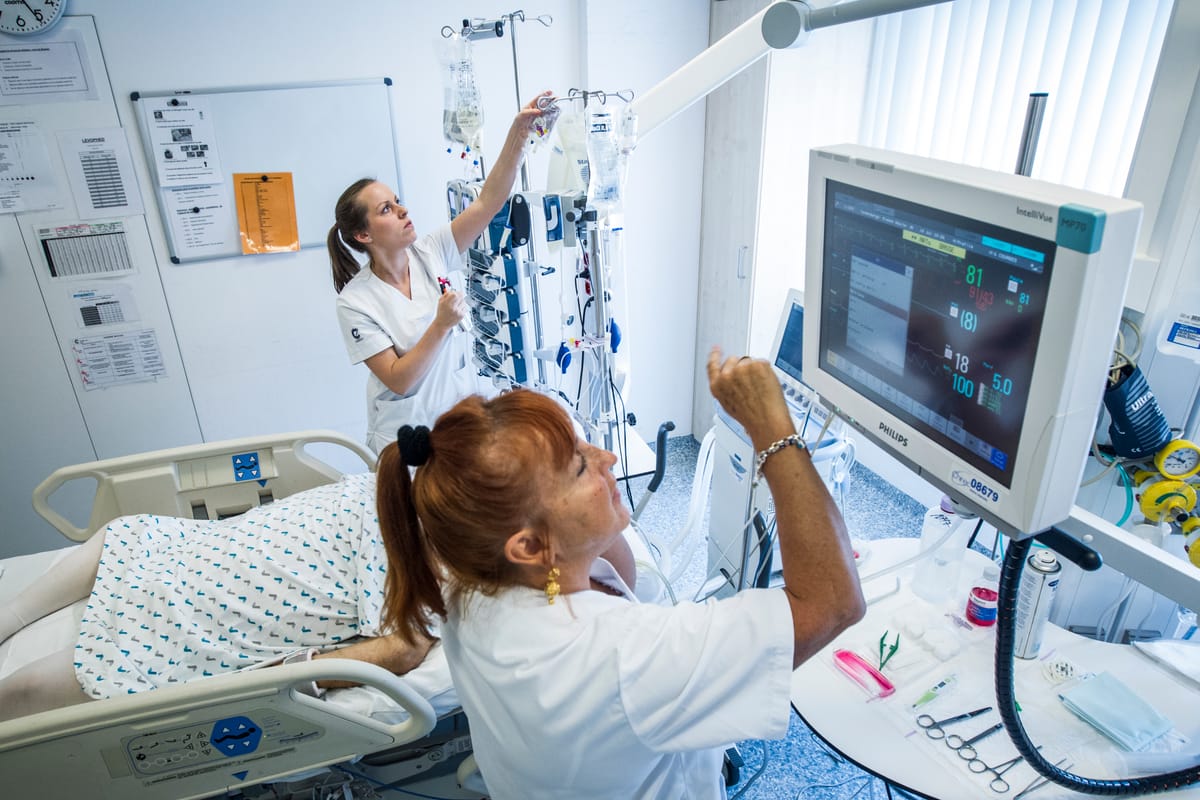
Persistent antimicrobial resistance in the food chain underlines need for ‘One Health’
The European Food Safety Authority and the European Centre for Disease Prevention and Control warns that resistance in Salmonella and Campylobacter “continues to be a public health concern across Europe”. A “high proportion” of samples show resistance to ciprofloxacin, now “no longer recommended” for treating some Campylobacter infections. Resistance to ampicillin and tetracyclines also remains elevated, while carbapenemase-producing E. coli detections are rising.
Yet progress is uneven rather than absent. Several countries report falling resistance in Salmonella and Campylobacter. The agencies say the mixed picture reinforces the need for a coordinated “One Health approach” spanning human and animal health.
 Catherine Feore
EU invites organisations to join ‘AI-Powered Screening Centres Network’
The European Commission has launched a call to join the new ‘European AI-powered advanced screening centres network’, a flagship of the Apply AI Strategy. The initiative aims to accelerate the safe and effective deployment of artificial intelligence across all EU Member States by 2029.
The invitation is aimed at advanced healthcare organisations that are deploying, piloting or evaluating AI-based solutions in healthcare or clinical research settings, or who wish to adopt AI in the near future. Of particular interest are AI-based solutions in cancer or cardiovascular disease prevention, early detection or diagnosis, for example AI-enabled software to detect tumours or AI solutions supporting analysis of electrocardiograms (ECG).
Participating centres will validate AI tools in real clinical settings, assess performance and cost-efficiency, and contribute to multi-centre studies generating evidence for large-scale adoption.
Healthcare organisations can apply by 10 April 2026, with the first meeting scheduled for May 2026.
EU launches €9 million call for AI-powered medical imaging pilots
The European Commission will launch a €9 million call under the Digital Europe Programme to fund two large-scale pilots deploying cloud-based AI systems in medical imaging. Opening 21 April 2026 and closing 1 October 2026, the initiative supports AI tools assisting analysis of MRI, CT, X-ray, PET and ultrasound scans. The pilots aim to improve diagnostic efficiency, prioritise critical cases, ease radiology workloads and expand equitable screening access, building on infrastructures like Cancer Image Europe and HealthData@EU.