
Inside EU Health: Swedes hold key to tobacco taxation; economic cost of menopause; Finnish first in AI and health
Sweden could be the last obstacle to a tobacco and nicotine tax agreement; menopause costs the EU economy €17.3 billion a year; Finland backs a world-first nationwide AI model to boost decision-making in healthcare
Sweden could be the last obstacle to a tobacco and nicotine tax agreement
Senior EU diplomats will meet on Wednesday evening in COREPER I for what could prove a decisive discussion on the European Commission's overhaul of tobacco taxation rules, ahead of next week's gathering of finance ministers in Luxembourg (12 June).
The tobacco taxation package forms part of a broader effort to modernise the EU's tobacco tax framework. The revision is also expected to contribute to the EU's search for additional "own resources" revenues at a time when pressure is mounting on the Union's finances.
The Commission argues that the current framework no longer reflects market realities, particularly the rapid growth of alternative nicotine products and significant tax disparities between member states.
Diplomatic sources say negotiators are edging closer to an agreement, but one issue continues to threaten a breakthrough: nicotine pouches.
One source familiar with the talks told Vital Signs on condition of anonymity that one member state is scuppering agreement over nicotine pouches, but the official said there was still hope for an agreement.
Sweden, where nicotine pouches are widely used and where production is significant, remains the principal holdout. Stockholm is pushing either for a complete exclusion of pouches from the new regime or, failing that, significantly lower tax rates than those proposed for other nicotine products.
Officials involved in the negotiations believe a compromise based on reduced rates could offer a pathway forward, but caution that concessions to Sweden could encourage other capitals to reopen settled parts of the package.
"The question is, if Sweden gets what it wants, who else comes out of the woodwork?" one diplomat remarked. "Everyone's concerns have been addressed very carefully."
In any event, the package remains on the agenda for a policy debate at ECOFIN, even if a final political agreement remains out of reach.
The Cypriot Presidency, which has invested considerable political capital in steering the negotiations towards a conclusion before the end of its term. "The Presidency wants to get this over the line," one EU official said.
 Catherine Feore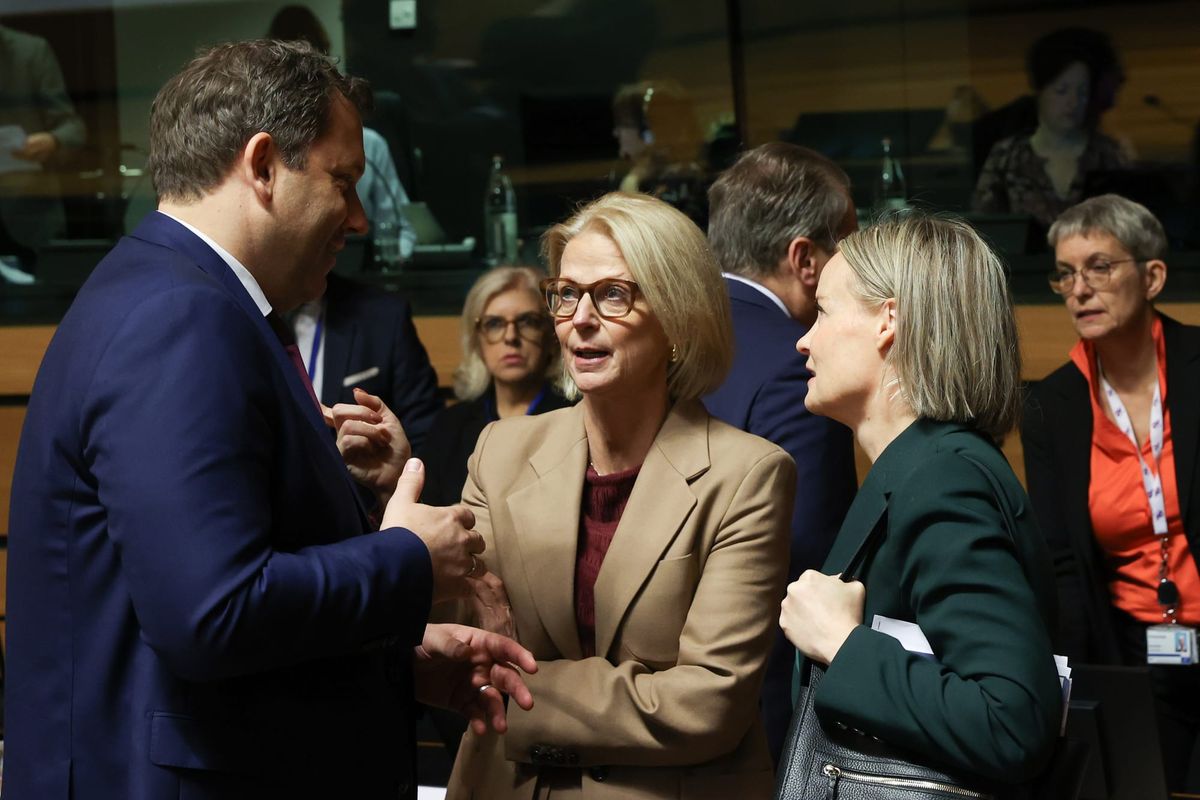
Menopause costs the EU economy €17.3 billion a year
Menopause is costing the EU economy an estimated €17.3 billion annually through lost productivity, absenteeism and women leaving the workforce.
Speaking at a European Parliament event on advancing menopause policy, Ana Carla Pereira, Director for Equality and Non-Discrimination at the European Commission's DG JUST, said the figure suggested in one study should serve as a wake-up call for policymakers.
The discussion highlighted growing recognition in Brussels that menopause is not just a health issue, but also a challenge for Europe's ageing workforce, productivity and competitiveness.
"It is time to move away from viewing menopause as an inevitable and private biological decline, and instead recognise it as a priority issue for women's health and well-being," said MEP Marta Temido (S&D, Portugal).
MEP Romana Jercović (S&D, Croatia) said that menopause must be more effectively integrated into healthcare systems and public health strategies.
The economic case for action was reinforced by speakers who warned that Europe cannot afford to lose experienced women from the workforce at a time of labour shortages and demographic decline.
"Menopause is one of the biggest unmet needs in our health systems and workplaces," said Florencia Pavoni, Global Affairs Representative for Women's Health at Bayer. "We are letting experienced women slip away over something that is natural, predictable and manageable."
To strengthen the evidence base, the European Commission is planning an EU-level study on the economic impact of menopause and broader women's health issues, examining drivers such as productivity loss, absenteeism and labour market participation.
Political momentum is also building in Parliament. Closing the event, MEP Lina Gálvez Muñoz (S&D, Spain), Chair of the European Parliament's Committee on Women's Rights and Gender Equality, announced that Parliament is preparing its first own-initiative report on menopause.
"We cannot keep treating women's issues as the exception anymore," Gálvez said.
Finland backs a world-first nationwide AI model to boost decision-making in healthcare
Finland is launching an ambitious project to develop the world's first nationwide healthcare foundation model, using artificial intelligence to support clinical decisions, improve health system planning, and predict disease risks across the population.
The FINe-Health Foundry project, led by researchers from the University of Helsinki, Aalto University, the University of Turku, and ELLIS Institute Finland, will harness Finland's extensive national health databases to create what experts describe as a healthcare "Swiss Army knife" AI system.
"The new foundation model will be able to predict disease risk for over 200 conditions for every living person in Finland," said Associate Professor Andrea Ganna, the project's lead principal investigator at the University of Helsinki.
The initiative combines multimodal health data, including medical images, electronic health records and genomic information, to generate real-time clinical insights and population-level health scenarios.
Professor Samuel Kaski, director of ELLIS Institute Finland, said the project represents a major step forward for AI in healthcare: "The resulting foundation model will accelerate and improve healthcare decision-making."