Inside EU Health: Rising sales of animal antimicrobials; special task force on imports; update on PABS
Rising EU sales of animal antimicrobials; special task force on food safety standards of imports; update on the Pandemic Agreement’s unfinished business
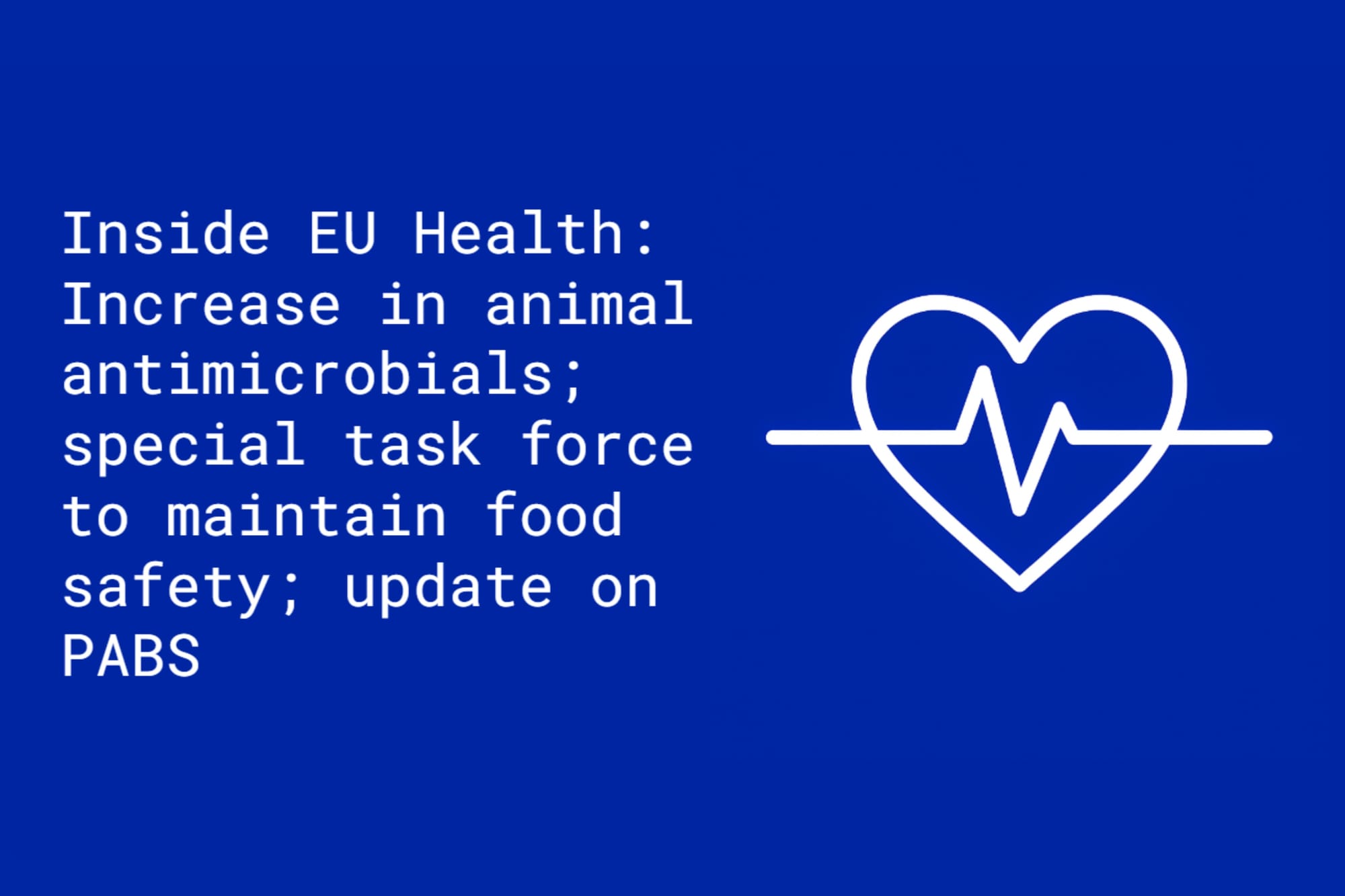
Rising EU sales of animal antimicrobials raise concern
The latest annual surveillance report from the European Medicines Agency (EMA) shows a worrying increase in antimicrobial sales for animal use across the European Union.
The authors caution that additional data will be needed to determine whether this shift represents the beginning of a long-term trend or a temporary fluctuation caused by factors such as stockpiling.
The report highlights how much work remains for the EU to meet its commitment to reducing antimicrobial use in farmed animals and aquaculture by 50% by 2030.
 Catherine Feore
Special task force to maintain health standards on imports
Health and Animal Welfare Commissioner Olivér Várhelyi announced (9 December) that the Commission plans to enhance import controls by creating a special task force.
The task force aims to ensure imported goods meet the same requirements as those applied by EU farmers, particularly regarding hazardous pesticides banned in Europe. The Commission will increase audits in non-EU countries by 50%, intensify monitoring of non-compliant imports, and strengthen checks at EU entry points to safeguard consumer health and fair competition.
“We can be proud that Europe claims the highest food safety and quality standards in the world,” said Várhelyi. “If pesticides are not allowed in the EU for reasons related to health protection in Europe, they should not be found in imports.”
Update on the Pandemic Agreement’s unfinished business
Members of the SANT Committee were updated on negotiations for the Pathogen Access and Benefit-Sharing (PABS) system, intended as an annex to the WHO Pandemic Agreement adopted in May 2025.
EU negotiator Americo Beviglia Zampetti said that while some countries prefer a formal contract-based model, the EU feels that that would be unnecessary and counterproductive. However, he remains hopeful that an effective and equitable framework can still be reached, despite doubts about concluding talks before the next World Health Assembly in May 2026.
MEP Tilly Metz stressed that PABS is central to avoiding a repeat of vaccine inequity, citing estimates that vaccine hoarding cost 1.3 million lives in the Global South.
The EU is aiming for a system that improves on COVAX’s ad hoc structure by ensuring clear, enforceable relationships between the WHO and producers of vaccines, therapeutics and diagnostics, helping avoid the scramble for medical countermeasures seen in past pandemics.
 Catherine Feore