Inside EU Health: Right to be forgotten; updated code against cancer; Eurostat cancer figures
Right to be forgotten - Commission offers guidance, not guarantees, to cancer survivors; Commission presents updated cancer prevention guidance; colorectal cancer emerges as the leading cancer diagnosis in EU hospitals
Right to be forgotten: Commission offers guidance, not guarantees, to cancer survivors
Marking World Cancer Day, the European Commission published a joint statement reaffirming support for the “right to be forgotten” (RTBF), which aims to end discrimination against cancer survivors in access to financial services. Survivors are often charged higher premiums or denied loans and mortgages because of their medical history.
Although Europe’s Beating Cancer Plan set a goal of agreeing a code of conduct and longer-term solution by 2023, this did not materialise, with divisions between patient groups, doctors and insurers proving unbridgeable.
The Commissioners take a cautious approach, promising to “carefully consider the complexity of the issue” and to issue non-binding guidance to financial firms in 2026.
Campaigners argue this falls short. Françoise Meunier notes that “around 60% of the EU population is already covered” by binding protections, adding: “Cancer may be part of someone’s past. Discrimination should not be part of their future.”
 Catherine Feore
Commission presents updated cancer prevention guidance
The European Commission has marked the fifth anniversary of Europe’s Beating Cancer Plan with the launch of an updated European Code Against Cancer. The revised guidance aims to help people across the EU better understand how to reduce their cancer risk, translating the latest scientific evidence into practical advice.
The updated Code is the result of four years of work by more than 60 public health experts from across Europe, which the Commission says is grounded in robust research and designed to align with EU health systems. The code places strong emphasis on prevention, highlighting the role of lifestyle choices alongside effective public health measures.
Among the areas addressed are vaccination and cancer screening, alcohol consumption, exposure to air pollution, and the growing impact of ultra-processed foods.
The revision of the Code was carried out by the International Agency for Research on Cancer on behalf of the European Commission.
Colorectal cancer emerges as the leading cancer diagnosis in EU hospitals
Eurostat’s latest figures on cancer show that in 2023, hospitals across the EU discharged 4.9 million inpatients diagnosed with cancer, highlighting the continued pressure cancer places on health systems across the EU.
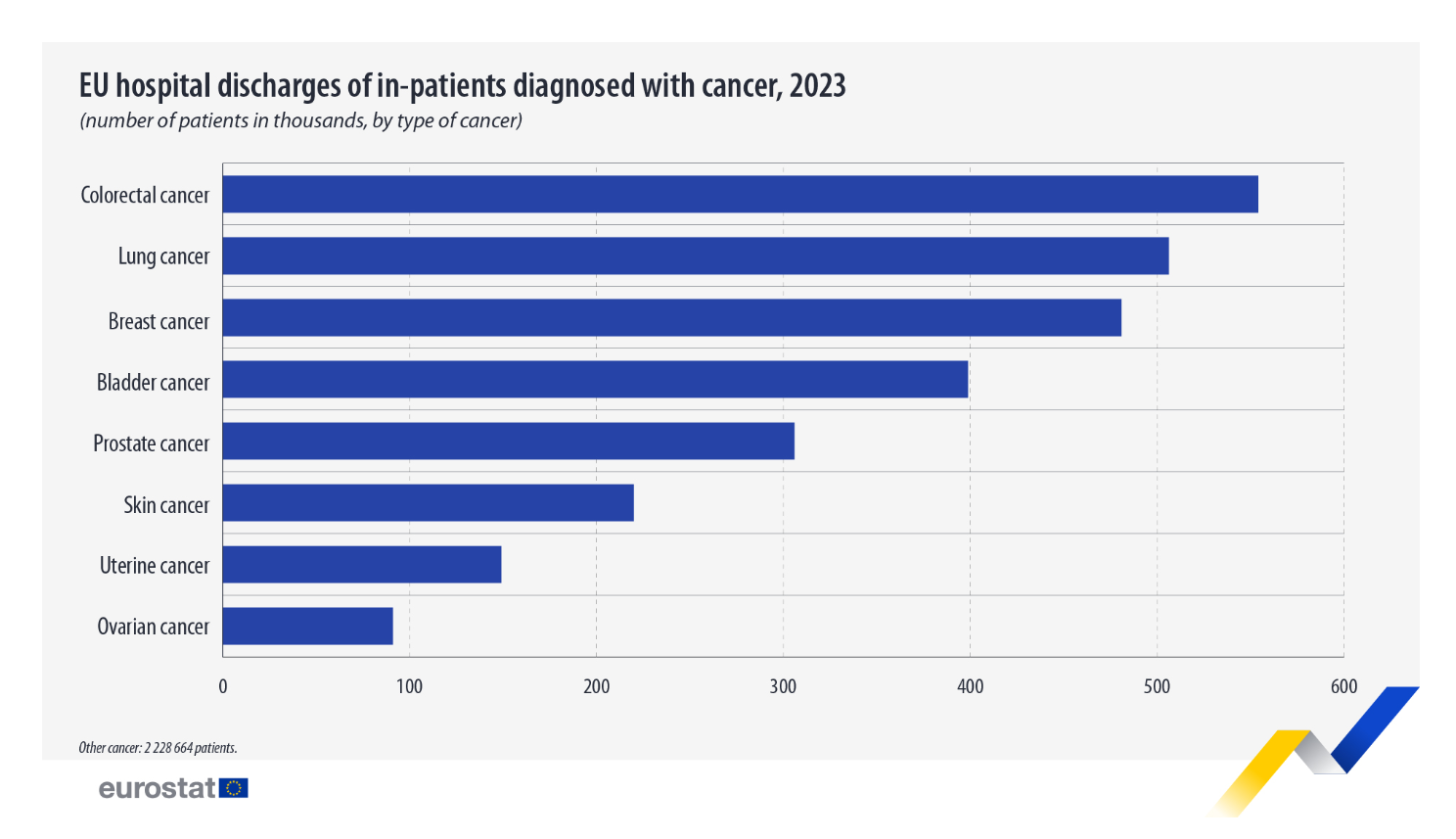
Colorectal cancer was the most common diagnosis among discharged cancer patients, accounting for 554,112 hospital discharges, or 11.2% of the total. This was followed by lung cancer with 506,372 discharges (10.3%) and breast cancer with 480,922 discharges (9.7%).
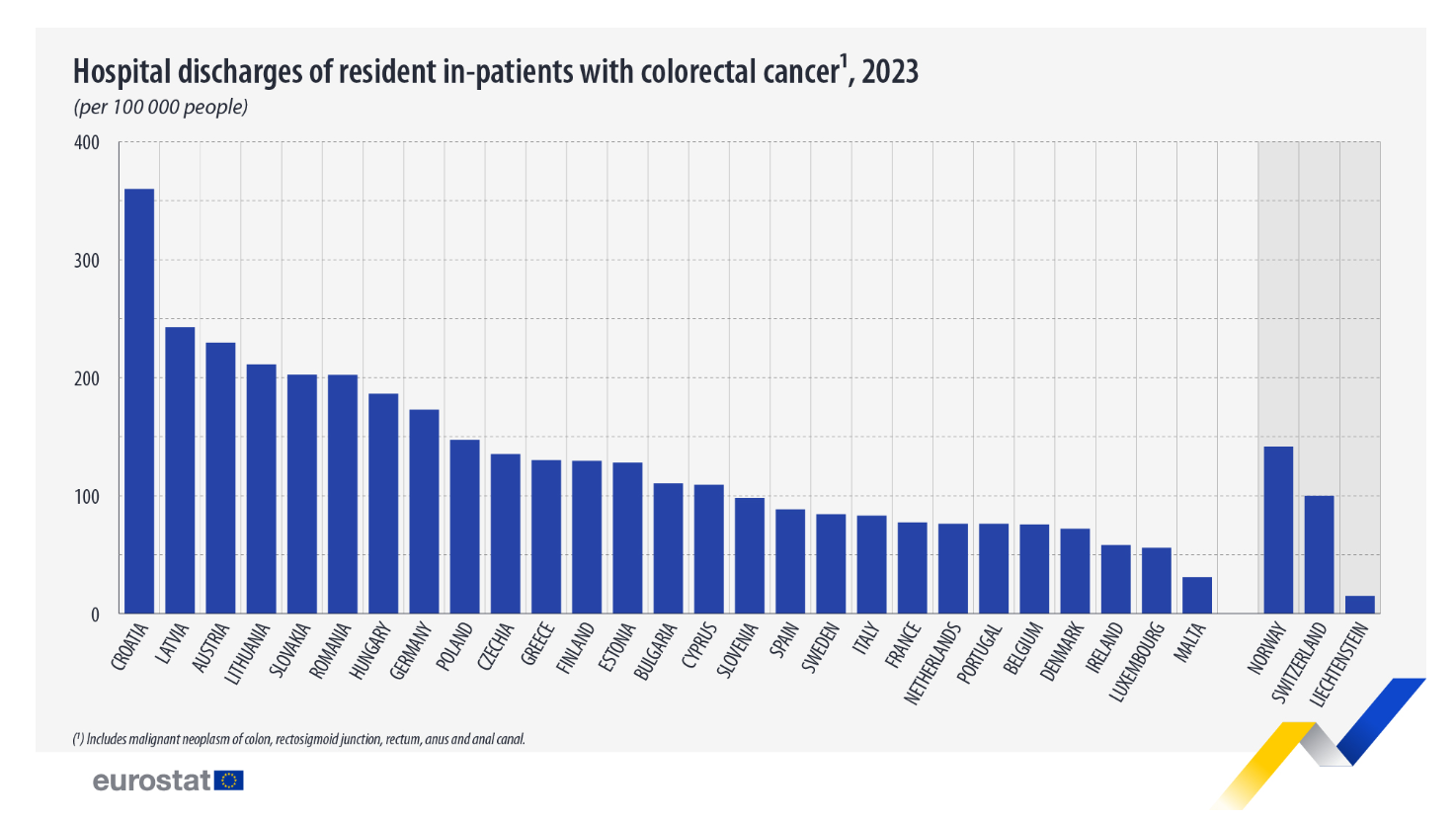
Colorectal cancer was the leading diagnosis among discharged cancer in-patients in 18 EU countries. The highest discharge rates for colorectal cancer were recorded in Croatia (360 patients per 100,000 inhabitants), Latvia (243), and Austria (239). By contrast, the lowest rates were observed in Malta (31 per 100,000), Luxembourg (56), and Ireland (58), pointing to substantial variation in hospitalisation patterns across the EU.