
Inside EU Health: Pharma deal agreed; State of EU Health Report; WHO concludes that vaccines don’t cause autism - again
The Council and Parliament reached a deal on the Pharma Package, the latest 'State of EU Health Report' is released, and WHO confirms - once again - that vaccines do not cause autism.
EU reaches landmark pharma deal after marathon overnight negotiations
In the early hours of today, the Parliament and Council reached an agreement on one of the EU's most complex legislative proposals, the Pharma Package.
The "jumbo" trilogue ends more than two years of negotiations, that started in the last mandate and a previous parliament. The Council managed to maintain 11-year protection periods, but with important conditions. Nonetheless, the baseline of eight years of regulatory data protection and one year of market protection was maintained.
Dolors Montserrat (EPP, Spain), rapporteur for the Directive, said this clarity meant “the day after a patent expires, there will be market access for generics”.
Tiemo Wölken (S&D, Germany), rapporteur for the Regulation, said he would have preferred a shorter baseline period but argued that the strengthened Bolar exemption and measures to improve access “struck the right balance”.
The European Medicines Agency has announced plans to publish a new web page serving as a gateway of information and will be updated as implementation work progresses providing guidance for pharmaceutical companies as it becomes available.
 Catherine Feore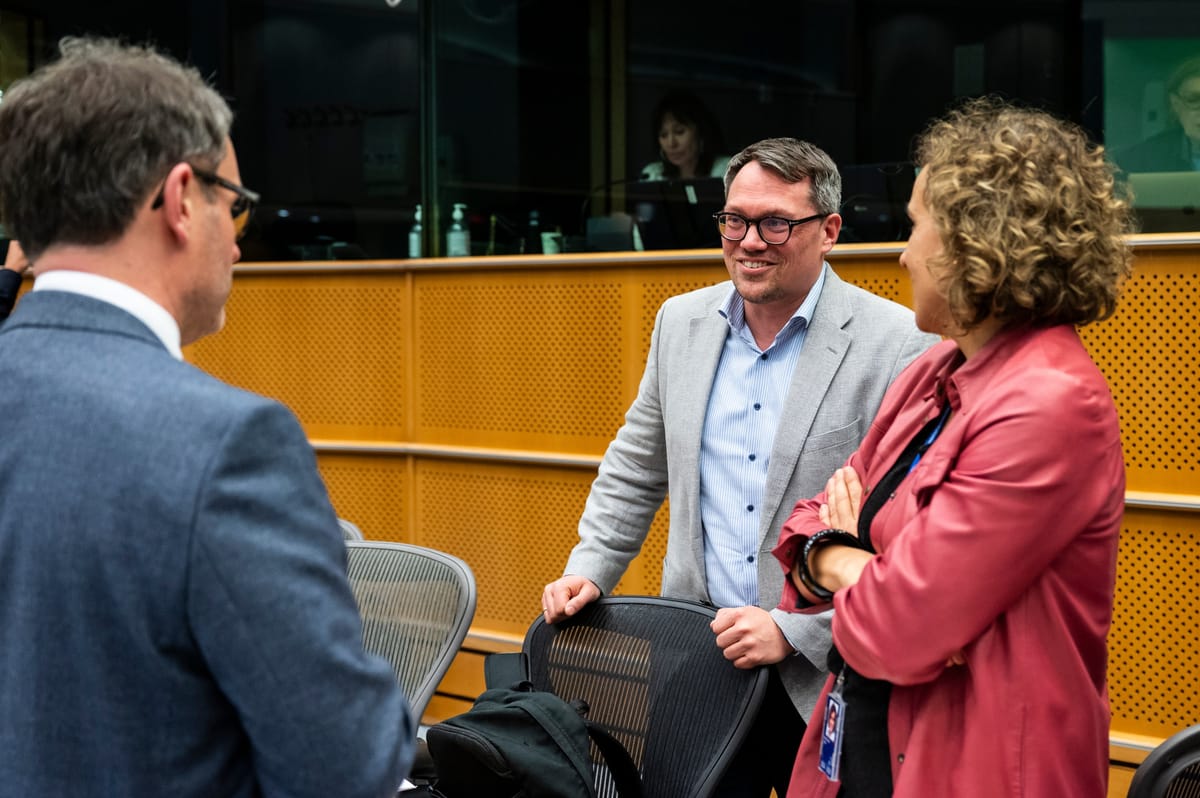
EU’s ‘2025 State of Health Report’ says Europe needs to ‘act now’
The latest State of Health in the EU Synthesis Report warns that Europe urgently needs more innovative and resilient health systems to improve care and strengthen competitiveness, as ageing populations and rising non-communicable diseases impose growing strains on healthcare systems.
The report highlights four priorities: preventing non-communicable diseases, accelerating digital health, reinforcing primary care, and ensuring affordable access to pharmaceuticals and innovation.
Since its launch in 2016, the report produced jointly by the European Commission, the OECD and the European Observatory on Health Systems has aimed to provide clear, accessible evidence to help policymakers improve performance.
Commissioner for Health and Animal Welfare Olivér Várhelyi calls the findings “a clear wake-up call,” noting that heart disease remains the leading cause of preventable death and warning of “worrying trends among young people” such as rising childhood obesity and e-cigarette use. He stressed the need to “act now”.
Country health profiles, covering all EU Member States, Iceland and Norway
WHO expert committee finds no causal link between vaccines and autism, again
In its latest review, the WHO Global Advisory Committee on Vaccine Safety (GACVS) has once again confirmed that vaccines do not cause autism spectrum disorder (ASD).
After assessing two new systematic reviews covering research up to 2025, the Committee found no credible evidence linking either thiomersal-containing vaccines or aluminium-adjuvanted vaccines to ASD. While a small number of studies suggested potential associations, these were found to have serious methodological flaws and carried very low evidentiary weight.
Speaking at the WHO’s end-of-year press conference, Dr Tedros said it was the fourth review of the evidence, following similar reviews in 2002, 2004 and 2012: “All reached the same conclusion: vaccines do not cause autism."
He added that over the past 25 years, under-five mortality has dropped by more than half, from 11 million deaths a year to 4.8 million, “vaccines are the major reason for that”.