
Inside EU Health: Ombudsman opens inquiry on NGO grants, Exposome Alliance launched, SANT debate budget, clinical trials, alarm over nicotine use
Ombudswoman inquiry over scrapped health grants; new Exposome Alliance; MEPs call for safeguards for health funding; Europe urged to scale up clinical trials; Nordics for action on nicotine use
Ombudswoman investigates Commission over scrapped health NGO grant
European Ombudswoman, Teresa Anjinho, has opened an inquiry into the European Commission’s failure to publish the 2025 EU4Health operating grant call, following a complaint by members of the EU4Health Civil Society Alliance.
In a letter dated 16 February 2026, Anjinho noted that many organisations relied on operating grants as core funding and were left in uncertainty when support disappeared. While the Commission was not legally required to allocate grants in 2025, she stressed it had a duty to communicate policy changes clearly and promptly.
The sudden funding withdrawal forced several organisations to cut staff and activities, including Eurocare, which closed its Brussels office. NGOs are more vulnerable to funding changes, with reduced resources there are concerns that there is a growing advocacy gap between civil society and well-resourced industry lobbyists. The Commission must respond by 15 May 2026.
 Catherine Feore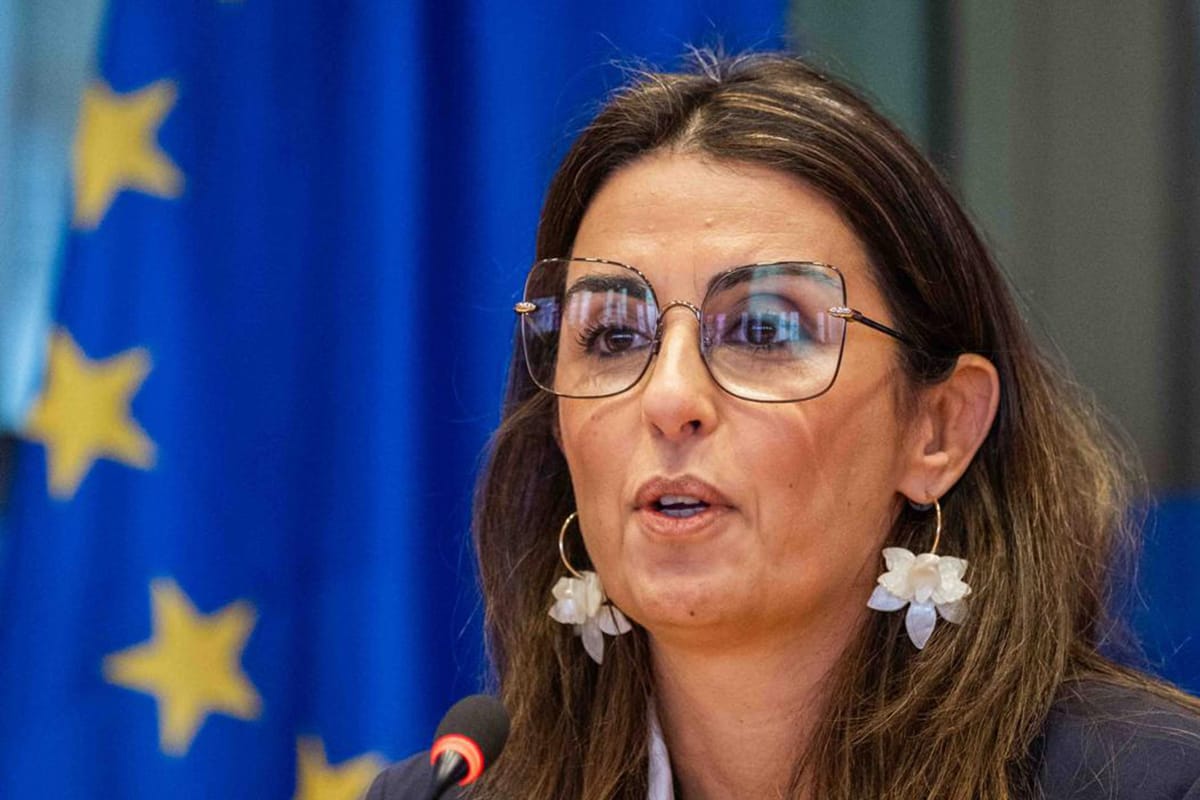
New Exposome Alliance aims to put prevention at the heart of EU health policy
A cross-party Exposome Alliance was launched in the European Parliament today. The Alliance’s goal is to put prevention at the heart of Europe’s future health and research agenda by focusing on the exposome,the combined impact of environmental, social and lifestyle factors on health across a lifetime.
Speaking at the event Christophe Clergeau (S&D, France) claimed that 90% of health problems are caused by environmental, chemical, occupational, and lifestyle-related exposure. “The health of our fellow citizens begins long before the hospital, it begins in our public policies.”
The Alliance has three clear priorities in relation to the next EU long-term budget: One billion euros of research funding, the creation of a European Exposome Data Space and a Common European Pillar for Prevention.
MEPs call for safeguards for health funding in the European Competitiveness Fund
The Public Health Committee (SANT) debated a draft opinion by rapporteur Radan Kanev (EPP, Bulgaria) on the proposed European Competitiveness Fund (ECF). Presenting his report, Kanev said it aims to ensure the ECF strengthens Europe’s health biotech and bioeconomy sectors while protecting public health objectives. He proposed ring-fencing funding for prevention, preparedness, innovation and health SMEs to prevent health budgets from being “crowded out by better organised sectors.”
Several political groups welcomed the ambition, also warning against weakening dedicated health programmes. Krisitian Vigenin (S&D, Bulgaria) stressed that “health is a public good” and cautioned that it must not become “a marginal window inside a competitiveness instrument,” calling for a clearly earmarked health budget.
From Renew Europe, Stine Bosse (Denmark) supported investment in innovation and supply-chain resilience, arguing Europe must ensure critical manufacturing, such as vaccines and antibiotics, “does not leave Europe.”
Meanwhile, Catarina Martins (The Left, Portugal) questioned the logic of linking health to competitiveness, warning that health investment should benefit society rather than private profit.
The European Commission defended the proposal, stating that strong health systems are “the foundation for social resilience, economic growth and competitiveness.” Negotiations will continue as MEPs seek consensus ahead of the final opinion.
Europe urged to scale up clinical research as study highlights economic gains
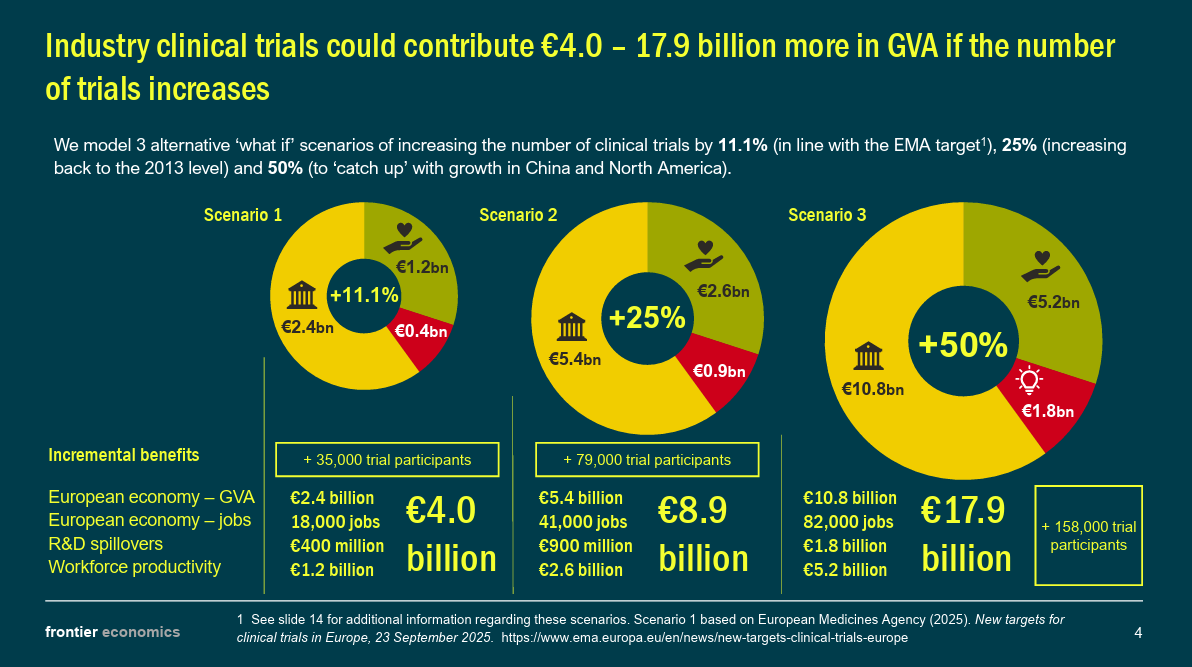
A new report building on a 2024 Frontier Economics study for the Association of the British Pharmaceutical Industry (ABPI) highlights the significant economic impact of industry-sponsored clinical trials across the European Economic Area (EEA).
The report assesses that if the EU objective to increase the number of clinical trials in the EU by 500 over the next five years is achieved - Scenario 1 - 35,000 Europeans would gain access to groundbreaking medical treatments.
The report also models future growth scenarios, including an unlikely scenario in which EU trial activity matches US and Chinese expansion. Nathalie Moll, Director General of EFPIA, said: “There is no downside to hosting clinical trials in Europe, only health and economic gains for patients and society.”
Nordics call out the alarming rise of nicotine use through novel products
Nordic cancer societies have joined forces to urge the European Commission to update the Tobacco Products Directive (TPD) and Tobacco Advertising Directive (TAD). They are particularly concerned by the gaps in the current legislation that allow the aggressive marketing of novel products, such as, nicotine pouches, e-cigarettes and heated tobacco to young people.
“Alarming increases in youth nicotine use in Nordic countries, driven by flavoured products with extremely high nicotine content, serve as a stark warning for the entire EU.”
The cancer societies are calling for price increases and “drastically reduced personal import limits”, they also want a ban on all direct and indirect marketing and a ban on online sales.