Inside EU Health: Cancer-causing chemicals; patient groups want HTA improvements; benefits of investing in innovative medicines
EU agrees tougher protections against cancer-causing chemicals; patient groups welcome progress on EU HTA while calling for further improvements; every €1 invested in innovative medicines returns €5.67 in benefits, claims EFPIA
EU agrees tougher protections against cancer-causing chemicals
EU lawmakers have reached a provisional agreement on new rules aimed at strengthening protections for workers exposed to hazardous substances linked to cancer and other serious health conditions.
The deal, struck on Tuesday between European Parliament and Council negotiators, marks the sixth revision of the Carcinogens, Mutagens and Reprotoxic Substances Directive (CMRD). It introduces updated occupational exposure limits for several chemicals based on the latest scientific evidence.
“Every year, around 120,000 workers in the EU are diagnosed with occupational cancer linked to exposure to carcinogens at work. This is a preventable tragedy that we cannot accept,” said Rapporteur Liesbet Sommen (EPP, Belgium). “By introducing stricter exposure limits, this agreement will better protect workers' health, reduce risks in the workplace and strengthen decent working conditions across the European Union.”
“This agreement updates EU protections in line with science, helping create safer workplaces and preventing work-related illnesses across Europe,” said Cypriot Minister for Labour and Social Insurance, Marinos Moushouttas.
The revised rules set new exposure limits for cobalt and its inorganic compounds used in battery production; chemicals used in aluminum production; and 1,4-dioxane, among others. Parliament also secured a commitment from the European Commission to assess additional limits for substances found in welding fumes. The revision is expected to prevent around 1700 lung cancer cases and 19000 other illnesses over the next 40 years.
Patient groups welcome progress on EU HTA while calling for further improvements
Fifteen patient organisations welcomed the publication of the first Joint Clinical Assessment (JCA) under the EU Health Technology Assessment Regulation, describing the assessment of tovorafenib as an important milestone for a more coordinated and patient-centred European HTA system.
While recognising progress in involving patients and carers, the organisations say further improvements are needed. They call for patient involvement from the earliest stages of the process, including the development of assessment scopes and participation in ‘Population, Intervention, Comparator and Outcomes’ (PICO) surveys, to ensure that issues most relevant to patients and families are considered.
The groups also advocate for a stronger role for patient organisations throughout the assessment process, greater transparency on how patient input influences assessments, and better evidence on outcomes that matter to patients, such as quality of life and treatment burden.
Another area they highlight is the need for clear and accessible language, available in all official EU languages. The organisations say they remain committed to strengthening patient involvement.
Every €1 invested in innovative medicines returns €5.67 in benefits, claims EFPIA
A new study published by the European Federation of Pharmaceutical Industries and Associations (EFPIA) claims that every €1 invested in innovative medicines generates €5.67 in social, economic and healthcare benefits across Europe.
EFPIA Director General Nathalie Moll said, “Deprioritising health and medicines budgets is a political choice that is not only a strategic mistake but an economically self-defeating decision which sacrifices long-term prosperity for short-term gains.”
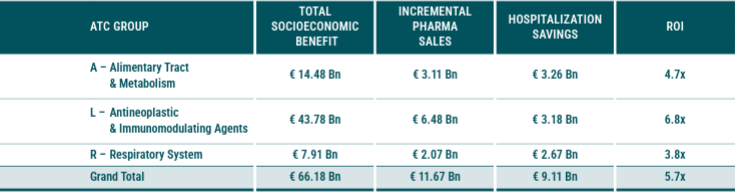
The research, conducted by the WifOR Institute analysed the impact of new medicines in 29 European countries between 2014 and 2022. It estimates that Europe’s investment of €11.67 billion in innovative medicines delivered more than €66 billion in benefits, including over €9 billion in direct hospital cost savings.
The study, which uses IQVIA data, shows variable returns on investment across therapeutic areas.
The impact also appears to be very variable across the EU: “The five largest contributors to the total socioeconomic benefit are the United Kingdom (€13.09 billion), Germany (€12.00 billion), France (€7.09 billion), and Spain (€4.61 billion), and Romania (€3.82 billion). Together, these five countries account for approximately 61% of the total socioeconomic benefit in scope.”
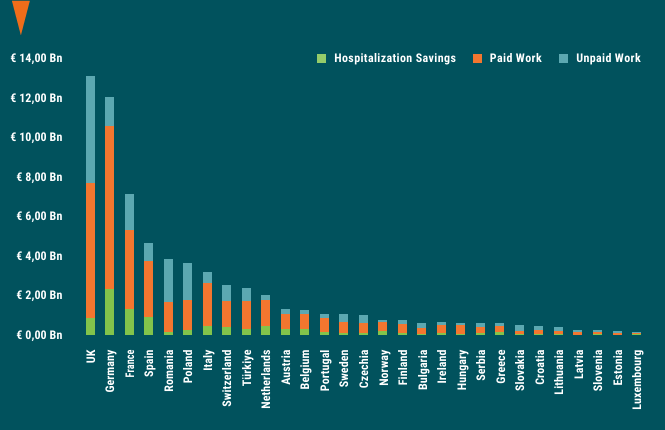
The economic impact included €38 billion in increased workforce productivity and €19 billion in unpaid contributions, alongside hospital savings. Cancer medicines delivered the highest return, generating €6.80 for every euro invested, compared with €4.70 for diabetes and metabolism treatments and €3.80 for respiratory medicines.