
Inside EU Health: Audiovisual Directive; EMA refutes autism vaccine link; MOP4 on illicit tobacco; COP11 wraps up; Novo discontinues Alzheimer’s trial
Commission consults on Audiovisual Media Services Directive; EMA refutes autism vaccine link; MOP4 on illicit tobacco; COP11 wraps up; Novo discontinues Alzheimer’s trial
Evaluation of media rules presents chance to strengthen health protections
The European Commission has opened a public consultation as part of its evaluation of the Audiovisual Media Services Directive (AVMSD), last updated in 2018. The process will examine whether the legislation remains fit for purpose in an era increasingly dominated by online platforms and new digital actors, including influencers.
For public health advocates, the evaluation represents an opportunity to reinforce and modernize the Directive’s health-related provisions. Key concerns include the marketing of unhealthy food to children, as well as the promotion of alcohol, tobacco and nicotine products, and even GLP-1 weight-loss medicines.
Public health organizations have long criticized the existing framework as insufficient, for example, by relying on self-regulation and voluntary industry codes of conduct to limit children’s exposure to unhealthy food advertising.
Evidence also continues to mount over the marketing tactics used by the tobacco and nicotine industry. Research by the Campaign for Tobacco-Free Kids shows that companies are heavily investing in social media promotion and influencer partnerships to reach young audiences with new nicotine products.
Vaccines do not cause autism
The European Medicines Agency's Head of Health Threats and Vaccines, Marco Cavaleri, isn’t mincing his words. In a LinkedIn post, he wrote: “Let me get this one straight: Vaccines do not cause autism.” He goes on to say that there have been plenty of big studies in hundreds of thousands of children across the world that have thoroughly investigated the claim and found no link between vaccines and autism.
The post was prompted by the US CDC updating its page on vaccine safety to read: “‘vaccines do not cause autism’ is not an evidence-based claim because studies have not ruled out the possibility that infant vaccines cause autism.” The page claims that supporting studies have been ignored by health authorities.
In his post, Cavaleri says: “ALL evidence has been considered by public health authorities in Europe and beyond. Only one exception is for fraudulent studies, which I guess we ALL agree should be ignored, right?” Referring to Andrew Wakefield’s infamous 1998 study, which was subsequently withdrawn. He says that what we should be concerned about is the resurgence of measles, “Let’s keep our children vaccinated and protected!”
From COP to MOP – tackling illicit tobacco trade
Following the conclusion of COP11 on tobacco control, the 71 Parties to the ‘Protocol to Eliminate Illicit Trade in Tobacco Products’ opened their fourth Meeting of the Parties (MOP4) today. Over the next three days, they will focus on strengthening implementation of the Protocol and closing persistent gaps that allow illicit tobacco trade to flourish.
In his opening address, Andrew Black, Acting Head of the WHO FCTC Secretariat, emphasized the scale of the challenge. He said that many outside the tobacco control community would be surprised to learn that illicit trade still accounts for an estimated 11% of the global tobacco market. Eliminating this trade, he said, could generate more than US $47 billion (€40 billion) in additional annual tax revenues.
The latest report on global implementation warns that progress remains fragile. Without consistent investment, political commitment, and international cooperation, gains could easily be reversed. The Secretariat stresses that in addition to closing existing gaps, the Protocol must be future-proofed to address emerging risks, particularly the rapid evolution of new and alternative tobacco and nicotine products that may evade current regulatory frameworks.
COP11 delivers incremental wins, but remains weak on new nicotine products
The eleventh Conference of the Parties for tobacco control closed on Saturday with incremental progress and some prevarication.
After a week of intense negotiations, there was some progress on different elements, but a rift between the parties on nicotine and harm reduction. Nevertheless, COP11 sets the groundwork for COP12 in Armenia in 2027.
 Catherine Feore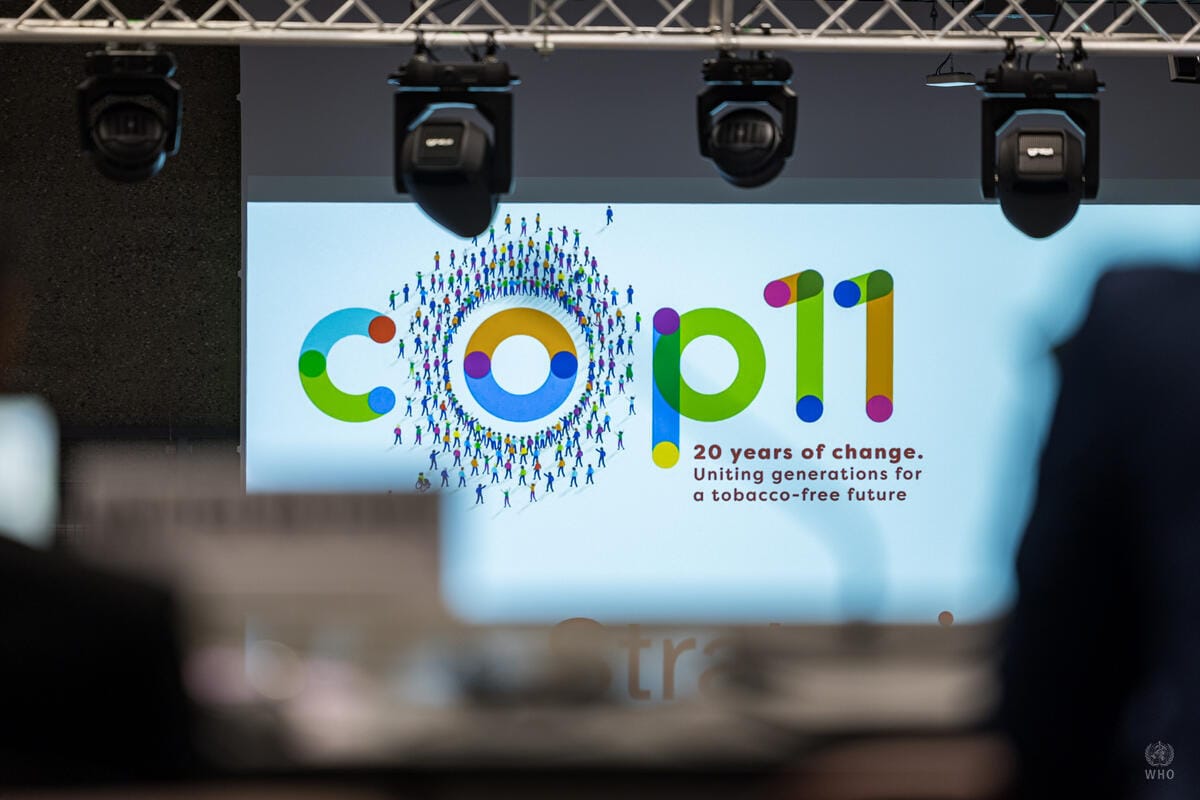
GLP-1 fails to slow Alzheimer’s
Novo Nordisk clinical trials to assess whether its GLP-1 weight-loss medicine semaglutide could delay Alzheimer's disease has failed to show a statistically significant reduction in disease progression.
Although the drug improved Alzheimer’s-related biomarkers, it did not show superior results to a control group in the trial. The company will discontinue the one-year extension phase of the trials and plans to present detailed findings at upcoming scientific meetings.