
Health Policy Index highlights ten MEPs and asks what does leadership mean in 2026
Parliamentarians' set out their top priorities for 2026 amid growing uncertainty and geopolitical disruption
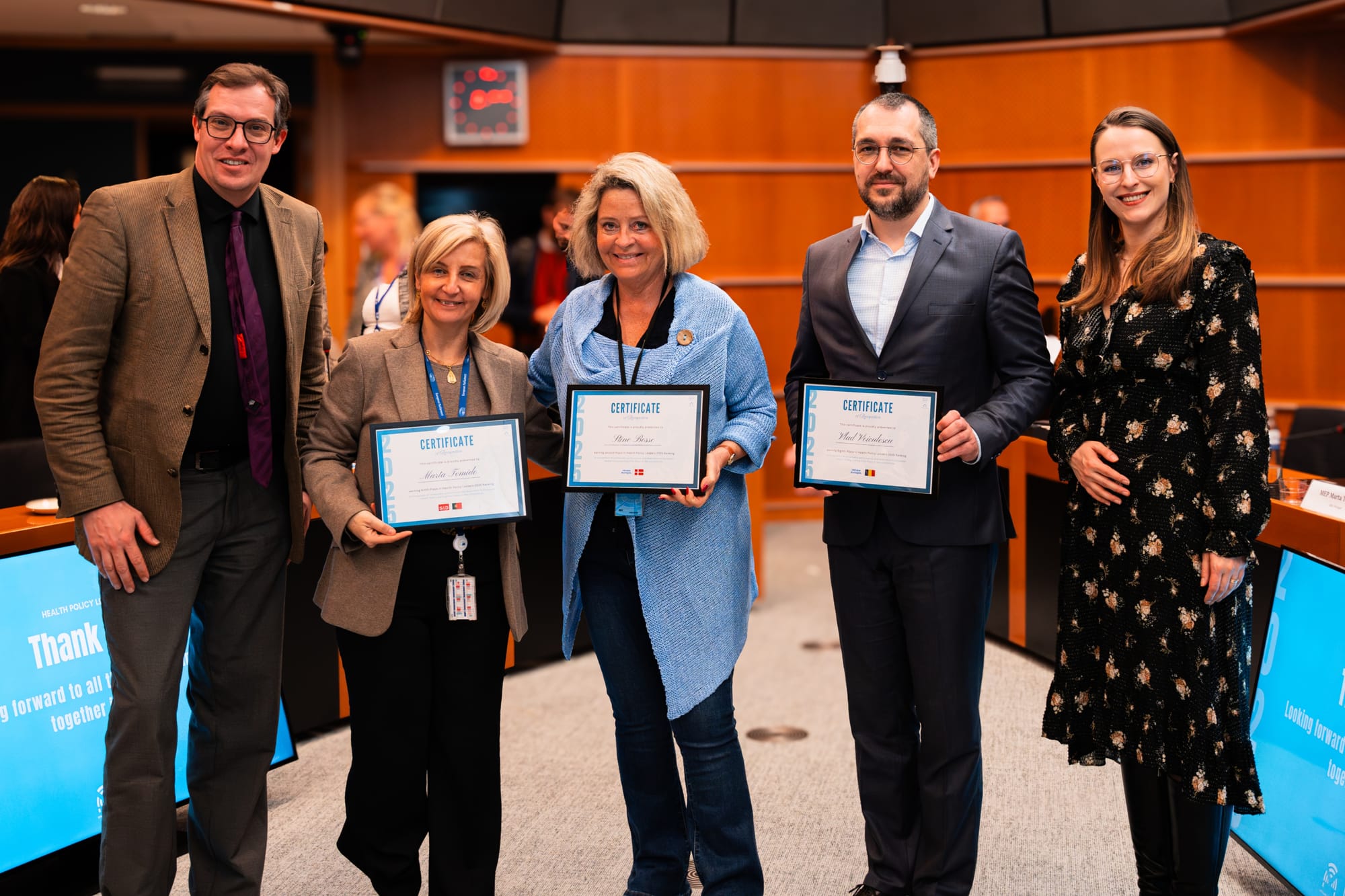
This year’s announcement of the ten leading MEPs in European health policy was also an opportunity to reflect on what leadership means in 2026.
MEP Tilly Metz said that while 2025 marked important legislative developments — from the pharma package to growing momentum on critical medicines — 2026 would not simply be about implementation: “From the One Health approach and exposome research, to tackling medicine shortages, strengthening the healthcare workforce, advancing Europe’s Beating Cancer Plan, revising tobacco legislation, and pushing for a comprehensive Mental Health Strategy, the work continues.”
A concern at the forefront for many MEPs is the growing struggle to recruit and retain healthcare workers. MEPs Marta Temido and András Kulja listed this as one of their top priorities. “It is not sustainable,” said Kulja.
Critical Medicines Act rapporteur Tomislav Sokol underlined how the changing global situation had changed perspectives on the security of supply chains and said that he doesn't think that the EU's Pharmaceutical Package would have been adopted at the end of last year, had it not been for US actions.
Health policy has lost some of its impetus since the pandemic, but all the MEPs present — including some who had previously expressed doubts about establishing a new Public Health Committee — agreed that it was working well and helping to keep health policy in the spotlight. Metz pointed to the urgency of the issue for the public: “Citizens expect us to deliver not only in legislation, but in their daily realities: in hospitals, pharmacies, and communities across Europe.”
RPP CEO Lutz Dommel said the EU must not get “trapped in linear thinking”: “We take today and extend it gently into tomorrow. But the world no longer develops that way. It moves in shocks, in ruptures, in geopolitical acceleration.”
Dommel argued that leadership in 2026 means recognising that “nothing is a given anymore.” Rather than remaining reactive, leaders must ask a more fundamental question: “What truly matters to us — as citizens, as researchers, as companies, as policymakers — before it is at risk? Leadership means protecting what matters before it is questioned.”
Health Policy Leaders Index
Since 2024, RPP has ranked MEPs for their leadership in health policy. RPP’s Director for Healthcare, Kinga Wójtowicz, outlined four broad areas used to collect data: partnership and legislative leadership, stakeholder networks, media visibility, and political leadership. “These factors give us a transparent and well-informed picture of who is driving the health agenda,” she said.
The Health Policy Leaders (HPL) Index recognises influential policymakers who significantly shape EU health policy. This year’s list will be familiar to those who follow European health policy closely: Romana Jerković (S&D, Croatia), Vytenis Andriukaitis (S&D, Lithuania), Tomislav Sokol (EPP, Croatia), Tilly Metz (Greens/EFA, Luxembourg), András Kulja (EPP, Hungary), Marta Temido (S&D, Portugal), Vlad Voiculescu (Renew, Romania), Adam Jarubas (EPP, Poland), Nicolas González Casares (S&D, Spain), and Stine Bosse (Renew, Denmark).
Wójtowicz said the purpose of the index is not to rank individuals strictly from one to ten, but to identify ten key Members of the European Parliament who consistently drive health agendas, propose important political initiatives, and shape policy implementation from patient, industry, and broader stakeholder perspectives.