
Giant condom erected in front of Parlaiment highlights lack of male contraceptive options
A giant condom outside the European Parliament highlights calls for EU investment in new male contraceptive options to promote shared reproductive responsibility
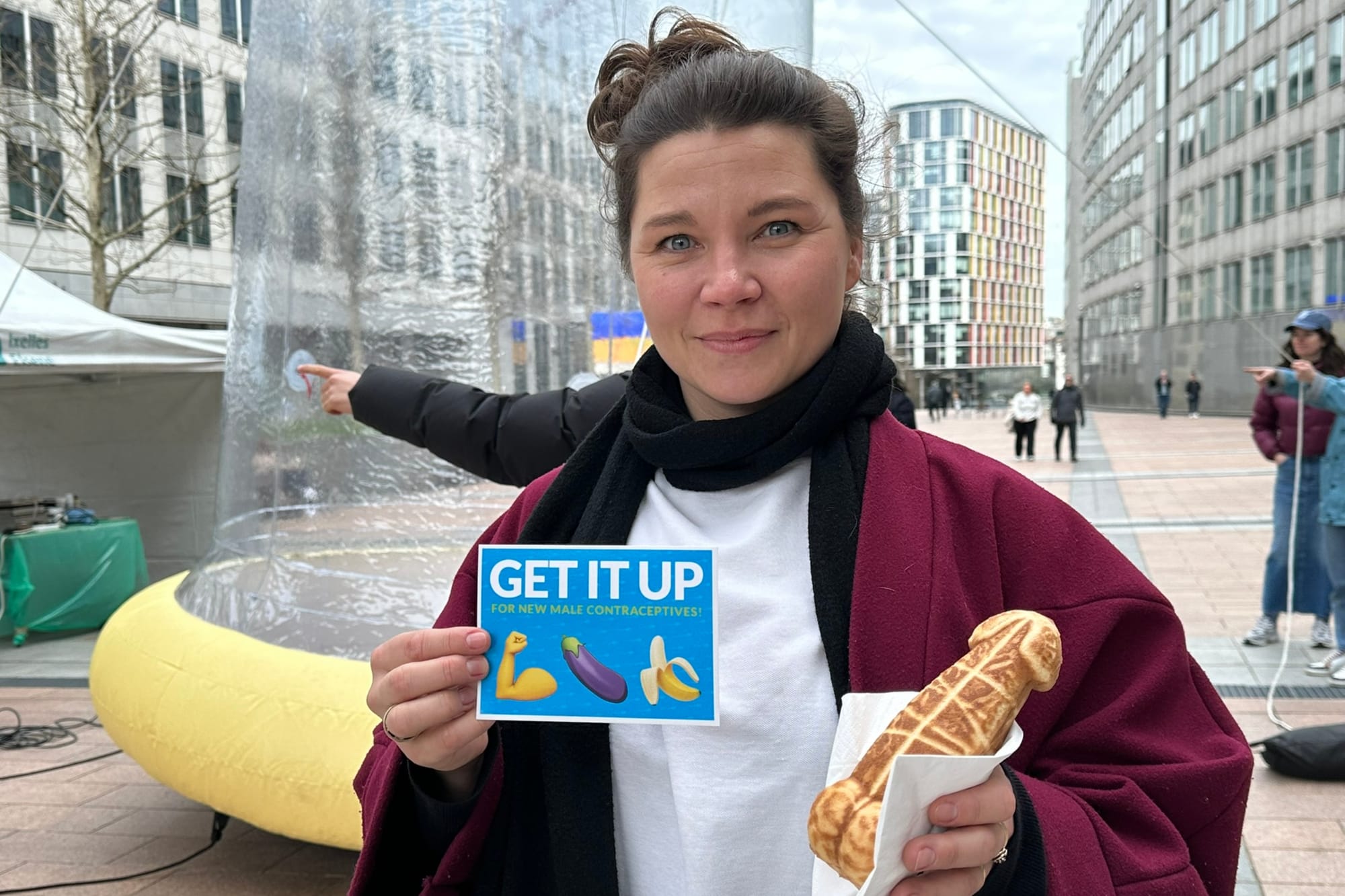
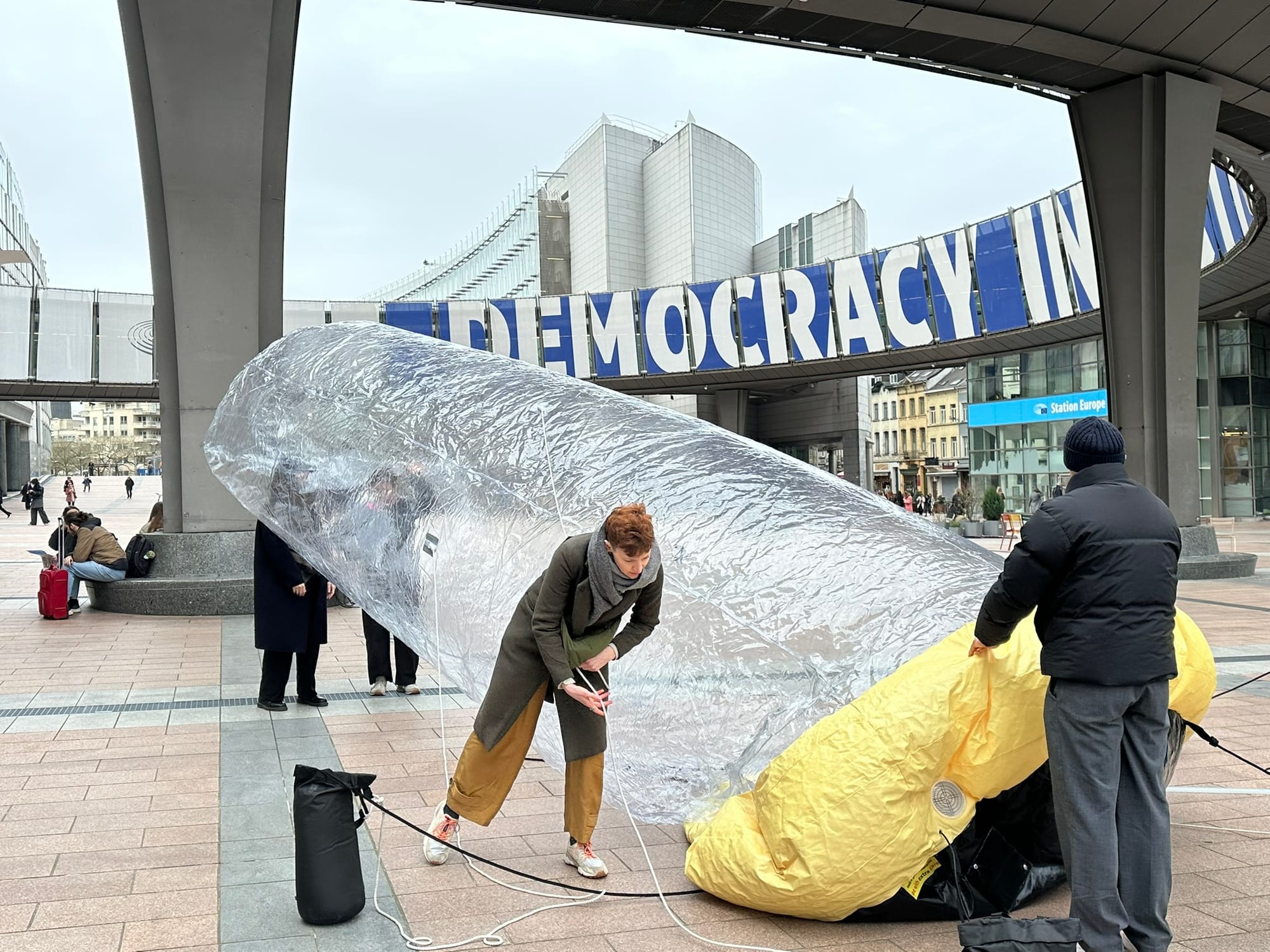
A seven-metre inflatable condom appeared outside the European Parliament in Brussels on Tuesday (17 March), part of a campaign by global health NGO DSW (to draw attention to the limited contraceptive choices available to men.
The eye-catching installation, accompanied by a tongue-in-cheek public campaign titled ’Time Has Cum’, aims to push EU institutions to invest in research and development of new male contraceptive methods.
Head of DSW’s Brussels office, Lisa Goerlitz, said the stunt was designed to spark conversation around what remains a significant gap in reproductive health.
“While it’s an eye-catcher, the message is serious,” she said. “It's the year 2026 and only two contraceptive methods are available for men: condoms, an on-demand option, and vasectomy, a permanent method of sterilisation. This has to change and the EU should take the lead in supporting breakthrough innovation in the male contraceptive field.”
DSW is calling on the EU to step up funding for innovation in this area, arguing that progress is being slowed by the high cost of late-stage clinical trials.
“There are a handful of promising male contraceptive options, but without adequate research funding and institutional support, these innovations may remain unavailable for years”, Goerlitz said. “We’re here today to raise awareness of this imbalance in access and call on the EU to lend its support to this important area of public health.”
Strong demand, but limited options
Despite the lack of available products, demand appears to be strong. A global survey found that more than 60% of men would be willing to try a new contraceptive method within its first year, provided it is safe and effective. Women also reported a high level of trust in their partners’ willingness to use such methods.
Goerlitz stressed that new male contraceptives are not intended to replace existing options for women, but to expand choice and promote shared responsibility.
“This is about giving couples more options and enabling men and women to share reproductive responsibility more equally,” she said.
Declining condom use raises concerns
The campaign also comes amid declining condom use across Europe, a trend that worries public health experts, particularly given the rise of antibiotic-resistant sexually transmitted infections.
“Condoms remain one of the only multipurpose prevention tools we have,” Goerlitz said, noting their dual role in preventing both unintended pregnancies and the spread of STIs.
Looking ahead, researchers are exploring so-called multipurpose prevention technologies (MPTs), such as vaginal rings that could simultaneously prevent pregnancy and infections. These innovations are complex and still under development.
A call for EU leadership
DSW argues that the EU has an important role to play, particularly as global funding for family planning faces increasing pressure.
Goerlitz welcomed the EU’s strong policy commitments, including its recent Gender Equality Strategy, which places sexual and reproductive health and rights at its core, and acknowledged that ‘alternative contraceptive solutions for men are underdeveloped’.
“Resources are limited, so we need to focus on areas with the greatest impact,” she said. “Access to contraception has huge ripple effects: improving education, health outcomes and gender equality.”
With the European Commission currently preparing new global health initiative, DSW hopes its campaign will help put contraceptive innovation higher on the agenda.
“Our message is clear,” Goerlitz said. “Invest not only in access to existing contraceptives, but also in developing new, better, and more accessible methods. We are long overdue for greater equality in reproductive responsibility.”