
Germany sets out 66 possible reforms to cut health spending
Germany has presented a 66-option health reform plan, leaving politicians to decide what and where to cut

Germany’s Health Finance Commission has handed policymakers a menu of 66 measures that could reshape the country’s statutory health insurance system and spark difficult political trade-offs.
Faced with a projected funding gap that will rise from €15.3 billion in 2027 to over €40 billion by 2030, the Commission argues that the current trajectory is unsustainable. The policy paper offers far more savings than strictly necessary, leaving politicians to decide who ultimately pays.
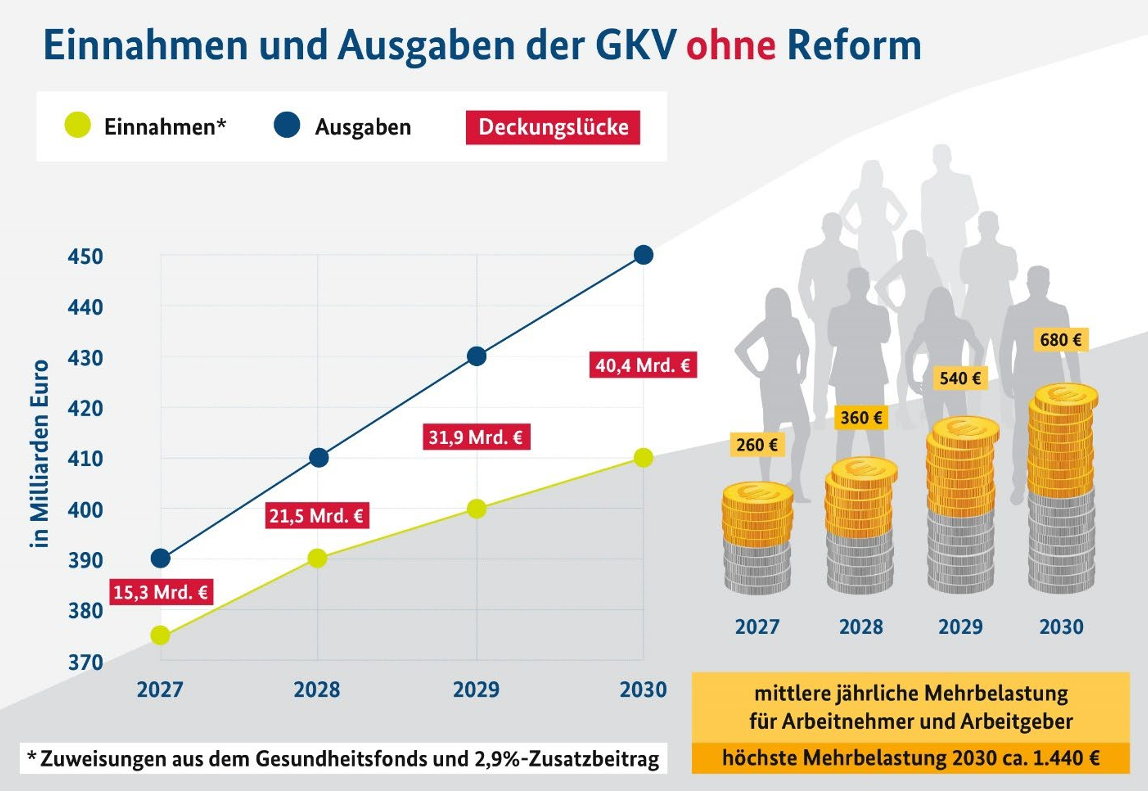
At the heart of the problem is that healthcare spending is outpacing revenues, driven largely by rising prices and a steady expansion of benefits. While revenues have historically grown robustly, this trend is now under pressure from a weakening labour market. Without reform, contribution rates are set to climb sharply, increasing the burden on workers and employers alike.
The Commission’s answer is sweeping. Its proposals range from tightening the use of evidence-based medicine - cutting funding for treatments without proven benefit - to raising co-payments that have increased slowly over two decades. It also advocates higher taxes on tobacco, alcohol and sugary drinks.
But what makes the report politically explosive is its scale. The total savings potential - over €60 billion by 2030—goes well beyond what is needed to stabilise the system. This is not a single reform package; it is a toolkit. Governments can choose to prioritise efficiency gains, shift costs onto patients, increase contributions, or rely more heavily on taxation.
That flexibility is both a strength and a risk. On one hand, it allows for tailored solutions and political compromise. On the other, it exposes the core dilemma: every option has winners and losers. Asking patients to pay more, squeezing providers, or raising taxes all come with consequences for access, quality, and fairness.
In effect, the Commission has done the technical work. The harder question now is political. Germany must decide not just how to save its health system, but what kind of system it wants to preserve.
Germany’s healthcare system continues to rank among the strongest in the European Union, combining high levels of public funding with universal coverage and relatively low out-of-pocket costs.
However, the country faces mounting challenges. Preventable diseases linked to obesity, alcohol use and smoking remain more prevalent than in many EU peers, while socioeconomic health inequalities are comparatively wide. At the same time, high hospital capacity has led to inefficiencies and elevated rates of avoidable admissions.
Although access to care remains strong overall, rising unmet mental health needs point to increasing pressure on services and indicate areas where further reform is needed.