
Inside EU Health: Nicotine and tobacco; Ebola update; EHDS
From tobacco-free to tobacco and nicotine-free generation; CEPI backs three possible Bundibugyo ebolavirus vaccine candidates; Patients call for stronger role in shaping Europe’s Health Data Space
From a tobacco-free to a tobacco and nicotine-free generation
In a statement on World No Tobacco Day (31 May), EU Health Commissioner Olivér Várhelyi said that the EU’s clear objective was to achieve a tobacco and nicotine-free generation by 2040. In the past, the Commission has only referred to a tobacco-free generation.
The Safe Hearts Plan, presented in December, highlighted what is described as the “alarming” rise in the consumption and sales of novel tobacco and nicotine products, including heated tobacco products, e-cigarettes and nicotine pouches, among young people.
“While traditional smoking is decreasing, new tobacco and nicotine products are increasingly reaching a new generation. Adolescents and young adults aged 12 to 29 are particularly exposed,” said Várhelyi. “More than half of nicotine pouch users are under 40, one in five consumers of tobacco and nicotine products aged 15 to 19 years started by regularly using e-cigarettes.”
The Commissioner warns that if current regulations do not keep pace with a rapidly changing market, Europe risks the creation of a new generation exposed to a new form of nicotine addiction.
The Commission has launched a consultation on the Tobacco Products and Tobacco Advertising rules in May.
 Catherine Feore
Ebola Update: CEPI backs three possible Bundibugyo ebolavirus vaccine candidates
The Coalition for Epidemic Preparedness Innovations (CEPI) has identified three investigational vaccines targeting the Bundibugyo ebolavirus. CEPI will continue to evaluate candidate vaccines.
"With Bundibugyo virus spreading rapidly and no licensed vaccines, every day counts in the race against this deadly disease,” said Dr Richard Hatchett, CEO of CEPI. “CEPI’s urgent funding and support for these three promising candidates aims to advance safe, effective vaccines to help control this epidemic.”
Contenders: IAVI will use an rVSV platform, which it has used for an approved Zaire ebolavirus vaccine. Moderna will use its mRNA technology, which will build on its existing Ebola-related R&D. Finally, the Oxford Vaccine Group is teaming up with the Serum Institute of India, like Moderna they will be making use of their well-studied adenoviral vector, which was the base of the AstraZeneca COVID vaccine.
EU health ministers to hold extraordinary meeting: The Cyprus Presidency has convened an extraordinary videoconference (VTC) of EU Health Ministers on 5 June to discuss the outbreak and assess preparedness and coordination measures across member states.
As a precautionary measure, the Cyprus Presidency has decided to place the Integrated Political Crisis Response (IPCR) arrangements in “monitoring mode” to facilitate the exchange of information on the evolving situation. Officials stressed that this does not constitute a formal activation of the IPCR but is intended to support information sharing and situational awareness among member states.
Out of Africa: In a joint statement issued following the visit of WHO Director-General Dr Tedros Adhanom Ghebreyesus to the Democratic Republic of the Congo (DRC), the parties commended the country's comprehensive response to the crisis. The statement emphasized that success will depend on the trust, engagement and leadership of local communities.
However, the statement acknowledges that ‘persistent challenges’ remain: Early case detection, contact tracing, infection control, and community awareness are still proving difficult.
Catherine Feore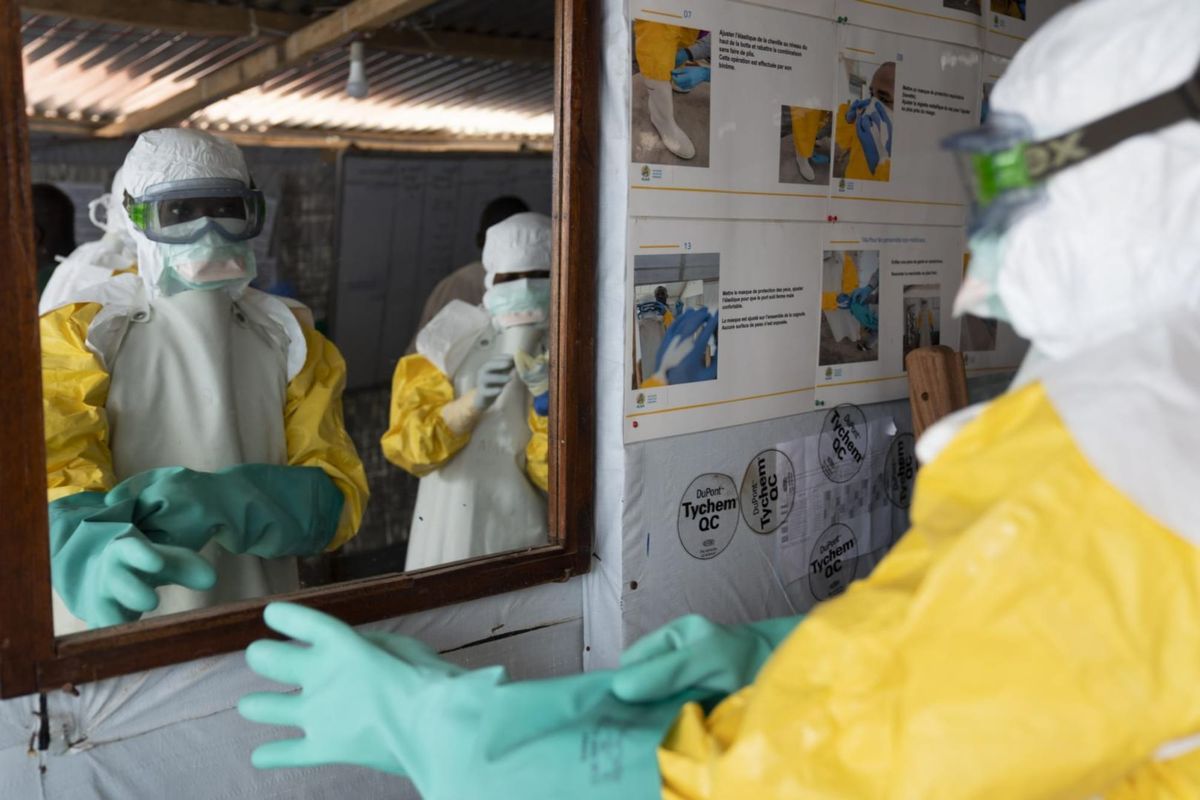
Patients call for a stronger role in shaping Europe’s Health Data Space
The European Patients’ Forum (EPF) has identified three key concerns in the implementation of the European Health Data Space (EHDS), arguing that patient trust must be placed at the centre of the new framework.
Public interest: EPF warns that the concept of “public interest” remains insufficiently defined. Without a common European interpretation, national Health Data Access Bodies (HDABs) could apply different standards across the EU.
“Spain does not have a clear definition of ‘public interest’. In the absence of clear criteria, there is a risk that projects of a very different nature could be considered equally aligned with the public interest,” said the Spanish Platform of Patient organisations (POP)
German patient organisation, BAG Selbsthilfe says: “The German HDAB allows access to health data to applicants demonstrating a scientific interest. This broad access framework has raised concerns regarding how scientific interest is defined and assessed.”
Patient participation: The EPF wants patient involvement formally embedded in EHDS governance through advisory boards with clear mandates and adequate funding. National experiences vary considerably. In the Czech Republic, patient organisations say consultation remains “largely ad hoc”, while in Spain there is still no “clearly formalised” mechanism for representation. Estonia’s patient community stresses the need for “independent voices”, not “state-aligned” representatives.
Less haste, more speed: There is also a fear that the desire to simplify and accelerate data access may come at the expense of robust ethical and scientific assessment. Czech patient groups share concerns that efforts to accelerate access could come “at the expense of robust ethical and scientific assessment”.
“Robust ethical and societal evaluation should therefore not be viewed as an administrative burden slowing down implementation, but rather as one of the core conditions for the long-term legitimacy, transparency, and public acceptance of the system,” says EPF.