EU’s Health Package is Europe’s answer to Trump’s drug pricing policy, says Várhelyi
Várhelyi estimated reforms could lower business costs by 20-25 percent - potentially offsetting the impact of US tariffs and "MFN" pricing.
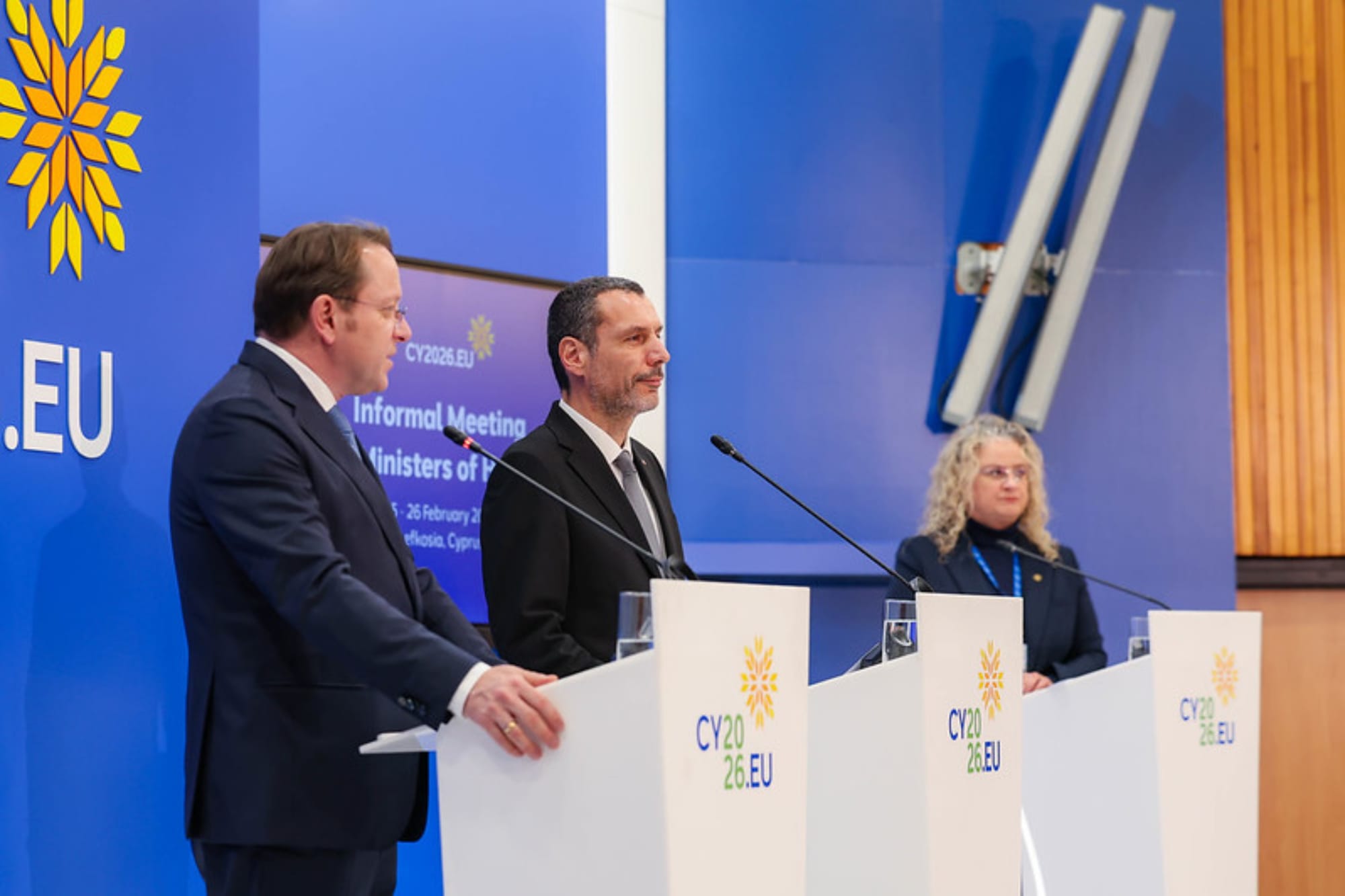
Asked about the impact of Trump’s so-called ‘most-favoured nation’ pricing, European Health Commissioner Olivér Várhelyi said that Europe’s strategy goes beyond pricing disputes and instead focuses on strengthening innovation, investment, and healthcare access across the EU.
Speaking after the Informal Health Council in Nicosia, Várhelyi stressed that the issue cannot be reduced solely to drug prices or tariffs and that recent regulatory decisions could reduce costs.
“My personal educated guess is that we are achieving between 20 and 25 percent cost reductions,” he said, suggesting that these savings could outweigh the impact of potential tariffs of around 15 percent.
The Commissioner said that pharmaceutical policy in Europe operates under a layered system of competencies. While tariffs fall under the EU’s exclusive authority, pricing decisions remain a national competence, as do the structure and organization of healthcare systems.
“We have different sets of competencies,” Várhelyi explained. “Tariffs are the EU's exclusive competence, pricing is national exclusive competence, and healthcare systems themselves are organized at national level.”
Because of this institutional framework, he said that the European Commission sought to design a response in areas where EU-level action could make a measurable and comparable impact.
Financial incentives and regulatory simplification
Várhelyi said that rather than engaging directly in price-setting debates, the Commission focused on improving the economic environment for pharmaceutical and biotechnology companies operating in Europe.
Várhelyi pointed to reforms included in proposals on medical devices and biotechnology aimed at reducing administrative burdens while maintaining strict scientific and patient-safety standards.
 Catherine Feore
The Commission argues that lowering operational costs can make Europe more attractive for companies without compromising regulatory quality.
Preserving innovation and manufacturing in Europe
Beyond immediate economic considerations, the EU’s broader objective is to safeguard Europe’s position as a global hub for medical innovation.
The Commissioner emphasized that maintaining clinical trials, pharmaceutical manufacturing, and research activity within Europe is essential to ensuring long-term access to advanced therapies for European patients.
“The purpose of the exercise is to ensure that we will continue to have innovation in Europe, clinical trials in Europe, manufacturing in Europe, and access in Europe,” Várhelyi said.
 Catherine Feore