
Europe’s healthcare systems are failing the victims of gender-based violence
Violence against women and girls is one of the most widespread and least addressed public-health emergencies according to the WHO/Europe Region

Nearly one in three women will experience abuse in their lifetime. Speaking at the launch of a report on the health sector’s response to violence against women and girls (20 November), WHO/Europe Regional Director Dr Hans Kluge said the situation is at crisis levels:
“Our data shows that political commitments to protect the health and well-being of women and girls and end gender-based violence, are not translating into safe and accessible care.”
Spanish Health Minister Mónica García said that Spain is making primary healthcare one of the key pathways to identify violence against women and girls and offer appropriate treatment and support.
“We know that survivors will use health services for conditions related to violence, even if they do not disclose that to health providers,” said WHO/Europe’s Gender, Equality and Human Rights Officer, Melanie Hyde. “That is why it is so important for health workers, across all levels of the health system, to learn about the different forms of violence, their health impacts, and how to respond in a non-judgemental way.”
A new report lays bare just how unprepared health systems are, and the changes they need to make in order to provide the compassionate and comprehensive care survivors need.
Many essential services for survivors are missing from national policies: emergency contraception, safe abortion care, HIV post-exposure prophylaxis, mental health support and referral pathways. Without these, health systems cannot provide the compassionate, comprehensive care survivors urgently need.
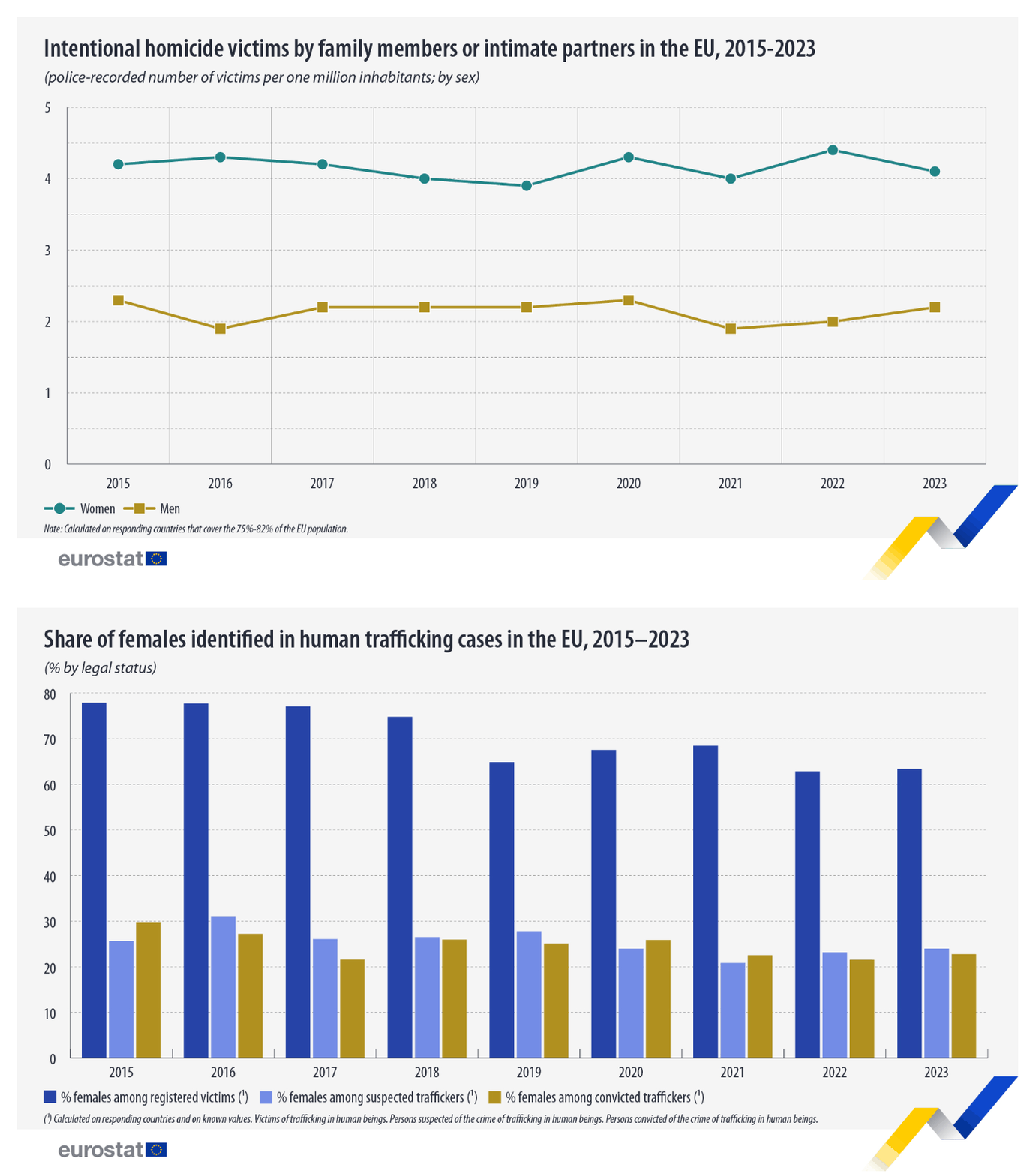
According to Eurostat data, in 2023, 4.1 women out of every million women were victims of intentional homicide, by family members or intimate partners and 63.4% of registered victims of trafficking in human beings in the EU were women or girls.
The report flags a dangerous trend where, in nearly one-third of countries, health workers are required to report cases against the wishes of adult survivors. A mandatory approach which can deter women from seeking help and compromise their autonomy, the opposite of what survivor-centred care demands.
Speaking at a debate in the European Parliament to mark the 'International Day for the Elimination of Violence against Women', S&D Group President, Iratxe García, said:
“The European Union must act with clarity and courage: recognise femicide; make 'only Yes means Yes' the law; and include rape as an EU crime.”
Co-Chair of the Green Group Terry Reintke called for full implementation of the Istanbul Convention on preventing and combating violence against women. The EU has ratified the Convention, but five countries have not completed the national ratification process, namely: Bulgaria, Czechia, Hungary, Lithuania, and Slovakia.
Ending violence against women will require a co-ordinated, multisectoral effort, but healthcare systems need to be at the forefront of Europe’s response.