
EU moves to fix failing medical and in vitro device rules and spur innovation
A 'targeted' revision to the MDR and IVDR promises clearer timelines, proportionate oversight and faster access to innovative technologies
The European Commission has unveiled its long-awaited targeted revision of the EU Medical Devices Regulation (MDR) and In Vitro Diagnostic Regulation (IVDR), aiming to ease the regulatory burden on manufacturers, while ensuring Europe’s high standards for patient safety.
The Commission estimates that the changes will result in cost savings of €3.3 billion per year, including €2.4 billion annual administrative savings.
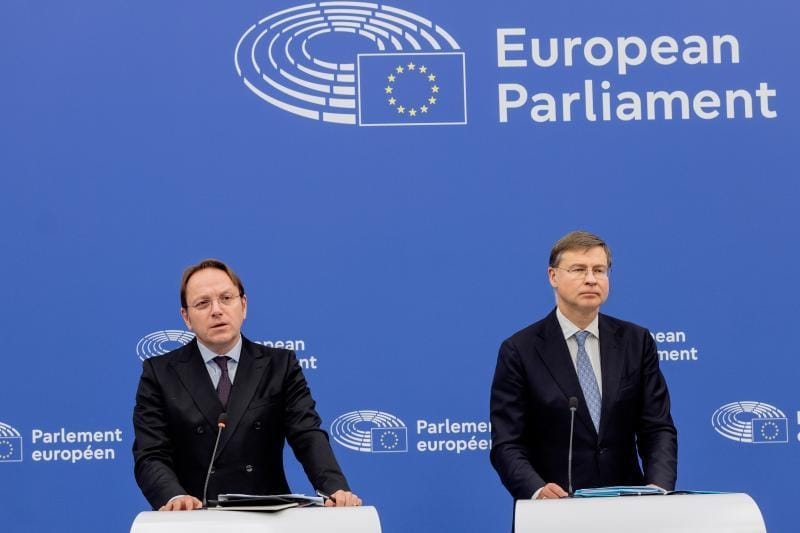
“Our rules must provide clarity, predictability and flexibility to sustain Europe’s leadership and continue delivering for patients,” said Executive Vice-President for Economy and Productivity, Valdis Dombrovskis. He said that streamlined and digitalized procedures would “speed up access to innovative medical devices and boost the competitiveness of the sectors that are vital for Europe’s economy, all this while keeping the needs and safety of patients at the center of our regulatory regime”.
Health Commissioner Olivér Várhelyi underlined the importance of devices to new treatments: “The reality is that it is the medical devices sector that will become indispensable in this whole new era of medical technology, because it is going to be the medical devices that will translate the new therapies to the patients.”
The EU is a global leader in medical devices, employing close to one million people across more than 38,000 companies and generating a market worth around €170 billion. But the regulations, adopted in 2017, prompted by a number of scandals have proven to be cumbersome, expensive, and resulted in shortages. They also have to be adapted to new developments such as AI.
Industry’s reaction has been broadly positive, though not without reservations. MedTech Europe’s CEO Oliver Bisazza welcomed the proposed revision, which he says is a necessary step “to fix parts of the EU regulatory system that are clearly not working for patients, innovators and healthcare providers.”
“Patient safety is our top priority. Past scandals, such as those involving harmful breast implants, have clearly shown the importance of high European standards for the approval and certification of medical devices,” said MEP Tiemo Wölken (S&D, Germany). “At the same time, the MDR and IVDR have posed significant challenges to the industry for years.”
Many of the changes involve taking a more proportionate, risk-based approach to safety and performance for low-risk devices, for example, by reducing the number of audits and safety update reports. There is also a clear definition of ‘well-established technologies’.
Combined studies
The Draghi Report called for the EU to address challenges for studies that combine medicines with medical devices and the application of AI. Wölken welcomes the possibility for sponsors of combined studies to submit a single application in the future: “A coordinated assessment reduces regulatory complexity, avoids duplication, and provides greater clarity and predictability for applicants.”
This is particularly relevant for in vitro devices and medicines, where sponsors had to undergo two parallel regulatory processes. The revision will now enable a co-ordinated assessment.
The Commission’s proposal seeks to address these challenges through simplification, digitalization and stronger EU-level co-ordination, while maintaining patient safety as the overriding priority.
EMA
The proposal strengthens the role of the European Medicines Agency (EMA), giving it greater responsibility for co-ordinating expertise, monitoring shortages and managing a future list of critical devices. Digital tools, including expanded use of electronic instructions, are intended to improve traceability and early detection of safety or supply issues.
MedTech Europe welcomes what it describes as “solid improvements in governance”, but says the Commission has missed an opportunity to establish a single governance structure.
Innovation
The proposal offers a dedicated regulatory pathway for orphan and breakthrough medical devices and IVDs. As small companies or academic innovators often develop these devices that may address small patient groups, high regulatory costs can be prohibitive.
Várhelyi highlighted the proposal’s practical impact on innovation and SMEs. He said that clear timelines and reduced fees would make the EU system comparable to that of the United States. “This will hopefully also result in these, mainly SMEs… staying here and delivering the newest technology much faster,” he said.
Bisazza says that with the right reforms and investment, Europe can once again lead in inventing, launching, and ensuring patient access to medical technology innovation: “The task now is for the European Parliament and the Council to fully seize this opportunity in the final legislation.”