
EU fertility falls to record low as population continues to age
New data released by Eurostat show that fertility across the European Union fell to its lowest level on record in 2024, while the population continued to grow older
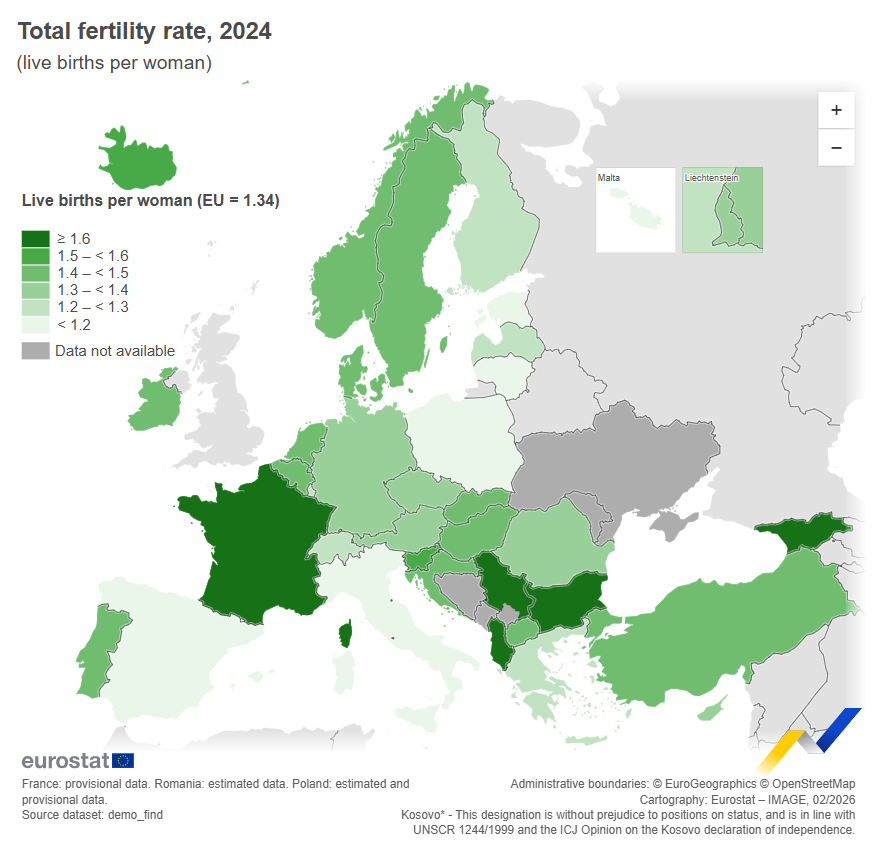
An estimated 3.55 million babies were born in the EU in 2024, a 3.3% decrease compared with 3.67 million births in 2023. The total fertility rate dropped to 1.34 live births per woman, down from 1.38 the previous year. It is the lowest figure recorded since EU-wide data became available in 2001.
The United Nations Population Division defines sub-replacement fertility as any rate below approximately 2.1 children born per woman of childbearing age. The growing needs of an ageing population and the expectation that many people already in the healthcare workforce will be retiring in the coming years mean that healthy ageing is receiving renewed importance.
Fertility rates differed significantly between member states. Bulgaria recorded the highest rate at 1.72 live births per woman, followed by France at 1.61 and Slovenia at 1.52. At the other end of the scale, Malta registered the lowest rate at 1.01, alongside Spain at 1.10 and Lithuania at 1.11.
The figures also highlight the EU’s continuing demographic shift toward an older population. Between 2004 and 2024, the share of people aged 80 and over increased in every member state. Across the EU, the proportion rose from 3.8% to 6.1%. The largest increases were recorded in Greece, Latvia and Portugal, each up 3.2 percentage points, while Sweden saw the smallest rise at 0.5 points.
Over the same period, the share of people aged 65 and over also climbed in all EU countries, increasing from 16.4% to 21.6% at the EU level.
The proportion of children under 15 fell from 16.2% to 14.6% across the EU. The sharpest declines were seen in Malta and Cyprus. Ireland enjoys the highest share of children as a percentage of the population at 18.9%, while Italy has the lowest at 12.2%.
The trend raises fresh concerns about labour shortages and the long-term sustainability of the EU’s relatively generous social systems.