
ECDC chief warns MEPs more health threats require more resources
ECDC Director Pamela Rendi-Wagner warned MEPs that Europe faces mounting threats from mosquito-borne diseases, rising STIs and antimicrobial resistance
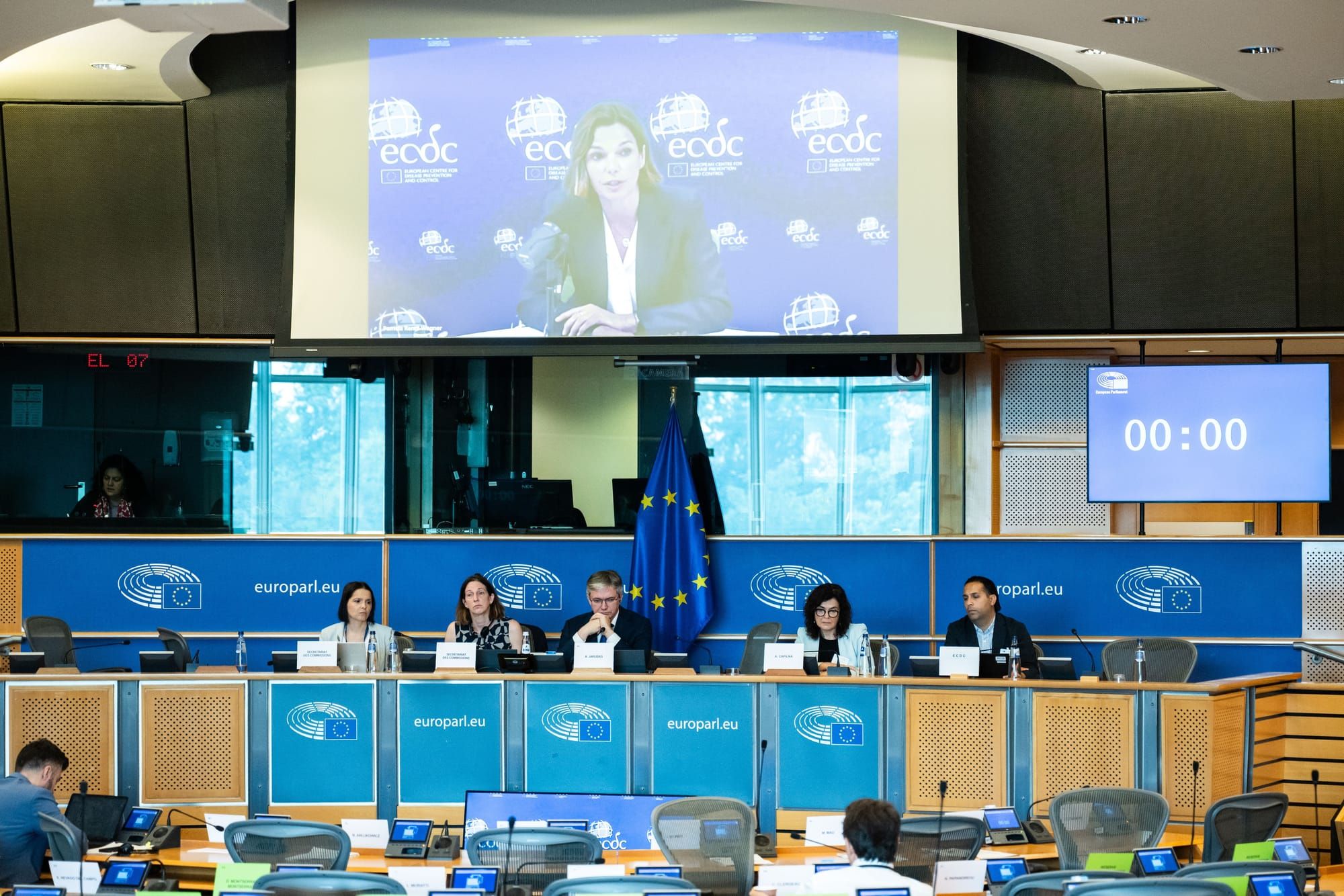
Europe is facing a growing wave of public health threats, from mosquito-borne diseases and sexually transmitted infections to antimicrobial resistance, ECDC Director Pamela Rendi-Wagner warned MEPs (3 June).
Presenting the European Centre for Disease Prevention and Control's 2025 Annual Activity Report to the European Parliament's Public Health Committee, Rendi-Wagner said Europe recorded “longer and more intense transmission seasons” for mosquito-borne diseases last year, including West Nile virus and chikungunya.
The ECDC is therefore “strengthening surveillance of vector-borne diseases”, as well as laboratory preparedness and climate-sensitive risk assessments, she said.
Rendi-Wagner sounded the alarm over sexually transmitted infections, which are rising at “worrying speeds” across Europe. “We see a doubling and a tripling of some of the STIs over the last 10 years,” she told MEPs. According to ECDC modelling, Europe could see “80,000 new HIV infections”.
Turning to antimicrobial resistance, she described AMR as “one of the most serious public health threats we're facing in Europe”. More than four million hospital-acquired infections occur annually, accounting for over 70% of the burden of antimicrobial resistance.
“Vaccination remains one of the strongest investments in Europe's health,” she added, highlighting HPV vaccination as a powerful tool against cervical cancer, which remains “the fourth most common cancer” and the second leading cause of cancer death among young women.
ECDC’s future role and funding
Pressed by MEPs on whether the ECDC should expand beyond infectious diseases, Rendi-Wagner said the agency was awaiting the results of an external evaluation but signalled openness to a broader role. The scientific links between communicable and non-communicable diseases are becoming "more and more important", she argued, pointing to the link between HPV and cervical cancer. A "holistic approach" would make Europe "more effective in prevention, preparedness and response", she said.
As the EU prepares its next long-term budget, she said the ECDC's first priority is safeguarding funding for its core tasks. “We see that there is a growing number of public health threats, including biotoxins and other threats. If there are more responsibilities in future, because there are more threats, this means more tasks for ECDC. More tasks mean we need more staff and more expertise in the centre to cover these tasks,” she said.
Rendi-Wagner said more investment in AI, digitalisation, and e-health tools, is needed to modernise surveillance and respond more quickly to emerging threats.