
Belgian court ruling triggers vaccine blame game in Poland and Romania
A Brussels court rules both Poland and Romania must honour binding vaccine contracts signed during the pandemic
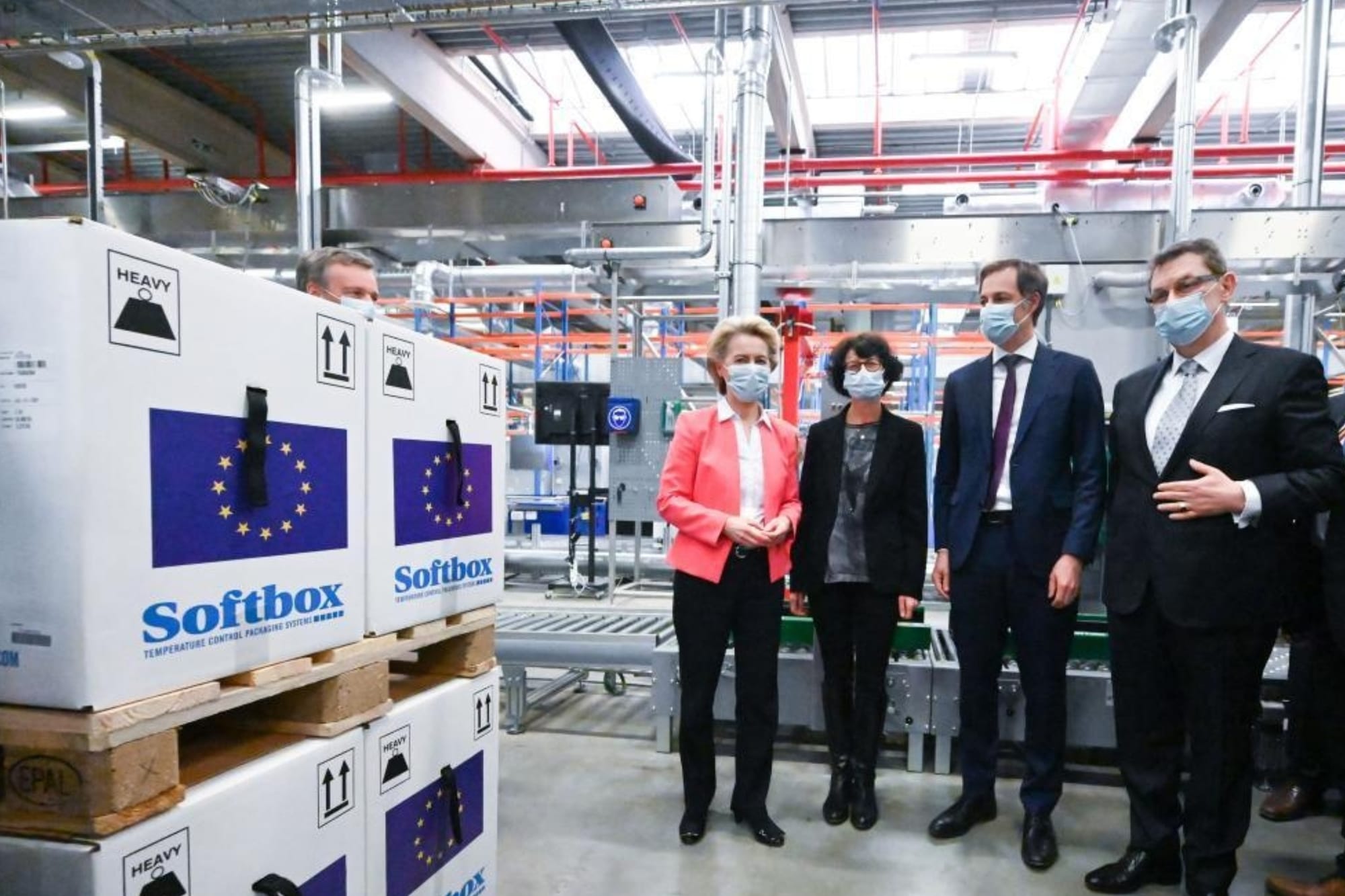
The Brussels Court of First Instance has held (1 April) that Poland and Romania were contractually obliged to pay for €1.9 billion worth of vaccines ordered in 2021. Both current governments are considering appealing the decision while also placing the blame on former administrations.
During the COVID pandemic, the EU negotiated 4.2 billion vaccine doses, ensuring that 84.8% of the EU’s adult population received at least one dose. Pfizer/BioNTech dominated the EU’s portfolio due to its ability to reliably supply the EU; an important factor, given the Commission’s experience with AstraZeneca, which prioritised supplying the UK rather than the EU.
While a Joint Negotiating Team, made up of Commission representatives and experts from seven countries, led the negotiations, they reported to a steering group in which all EU states were represented; each country could opt out. Once purchase agreements were agreed upon with the participating states, they became legally binding and could not be unilaterally changed.
Romania - ‘Now comes the bill’
Romanian MEP Vlad Voiculescu (Renew) and former Romanian Minister for Health said on LinkedIn that when the European Commission and Pfizer offered all member states a negotiated way out of COVID-19 vaccine contracts in 2023, twenty-four countries agreed: “Three refused: Viktor Orbán's Hungary, Poland then led by the far right (PiS), and Romania, where Mr Rafila (Minister of Health, 11/2021 – 06/2025) and Mr Ciucă (Romanian Prime Minister, 11/2021 - 06/2023) rejected any negotiation without even providing an answer to Pfizer's proposal. Now comes the bill.”
The current Romanian Health Minister, Alexandru Rogobete, said that the sum to be repaid (approximately €600 million) was equal to the cost of a new major hospital. Romania is analysing all legal and financial options, but the minister says he will not “cosmeiticise reality” or avoid the truth: “Trust is built on facts and responsibility is not optional”. Romania is hopeful that, under its new administration, a negotiated solution can still be reached.
Poland - ‘Not an April fool’s’
Similarly, Poland has been ordered to pay Pfizer around €1.3 billion (5.6 billion zloty) for COVID-19 vaccines it later refused to receive.
Polish Prime Minister Donald Tusk, on a post on X, placed the blame at the door of the main opposition party, PiS, which was in power at the time: “The government led by Morawiecki ordered COVID-19 vaccines that it did not collect and for which it did not provide payment. Consequently, Poland and all its citizens will be liable for a penalty exceeding PLN 6 billion (€1.4 billion) due to the Law and Justice party’s unfortunate decision. Regrettably, this is not an April Fool’s joke.“
Poland’s health ministry notes that the ruling can still be appealed, and has indicated that it will “pursue all legal means available to change this decision and defend its interests”.
Deputy Minister of Health Katarzyna Kacperczyk said the amount was equivalent to Poland’s entire annual budget for advanced, highly specialised therapies for people suffering from cancer.
Hungary
Hungary has a trial scheduled for mid-April, which it is expected to lose; it is anticipated that the amount at issue will be much smaller.
Pfizer welcomed the Belgian court’s decision: “This decision reflects the importance of the contractual obligations that underpinned a successful European pandemic response.”