
Audit exposes weak targets and funding doubts in EU cancer strategy
An audit by the European Court of Auditors warns that Europe’s Beating Cancer Plan lacks clear targets, monitoring mechanisms and long-term funding certainty
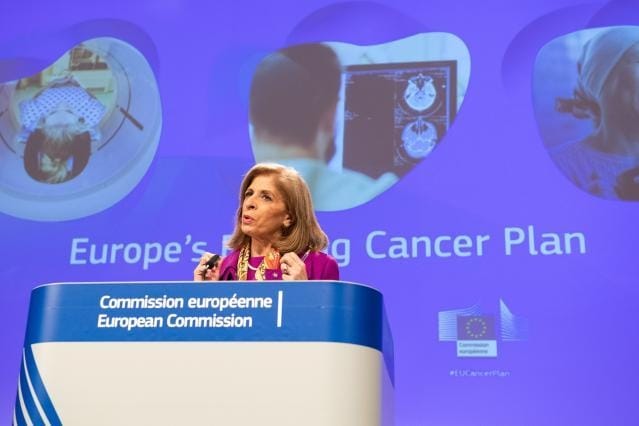
The European Court of Auditors (ECA) has warned that Europe’s Beating Cancer Plan (EBCP) is “fraught with uncertainty”, according to an audit published on 19 February.
Launched in 2021 with an initial budget of €4 billion for the 2021–2027 period, the EBCP aims to tackle cancer across the entire disease pathway, from prevention and early detection to treatment, survivorship and patients’ quality of life.
Klaus-Heiner Lehne, the ECA member responsible for the audit, said the plan suffers from several structural shortcomings. Chief among them is the absence of a comprehensive monitoring framework. “Many objectives lack measurable targets, actions operate on different timelines, and there is no system in place to assess results or long-term impact,” he told Vital Signs.
The auditor also identified potential overlaps between initiatives and raised concerns about long-term sustainability. Many projects depend on uptake at national level, which remains uncertain across member states.
The report also highlights doubts over the plan’s financing. According to the ECA, the European Commission did not clearly explain how the €4 billion budget would be allocated at the outset. In addition, the EU4Health budget was reduced midway through implementation, while funding arrangements beyond 2027 remain unclear.
Lehne said: “The Commission could have done better by identifying potential overlaps earlier, better tailoring initiatives to member states’ needs and capacities, ensuring sustainability planning, and creating a proper set of indicators to track progress.”
The ECA acknowledges that shortcomings cannot be placed solely at the Commission’s door, noting that “persistent inequalities stem from factors outside the Commission’s direct influence, including national decisions on data availability, health investment, screening, or vaccination programmes.”
Contrary to the ECA’s rather bleak press release, the audit found that the EBCP had served as a trigger for policy change in several member states: “After it was adopted, four member states developed new national cancer plans, while 10 countries updated their existing plans. This shows that EU-wide coordination and tools under the EBCP can be a catalyst for national action, which was also confirmed by the stakeholders and national authorities we visited.”
What is perhaps most surprising is that the report does not mention Covid once, despite the pandemic being very disruptive to cancer screening and care. While the criticisms remain, it seems like a surprising omission.
Asked about the implications for the upcoming ‘Safe Hearts Plan’, Lehne said the main lessons from the EBCP are to establish a monitoring framework from the start, identify potential overlaps between initiatives early on, and ensure long-term funding and national buy-in.